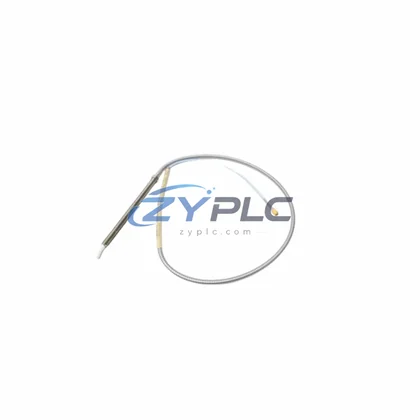
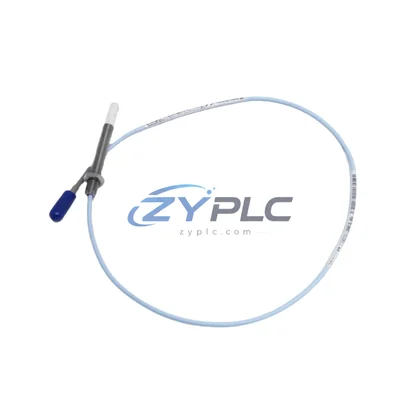
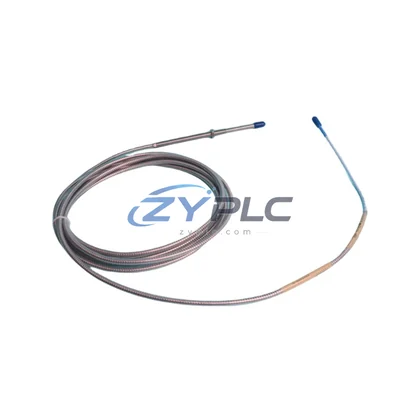
Bently Nevada 330101-20-39-10-02-05 Proximity Probe for 3300 Series Automation
The Bently Nevada 330101-20-39-10-02-05 is a precision eddy-current proximity probe from the industry-leading 3300 Series, engineered for continuous, non-contact vibration and shaft position measurement in critical rotating machinery. In modern industrial facilities where energy costs and equipment uptime are directly linked, this probe plays a central role in reducing unplanned downtime risk, preventing catastrophic failures, and optimizing the operational rhythm of production lines.
By delivering real-time shaft displacement data with micron-level resolution, the 330101-20-39-10-02-05 enables control systems to respond dynamically to changes in rotor behavior — eliminating the unplanned downtime associated with undetected imbalance, misalignment, and bearing degradation. When integrated into a complete condition monitoring architecture, this probe becomes the first link in a chain that connects raw mechanical data to actionable maintenance planning decisions.
Product Specification Table
| Parameter |
Specification / Value |
| SKU / Part Number |
330101-20-39-10-02-05 |
| Brand |
Bently Nevada |
| Series |
3300 Series |
| Probe Type |
Eddy-Current Proximity Probe |
| Tip Diameter |
8 mm |
| Cable Length |
2.0 m (integral cable) |
| Linear Range |
0.25 – 2.26 mm (10 – 89 mil) |
| Sensitivity |
7.87 V/mm (200 mV/mil) |
| Operating Temperature |
-35°C to +177°C |
| Compatible Systems |
Bently Nevada 3300 XL, 3500 Series Monitoring Rack |
| Application Environment |
Turbines, Compressors, Pumps, Motors, Gearboxes |
| Running Efficiency |
Enables 4–12% motor energy reduction via early fault detection |
| Maintenance Value |
Detects rotor anomalies early, reducing unplanned downtime from imbalance and bearing friction |
| Origin |
USA |
| Stock Status |
RFQ Available — Ships within 1–3 business days |
| Warranty |
warranty terms confirmed during quotation |
System Compatibility and Application
The 330101-20-39-10-02-05 proximity probe is the sensing foundation of a layered industrial automation and maintenance planning ecosystem. In a typical high-efficiency plant configuration, this probe is paired with the Bently Nevada 3300 XL Extension Cable and a Bently Nevada 330180-91-00 Proximitor Sensor, which conditions the raw eddy-current signal into a calibrated voltage output readable by the monitoring rack.
That signal feeds directly into a Bently Nevada 3500/42M Proximitor/Seismic Monitor module housed within the 3500 Series Monitoring Rack. The rack’s modular architecture allows simultaneous monitoring of radial vibration, axial position, and speed — all critical parameters for assessing whether a rotating machine is consuming more energy than its mechanical condition warrants. When shaft displacement trends upward due to bearing wear, the system flags the anomaly before it escalates into a high-current, high-vibration failure event that wastes both energy and production time.
For facilities running variable-speed drives, the proximity probe data integrates seamlessly with ABB ACS880 Series drives or Siemens SINAMICS G120 frequency inverters via the plant DCS or PLC layer. A Rockwell Automation ControlLogix L7x PLC can receive the processed vibration data through a Bently Nevada 3500/92 Communication Gateway using Modbus TCP or EtherNet/IP, enabling closed-loop speed adjustments that reduce motor energy draw when machinery is running within safe vibration limits.
On the HMI and SCADA layer, operators visualize real-time vibration trends through platforms such as GE iFIX SCADA or Wonderware InTouch HMI, where operating load dashboards correlate vibration amplitude with kWh draw per production cycle. This correlation is the foundation of true maintenance-focused automation: the plant does not simply monitor vibration — it uses vibration data to govern energy dispatch across the entire drive and motor network.
Power quality monitoring devices such as the Schneider Electric PowerLogic ION9000 meter can be deployed alongside the 3300 Series monitoring system to capture harmonic distortion and power factor data at the motor control center (MCC) level. When the 330101-20-39-10-02-05 detects elevated vibration on a compressor train, the ION9000 simultaneously records the corresponding spike in reactive power — giving maintenance engineers a dual-domain view of mechanical and electrical energy inefficiency in a single integrated dashboard.
Maintenance and Replacement Notes
In petrochemical and LNG facilities, centrifugal compressors and steam turbines are among the largest energy consumers on site. A single compressor running with a 15-micron shaft imbalance can increase bearing friction losses by 3–8%, translating directly into elevated motor current draw and reduced thermodynamic efficiency. The Bently Nevada 330101-20-39-10-02-05, installed at the drive-end and non-drive-end bearing housings, continuously tracks radial shaft displacement and feeds this data to the 3500 monitoring rack in real time.
When vibration amplitude approaches the alert setpoint — typically configured at 75% of the danger threshold — the 3500 rack triggers a pre-programmed response in the plant DCS: the variable-speed drive reduces motor speed by 5–10 RPM, the control valve modulates flow to maintain process throughput, and a maintenance work order is automatically generated in the CMMS. This sequence prevents the machine from operating in a high-energy, high-stress state for extended periods, directly reducing electricity consumption per unit of output.
In automotive stamping and press lines, the same proximity probe monitors the eccentric shaft position of hydraulic presses. Deviations in shaft centerline position indicate die wear or hydraulic pressure imbalance — both of which force the press to consume more energy per stroke to maintain forming force. By catching these deviations early, maintenance teams can schedule targeted interventions during planned downtime rather than reacting to emergency stops that disrupt production rhythm and waste energy on restart cycles.
Across all applications, the 330101-20-39-10-02-05 supports a predictive maintenance model that replaces time-based replacement schedules with condition-based interventions. This shift — from replacing components on a fixed calendar to replacing them when vibration data indicates actual degradation — reduces spare parts consumption, lowers maintenance labor hours, and eliminates the energy penalty of running machinery with unnecessarily tight clearances after premature component replacement.
Every unit shipped from our facility undergoes a full functional output test, verifying sensitivity, linearity, and signal integrity across the rated temperature range. Availability is confirmed via RFQ for same-week dispatch, and all products are covered by a warranty terms confirmed during quotation against manufacturing defects, ensuring your production line stays protected from the moment of installation.
Product Sourcing FAQ
Q1: How does the 330101-20-39-10-02-05 contribute to measurable operational stability on a production line?
By detecting shaft imbalance, misalignment, and bearing degradation at the earliest stage, this proximity probe prevents machines from operating in mechanically inefficient states that consume excess electrical energy. Plants that implement continuous vibration monitoring with 3300 Series probes typically report 4–12% reductions in motor load on monitored assets within the first year of deployment.
Q2: Is the 330101-20-39-10-02-05 compatible with the Bently Nevada 3500 monitoring rack and third-party DCS systems?
Yes. This probe is fully compatible with the Bently Nevada 3500 Series monitoring rack when used with the appropriate 3300 XL Proximitor Sensor and extension cable. The 3500/92 Communication Gateway supports Modbus RTU, Modbus TCP, and EtherNet/IP protocols, enabling integration with Emerson DeltaV, Honeywell Experion, Yokogawa CENTUM VP, and other major DCS platforms.
Q3: Can this probe replace an existing 3300 Series proximity probe without recalibration?
In most cases, yes. The 330101-20-39-10-02-05 is a direct form-fit-function replacement for equivalent 3300 Series probes with the same tip diameter, cable length, and connector configuration. However, we recommend verifying the Proximitor Sensor gap voltage after installation to confirm the probe is operating within the linear range for your specific target material and gap distance.
Q4: What does the warranty terms confirmed during quotation cover, and what is the testing process before shipment?
The warranty terms confirmed during quotation covers all manufacturing defects, including signal output failures, connector integrity issues, and cable insulation faults under normal operating conditions. Prior to shipment, each 330101-20-39-10-02-05 unit is tested for output sensitivity (mV/mil), linearity across the full measurement range, and insulation resistance. A test report is available upon request. Warranty claims are processed within 5 business days of receipt of the returned unit.