Bently Nevada 330101-29-52-10-02-00: Precision Proximity Sensing for 3300 Series Industrial Monitoring
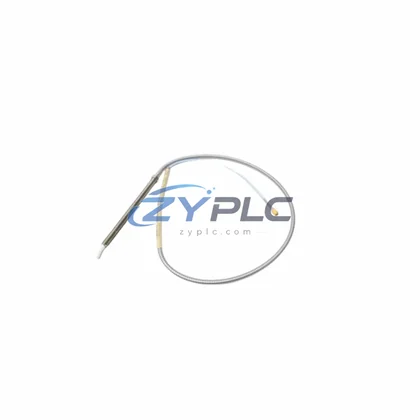
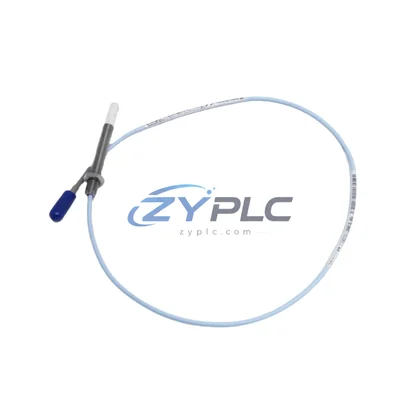
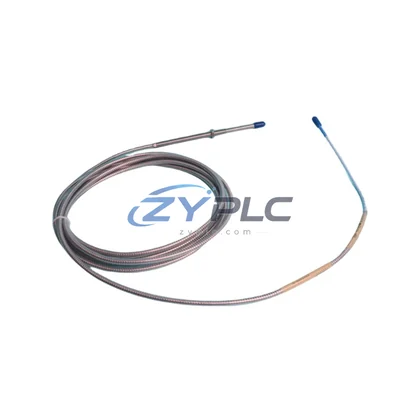
The Bently Nevada 330101-29-52-10-02-00 is an 8mm proximity sensor engineered for continuous, high-accuracy shaft vibration and position measurement within the Bently Nevada 3300 Series machinery protection architecture. Designed to operate as a core sensing element in rotating machinery monitoring systems, this proximity sensor delivers reliable eddy-current-based non-contact measurement across a wide range of industrial environments — from turbine halls and compressor stations to pump skids and gearbox monitoring panels. Its role within the broader 3300 Series ecosystem is not simply that of a standalone transducer; it is a foundational data acquisition node that feeds real-time mechanical health data into the control and protection layers of a complete automation architecture.
In modern industrial facilities, the integrity of rotating machinery monitoring depends on the seamless coordination of sensing, signal conditioning, communication, and supervisory layers. The 330101-29-52-10-02-00 proximity sensor is designed to integrate directly with Bently Nevada 3300 Series signal conditioning modules, enabling precise gap voltage output that is then processed by the system monitor rack. This signal chain — from the probe tip through the extension cable and into the proximitor — forms the foundation of vibration data that drives both local protection logic and upstream SCADA visibility.
Compatibility & Integration Notes
| Parameter |
Specification |
| SKU |
330101-29-52-10-02-00 |
| Brand |
Bently Nevada |
| Series |
3300 Series |
| Product Type |
Proximity Sensor (Eddy Current) |
| Probe Diameter |
8mm |
| Cable Length |
5m (extension cable) |
| Output Signal |
DC voltage (gap proportional) |
| Measurement Type |
Non-contact shaft vibration & position |
| Compatible Proximitor |
Bently Nevada 3300 XL Proximitor Series |
| System Integration |
3300 Series rack-mount monitor systems |
| Operating Temperature |
-35°C to +120°C (probe tip) |
| Installation Environment |
Hazardous area rated, IP67 probe body |
| Origin |
United States |
| Warranty |
warranty terms confirmed during quotation |
Connected Automation Data Flow
The 330101-29-52-10-02-00 proximity sensor operates at the sensing layer of a multi-tier industrial automation architecture. Its output is conditioned by the Bently Nevada 3300 XL Proximitor, which converts the raw eddy-current signal into a calibrated DC voltage representing shaft displacement or vibration amplitude. This conditioned signal is then routed into the Bently Nevada 3500 Series rack-mount machinery protection system — a modular platform that houses I/O modules, communication cards, and relay output modules for trip and alarm logic.
Within the 3500 rack, the vibration data is processed alongside inputs from complementary sensors such as the Bently Nevada 330130 velocity sensor and the 330180 temperature sensor, creating a multi-parameter health profile for each monitored machine. The rack communicates upstream via the Bently Nevada 3500/92 communication gateway module, which supports Modbus TCP, Ethernet/IP, and OPC-DA protocols — enabling direct integration with Emerson DeltaV DCS systems, Honeywell Experion PKS, or third-party SCADA platforms such as Wonderware InTouch or Ignition by Inductive Automation.
At the HMI layer, operators interact with real-time vibration trends, alarm states, and historical waveform data through dedicated machinery monitoring workstations running System 1 Evolution software — Bently Nevada’s proprietary condition monitoring and diagnostics platform. System 1 aggregates data from multiple 3500 racks across a plant, providing fleet-level visibility into rotating equipment health. This data flow — from the 330101-29-52-10-02-00 probe tip through the proximitor, into the 3500 rack, across the plant network, and up to the System 1 server — represents a complete, closed-loop machinery protection and condition monitoring architecture.
For facilities requiring wireless data transmission or edge analytics, the Bently Nevada Scout wireless monitoring system can complement the wired 3300/3500 infrastructure, providing portable or permanently installed wireless vibration nodes that feed into the same System 1 data environment. Additionally, the Bently Nevada TDXnet data acquisition system supports high-speed dynamic data capture for advanced diagnostics, working in parallel with the standard protection rack to capture full-spectrum vibration waveforms for offline analysis.
Power supply integrity for the monitoring rack is maintained through dedicated 24VDC industrial power supplies with redundant feed capability, ensuring that the protection system remains operational even during primary power disturbances. The overall architecture — sensing, conditioning, protection, communication, and supervisory layers — is designed for continuous, uninterrupted operation in critical rotating machinery applications including steam turbines, gas compressors, centrifugal pumps, and large electric motors.
Solving Data Isolation in Industrial Sites
One of the persistent challenges in industrial facilities operating legacy rotating machinery monitoring systems is data isolation — the inability to surface real-time machinery health data within the broader plant information network. Older Bently Nevada 3300 Series installations may have been commissioned as standalone protection systems, with alarm and trip outputs wired directly to the DCS or safety system but without digital data integration. This means that vibration trends, waveform data, and diagnostic information remain locked within the monitoring rack, invisible to plant historians, SCADA systems, and maintenance management platforms.
The 330101-29-52-10-02-00 proximity sensor, when deployed as part of a modernized 3300/3500 architecture with the 3500/92 communication gateway, directly addresses this data isolation problem. By enabling Modbus TCP or OPC-UA data export from the protection rack, the gateway allows vibration amplitude, phase, gap voltage, and alarm status to be published to the plant DCS historian, OSIsoft PI System, or any OPC-compliant SCADA platform. This transforms the machinery protection system from a passive trip device into an active contributor to the plant’s digital intelligence layer.
For facilities undergoing digital transformation initiatives, integrating the 330101-29-52-10-02-00 sensor data into a unified asset performance management (APM) platform enables predictive maintenance workflows. Vibration trend data from the proximity sensor can be correlated with process variables — flow, pressure, temperature — to identify developing faults such as rotor imbalance, misalignment, bearing wear, and seal degradation before they result in unplanned shutdowns. This shift from reactive to predictive maintenance directly reduces maintenance costs, extends equipment life, and improves overall plant availability.
Remote diagnostics capability is another key benefit of full digital integration. With the 3500/92 gateway publishing data to a cloud-accessible historian or edge gateway, remote engineers can monitor machinery health in real time without being physically present on site — a critical capability for unmanned or remotely operated facilities such as offshore platforms, pipeline compressor stations, and remote power generation sites.
Industrial Connectivity FAQ
Q1: Is the 330101-29-52-10-02-00 compatible with both the 3300 XL Proximitor and the standard 3300 Proximitor?
The 330101-29-52-10-02-00 is designed for use with the Bently Nevada 3300 XL Proximitor series. Compatibility with earlier standard 3300 Proximitors depends on the specific proximitor model and calibration range. We recommend confirming the target proximitor part number before ordering. Our technical team can assist with compatibility verification as part of the pre-shipment consultation process.
Q2: What communication protocols does the 3500 Series rack support when used with this proximity sensor system?
When the 330101-29-52-10-02-00 sensor is integrated into a Bently Nevada 3500 Series rack equipped with the 3500/92 communication gateway module, the system supports Modbus RTU, Modbus TCP/IP, Ethernet/IP, and OPC-DA/OPC-UA protocols. This enables direct integration with most major DCS, SCADA, and historian platforms without requiring additional protocol converters.
Q3: How is network stability and data continuity ensured in critical machinery monitoring applications?
The 3500 Series rack architecture is designed for high-availability operation, with redundant power supply options and watchdog-monitored communication modules. In the event of a network interruption, the protection rack continues to execute local trip and alarm logic independently of the upstream communication link, ensuring that machinery protection is never compromised by network instability. Data buffering within the communication module preserves trend data during short network outages.
Q4: What does the warranty terms confirmed during quotation cover, and what is the process for warranty claims?
All Bently Nevada 330101-29-52-10-02-00 proximity sensors supplied by ZYPLC are covered by a warranty terms confirmed during quotation against manufacturing defects and functional failures under normal operating conditions. Warranty claims are processed through our technical support team. Upon receipt of the returned unit, our engineers perform a failure analysis and provide either a replacement unit or a repaired unit within an agreed lead time. Warranty coverage begins from the date of shipment confirmation.