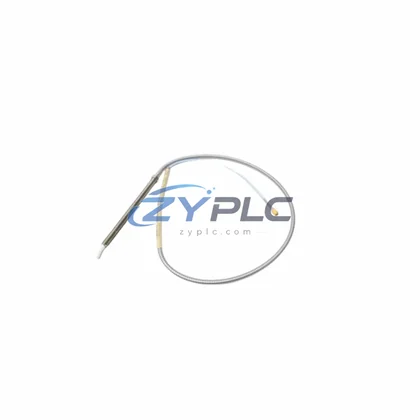
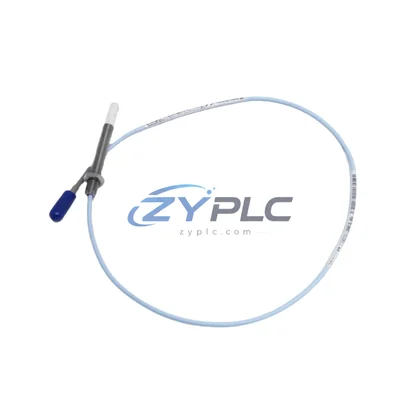
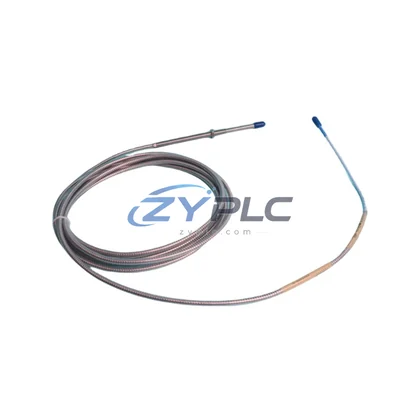
Bently Nevada 330101-33-53-10-12-05: Industrial Data Link for 3300 Series Smart Factory Connectivity
The Bently Nevada 330101-33-53-10-12-05 is a high-precision proximity probe engineered for the 3300 Series vibration monitoring platform — one of the most widely deployed condition monitoring systems in rotating machinery environments worldwide. Designed to deliver continuous, real-time displacement and vibration data from critical rotating assets such as turbines, compressors, pumps, and motors, this probe forms the foundational sensing layer of an integrated industrial data chain. From raw signal acquisition at the machine shaft to protocol-converted data streams flowing into SCADA dashboards and historian systems, the 330101-33-53-10-12-05 plays a decisive role in ensuring uninterrupted production visibility across smart factory architectures.
In modern industrial facilities, the demand for seamless data flow between field devices and upper-level control systems has never been greater. The 330101-33-53-10-12-05 proximity probe interfaces directly with the Bently Nevada 3300 Series signal conditioning modules, which convert raw eddy-current displacement signals into standardized analog outputs — typically 4–20 mA or ±24 VDC — compatible with a broad range of PLC input cards, DCS controllers, and remote I/O systems. This analog-to-digital bridge is the first critical step in eliminating data isolation at the field level.
Compatibility & Integration Notes
| Parameter |
Specification |
| SKU / Part Number |
330101-33-53-10-12-05 |
| Brand / Manufacturer |
Bently Nevada |
| Series |
3300 Series Vibration Monitoring |
| Probe Type |
Eddy-Current Proximity Probe |
| Signal Output |
Analog (4–20 mA / ±24 VDC) |
| Protocol Compatibility |
Analog, Modbus RTU (via gateway), PROFIBUS DP (via gateway), OPC-UA (via edge gateway) |
| Interface Type |
Coaxial cable connection to 3300 Series proximitor/signal conditioner |
| Network Compatibility |
Compatible with DCS, PLC, SCADA, HMI, Historian, and Edge Gateway systems |
| System Application |
Rotating machinery condition monitoring, predictive maintenance, smart factory IIoT |
| Communication Gateway Support |
Supports integration via Bently Nevada System 1, Modbus/OPC-UA gateways |
| Origin |
United States |
| Warranty |
warranty terms confirmed during quotation |
Connected Automation Data Flow
The industrial data journey enabled by the 330101-33-53-10-12-05 begins at the machine surface. The probe tip, positioned within 1–2 mm of the rotating shaft, continuously measures radial displacement using eddy-current technology. This raw signal travels through a matched extension cable to the Bently Nevada 3300 XL 8mm Proximitor Sensor, which conditions and amplifies the signal into a clean analog output. From there, the signal enters the plant’s control infrastructure.
In a typical smart factory deployment, the conditioned analog signal feeds into a Rockwell Automation ControlLogix PLC or a Siemens S7-400 DCS input module via a 4–20 mA analog input card. The PLC processes the vibration amplitude and phase data in real time, comparing live readings against pre-configured alarm thresholds. When values approach critical limits, the control system triggers automated responses — reducing machine load, activating standby equipment, or initiating a controlled shutdown sequence — all without human intervention.
For facilities requiring protocol conversion and network-level data transmission, the analog output from the 3300 Series signal conditioner connects to a Moxa MGate MB3180 Modbus gateway or a Hilscher netTAP NT 100-RE-RE gateway, translating the analog signal into Modbus RTU or PROFIBUS DP frames. These frames are then transmitted across the plant’s industrial Ethernet backbone — typically running on a managed industrial switch such as the Hirschmann RS20 or Cisco IE-3300 — to the SCADA server or DCS historian.
At the SCADA layer, platforms such as Wonderware System Platform, Ignition by Inductive Automation, or GE iFIX receive the vibration data streams and display real-time trend curves on operator HMI screens. Maintenance engineers monitoring a Siemens WinCC HMI panel can observe shaft displacement waveforms, bearing temperature correlations, and alarm event logs simultaneously. The 330101-33-53-10-12-05 thus becomes the originating data source for an entire predictive maintenance workflow — from raw signal to actionable insight.
For IIoT-enabled facilities, the data chain extends further. An edge gateway such as the Advantech ADAM-3600 or Moxa UC-8112 aggregates vibration data from multiple 3300 Series channels, applies local analytics, and publishes structured data packets via MQTT or OPC-UA to cloud-based asset performance management platforms. This architecture supports remote diagnostics, fleet-wide benchmarking, and AI-driven anomaly detection — all anchored by the precision sensing capability of the 330101-33-53-10-12-05 proximity probe.
Solving Data Isolation in Industrial Sites
One of the most persistent challenges in legacy industrial facilities is protocol fragmentation — machines and sensors from different eras speaking incompatible communication languages. The Bently Nevada 3300 Series, with the 330101-33-53-10-12-05 as its primary sensing element, addresses this challenge through its universal analog output architecture. Because 4–20 mA signals are universally accepted by virtually every PLC, DCS, and remote I/O platform on the market, the probe can be integrated into both legacy control systems and modern IIoT architectures without requiring hardware replacement.
Data silos — isolated pockets of machine data that never reach the control room or enterprise systems — are eliminated when the 330101-33-53-10-12-05 is paired with appropriate signal conditioning and gateway infrastructure. A single Bently Nevada System 1 software node can aggregate vibration data from dozens of 3300 Series channels, normalize the data format, and publish it to plant historians, ERP systems, or cloud platforms via OPC-DA or OPC-UA interfaces. This transforms previously invisible machine health data into a transparent, queryable asset across the entire production network.
Remote monitoring and diagnostics are further enhanced by the probe’s stable, low-noise signal output. Maintenance teams operating from centralized control rooms or remote operations centers can monitor shaft vibration trends in real time, set dynamic alarm thresholds, and receive automated alert notifications via email or SMS — all without physically accessing the machine. This capability is particularly valuable in hazardous environments such as offshore platforms, chemical processing plants, and high-temperature turbine halls where physical inspection carries significant safety risk.
Production line transparency — the ability to see exactly what every machine is doing at any given moment — is a core deliverable of smart factory initiatives. By integrating the 330101-33-53-10-12-05 into a unified condition monitoring network, plant managers gain a real-time view of equipment health across the entire production floor. Capacity planning, maintenance scheduling, and spare parts procurement can all be driven by live machine data rather than fixed time intervals, reducing both unplanned downtime and unnecessary maintenance costs.
Industrial Connectivity FAQ
Q1: What communication protocols are compatible with the Bently Nevada 330101-33-53-10-12-05?
The 330101-33-53-10-12-05 outputs a standard analog signal (4–20 mA / ±24 VDC) that is natively compatible with any PLC, DCS, or remote I/O system accepting analog inputs. For digital protocol integration — including Modbus RTU, PROFIBUS DP, or OPC-UA — a protocol gateway such as the Moxa MGate series or Hilscher netTAP is required to convert the analog signal into the target digital protocol frame.
Q2: How does the 330101-33-53-10-12-05 integrate with SCADA and HMI systems?
The probe’s conditioned analog output connects to PLC or DCS input modules, which then communicate with SCADA platforms (Wonderware, Ignition, WinCC) via standard industrial protocols. HMI screens can display real-time vibration trends, alarm states, and historical data. For direct OPC-UA integration, Bently Nevada System 1 software serves as the data aggregation and publishing layer.
Q3: What is the network transmission latency for vibration data from the 330101-33-53-10-12-05?
Analog signal transmission from the probe to the signal conditioner is essentially instantaneous (microsecond-level). Protocol conversion and network transmission latency depends on the gateway and network infrastructure — typically 10–100 ms for Modbus RTU over RS-485, and under 10 ms for Industrial Ethernet-based protocols. For real-time control applications, direct analog input to PLC is recommended to minimize latency.
Q4: Does the 330101-33-53-10-12-05 come with a warranty, and has it been tested before shipment?
Yes. Every Bently Nevada 330101-33-53-10-12-05 unit supplied by ZYPLC carries a warranty terms confirmed during quotation covering manufacturing defects and functional performance. All units undergo pre-shipment functional testing to verify signal output accuracy, cable integrity, and connector condition before dispatch. Global shipping is available via DHL and FedEx with full export documentation and compliance support.