Bently Nevada 330102-00-20-10-01-05 Proximity Probe for 3300 XL
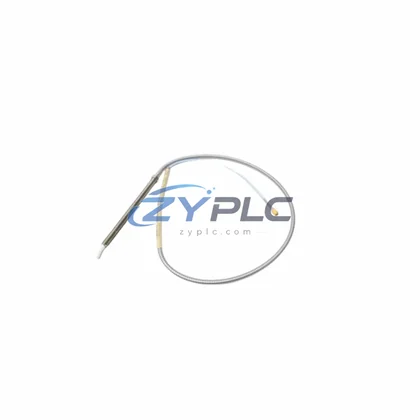
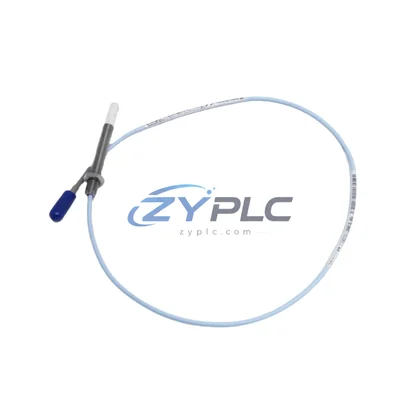
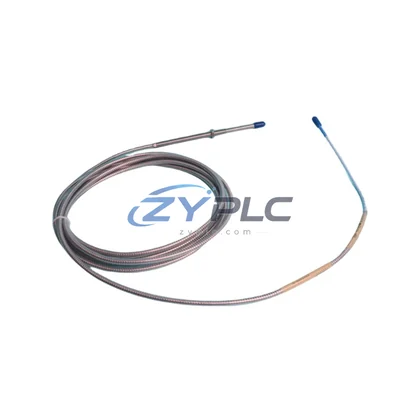
The Bently Nevada 330102-00-20-10-01-05 is an 8mm eddy-current proximity probe engineered for seamless integration within the Bently Nevada 3300 XL continuous vibration monitoring architecture. Rather than functioning as a standalone sensing element, this probe is designed as a foundational node in a layered machine protection system — one that spans the control layer, I/O layer, signal conditioning layer, communication layer, and supervisory interface layer. Its role is to deliver high-fidelity shaft displacement and radial vibration data to the broader system, enabling real-time condition assessment, predictive maintenance decisions, and automated protective shutdown logic across rotating machinery assets.
In a complete 3300 XL monitoring architecture, the 330102-00-20-10-01-05 probe operates in conjunction with the 330130 extension cable and the 330180 proximitor/oscillator, forming a calibrated three-component measurement chain. The proximitor converts the probe’s electromagnetic signal into a DC voltage proportional to the gap distance between the probe tip and the rotating shaft. This conditioned signal is then routed to the 3300/16 or 3300/20 monitor modules housed within the 3300 XL rack system, where it is processed against user-defined alert and danger setpoints. The rack’s backplane architecture ensures deterministic signal routing and eliminates the latency risks associated with distributed wiring schemes.
System consistency is further reinforced when the 330102-00-20-10-01-05 is deployed alongside complementary I/O and communication modules within the same 3300 XL chassis. The 3300/55 keyphasor module, for instance, provides the rotational reference signal required for phase-referenced vibration analysis, while the 3300/46M or 3300/46 relay output modules translate monitor logic into hardwired trip signals for turbine control systems, compressor anti-surge controllers, or DCS interlock circuits. This tight architectural coupling between the proximity probe chain and the relay output layer is what enables sub-100ms protective response times — a critical requirement in high-speed turbomachinery applications.
At the network and supervisory layer, the 3300 XL system interfaces with plant-level SCADA and DCS platforms via the 3500/92 communication gateway or through direct Modbus TCP/IP or OPC-DA connections supported by System 1 Evolution software. The 330102-00-20-10-01-05 probe’s measurement data, once processed by the monitor rack, becomes available as a structured data stream to historians, alarm management systems, and condition monitoring dashboards. This system integration capability ensures that vibration data from individual probe channels is not siloed but is instead correlated with process variables such as bearing temperature, lube oil pressure, and load conditions — enabling holistic machine health assessment.
From a redundancy design perspective, the 330102-00-20-10-01-05 supports dual-probe configurations on critical machinery where API 670 standards mandate redundant measurement channels. In such architectures, two probes are mounted 90 degrees apart on the same bearing journal, feeding independent monitor channels within the same rack. This arrangement provides both X-Y orbital analysis capability and measurement redundancy, ensuring that a single probe failure does not result in a loss of protective monitoring. The 3300 XL rack’s channel-to-channel isolation further prevents a fault in one measurement chain from propagating to adjacent channels.
For engineering teams managing large rotating equipment fleets — including steam turbines, gas compressors, centrifugal pumps, and gearboxes — the availability of the 330102-00-20-10-01-05 as a stocked, tested, and immediately shippable component is a significant operational advantage. Unplanned probe replacements during maintenance windows or following protective shutdowns require rapid component availability. ZYPLC maintains verified inventory of this probe along with associated extension cables, proximitors, and monitor modules, supporting same-day dispatch for urgent maintenance requirements.
All 330102-00-20-10-01-05 units supplied by ZYPLC are covered by a warranty terms confirmed during quotation and have undergone functional verification prior to shipment, including gap voltage output testing and cable continuity checks. This ensures that replacement probes perform identically to factory-new units within the calibrated measurement chain, eliminating the risk of system recalibration errors following field replacement.
Product Specification Table
| Parameter |
Specification |
| System Role |
Eddy-Current Proximity Probe — Vibration & Position Sensing Node |
| Compatible System |
Bently Nevada 3300 XL Continuous Monitoring Architecture |
| Probe Diameter |
8mm |
| Measurement Range |
0 to 2.0 mm (0 to 80 mil) linear range |
| Sensitivity |
7.87 V/mm (200 mV/mil) nominal |
| Operating Temperature |
-35°C to +121°C (probe tip) |
| Cable Length |
Requires 330130 extension cable (field-specified length) |
| Proximitor Compatibility |
330180 Proximitor/Oscillator |
| Monitor Compatibility |
3300/16, 3300/20 Radial Vibration Monitor Modules |
| Communication Integration |
Via 3300 XL rack backplane → 3500/92 gateway → Modbus TCP/IP, OPC-DA |
| Installation Environment |
Bearing housing, seal housing, thrust collar proximity — industrial rotating machinery |
| Compliance |
API 670 (Machinery Protection Systems) |
| Warranty |
warranty terms confirmed during quotation (ZYPLC verified, functional tested prior to shipment) |
System Compatibility Notes
The 330102-00-20-10-01-05 proximity probe achieves its full protective value only when integrated within a coordinated system architecture. The following components represent the typical system context in which this probe operates:
The 330130 extension cable connects the probe body to the proximitor, maintaining signal integrity over distances up to 9 meters. The 330180 proximitor/oscillator provides the oscillator drive signal and converts the probe’s impedance change into a calibrated DC voltage output. The 3300/16 radial vibration monitor processes the proximitor output, applies alert and danger setpoint logic, and drives relay outputs for protective action. The 3300/55 keyphasor module provides the once-per-revolution reference signal required for phase analysis and balancing operations. The 3300/46M relay output module translates monitor danger states into hardwired trip signals for turbine trip solenoids or compressor shutdown circuits.
At the rack level, the 3300 XL power supply module provides regulated DC power to all monitor modules and proximitors within the chassis, with optional redundant power supply configurations for critical applications. The 3500/92 communication gateway aggregates data from multiple 3300 XL racks and presents it to plant DCS or SCADA systems via Modbus TCP/IP. For human-machine interface, System 1 Evolution software provides real-time waveform display, trend analysis, and alarm management, consuming data from the communication gateway. In applications requiring thrust position monitoring alongside radial vibration, the 330500 thrust position probe and associated 3300/25 thrust monitor module complement the radial probe channels within the same rack architecture.
Industrial Application Notes
The 330102-00-20-10-01-05 proximity probe is deployed across a wide range of industrial sectors where rotating machinery protection is critical to process continuity and personnel safety.
In power generation applications, this probe monitors shaft vibration on steam turbine-generator sets, providing the primary vibration signal for both operational monitoring and automatic protective shutdown. In oil and gas processing, it is installed on centrifugal compressors and gas turbines in pipeline compression stations and LNG facilities, where API 670 compliance is a contractual requirement. In petrochemical and refinery environments, the probe monitors critical pumps, agitators, and expanders, with its output integrated into the plant’s safety instrumented system (SIS) via hardwired relay contacts from the 3300 XL monitor rack.
In steel and metallurgical plants, the probe is used on rolling mill drive trains and large induction motor-driven compressors, where early detection of bearing wear or rotor imbalance prevents costly unplanned outages. In water and wastewater treatment facilities, it monitors large vertical turbine pumps and blower units. In mining and mineral processing, the probe is applied to SAG mill drives, slurry pumps, and conveyor drive gearboxes. Across all these applications, the probe’s role within the 3300 XL architecture remains consistent: to provide a reliable, calibrated displacement signal that feeds the system’s protective and monitoring logic layers.
Product Compatibility FAQ
Q1: Is the 330102-00-20-10-01-05 directly compatible with the 3500 Series monitoring system, or is it exclusive to the 3300 XL architecture?
The 330102-00-20-10-01-05 is calibrated for use with the 3300 XL system and its associated 330180 proximitor. While Bently Nevada proximity probes share a common eddy-current operating principle across the 3300 and 3500 product families, each probe series is calibrated to a specific proximitor. Using this probe with 3500 Series proximitors (such as the 3500/42M monitor) without recalibration may result in measurement errors. Always verify the probe-proximitor-monitor calibration chain before substitution across system families.
Q2: What is the recommended installation procedure to ensure accurate gap voltage calibration after replacing the 330102-00-20-10-01-05 in a live system?
After mechanical installation, the probe gap should be set to the midpoint of the linear range (approximately 1.0 mm / 40 mil), verified using a calibrated gap tool or by measuring the proximitor output voltage (target: approximately −10 VDC at midpoint for a 330180 proximitor). The monitor module’s OK setpoints should be verified against the new probe’s output range. A full channel functional test, including alert and danger setpoint verification, should be performed before returning the machine to service. ZYPLC’s pre-shipment functional testing ensures the probe’s output characteristics are within factory specification, reducing on-site calibration time.
Q3: Does the warranty terms confirmed during quotation cover field failures caused by environmental contamination or mechanical contact damage?
The warranty terms confirmed during quotation provided by ZYPLC covers manufacturing defects and functional failures under normal operating conditions as specified in the product datasheet. Failures resulting from improper installation, mechanical contact between the probe tip and the rotating shaft, chemical contamination beyond the probe’s rated environmental specification, or operation outside the specified temperature range are not covered under warranty. ZYPLC recommends reviewing the installation environment against the probe’s IP rating and temperature specifications prior to installation. For applications with aggressive chemical exposure or extreme temperatures, consult ZYPLC’s technical team for guidance on probe selection and protective measures.