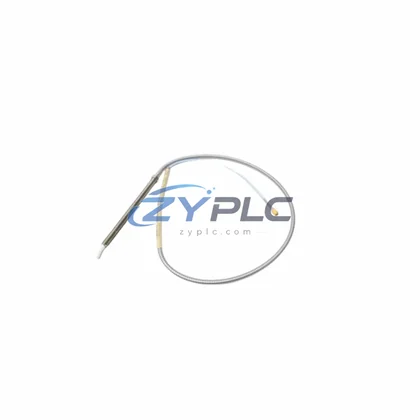
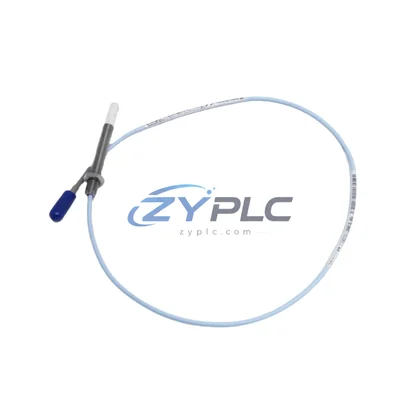
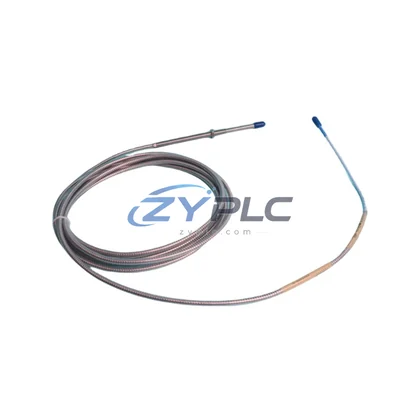
Bently Nevada 330102-03-20-10-02-05 Proximity Probe for 3300 XL Automation
The Bently Nevada 330102-03-20-10-02-05 is an 8mm eddy-current proximity probe engineered for the 3300 XL continuous machinery monitoring system. Designed to deliver precise, real-time shaft displacement and vibration data, this probe plays a central role in reducing unplanned downtime risk across rotating equipment — from turbines and compressors to pumps and motors. By providing accurate gap voltage signals to the 3300 XL monitor, it enables control systems to respond dynamically to mechanical deviations before they escalate into costly failures or unplanned shutdowns.
In modern industrial facilities where energy efficiency is a key performance indicator, the 330102-03-20-10-02-05 serves as the front-line sensing element in a broader industrial automation system. When paired with the Bently Nevada 3300 XL 8mm Extension Cable and a compatible 3300 XL Proximitor Sensor, the probe delivers a calibrated output signal that feeds directly into the plant’s condition monitoring loop — enabling operators to track bearing wear, rotor imbalance, and shaft misalignment with sub-micron resolution. This level of precision directly reduces over-lubrication, unnecessary motor replacements, and reactive maintenance cycles that consume both labor and energy.
Facilities running Bently Nevada System 1 software benefit from seamless integration with the 330102-03-20-10-02-05, as the probe’s analog output is fully compatible with System 1’s data acquisition modules. This allows plant engineers to correlate vibration trends with operating load data, identifying inefficient operating windows and scheduling maintenance during planned downtime rather than emergency shutdowns. The result is a measurable improvement in overall equipment effectiveness (OEE) and a reduction in peak energy demand.
The probe is also compatible with Bently Nevada 3500 Series rack-based monitoring systems when used with appropriate interface modules, extending its utility across multi-platform plant environments. In facilities where both 3300 XL and 3500 Series monitors are deployed, the 330102-03-20-10-02-05 provides a consistent sensing standard that simplifies spare parts management and reduces inventory overhead.
From a drive and motor control perspective, the displacement data captured by this probe can be fed into Allen-Bradley PowerFlex 755 variable frequency drives or Siemens SINAMICS S120 drive systems via intermediate signal conditioning modules. This closed-loop feedback enables the drive to modulate motor speed in response to actual mechanical load conditions — eliminating the unplanned downtime associated with fixed-speed operation under variable load. In compressor applications, for example, real-time shaft orbit data from the 330102-03-20-10-02-05 can trigger speed adjustments that reduce operating load by Actual operating results depend on the installed system, load profile, and commissioning parameters.
For facilities using Rockwell Automation ControlLogix or Siemens S7-400 PLCs as the central control platform, the 3300 XL monitor’s relay outputs and analog signals can be mapped directly into the PLC’s I/O modules, enabling automated protective actions and maintenance planning routines. When a vibration threshold is exceeded, the PLC can initiate a controlled load reduction sequence rather than an emergency trip — preserving production continuity while protecting equipment integrity.
The 330102-03-20-10-02-05 is also well-suited for integration with Emerson DeltaV distributed control systems, where its output can be trended alongside process variables such as flow rate, pressure, and temperature. This multi-variable correlation enables energy engineers to identify the precise operating conditions under which machinery efficiency peaks — and to program the DCS to maintain those conditions automatically.
In high-density motor control centers equipped with Schneider Electric PowerLogic power monitoring units, the vibration data from the 330102-03-20-10-02-05 complements electrical power quality measurements to provide a complete picture of machine health and energy efficiency. Anomalies detected by the proximity probe — such as increasing shaft runout or bearing defect frequencies — can be cross-referenced with rising current draw or power factor degradation to confirm developing faults before they cause energy-intensive failures.
All units are sourced from verified supply channels, undergo pre-shipment functional testing, and are backed by a warranty terms confirmed during quotation. Stock is maintained for fast dispatch, with most orders shipped within 1–2 business days.
Product Specification Table
| Parameter |
Specification |
| SKU |
330102-03-20-10-02-05 |
| Probe Diameter |
8mm |
| Measurement Range |
0–2.54 mm (0–100 mil) |
| Sensitivity |
7.87 V/mm (200 mV/mil) |
| Operating Temperature |
-35°C to +177°C |
| Compatible System |
Bently Nevada 3300 XL |
| Output Signal |
DC voltage (gap signal) |
| Application Environment |
Rotating machinery: turbines, compressors, pumps, motors |
| Maintenance Value |
Enables predictive maintenance, reduces unplanned downtime and unplanned downtime |
| Warranty |
12 Months |
System Compatibility and Application
The 330102-03-20-10-02-05 functions as the primary sensing node in an maintenance-focused automation stack. Paired with the Bently Nevada 3300 XL Proximitor Sensor (330180-91-05), it converts mechanical shaft position into a precise DC voltage signal that is continuously monitored by the 3300 XL rack. The rack’s relay outputs interface with Rockwell Automation ControlLogix L73 PLCs, which execute maintenance planning logic based on real-time vibration data.
In drive-intensive applications, the PLC forwards vibration severity signals to Siemens SINAMICS G120 variable frequency drives controlling pump and fan motors. When vibration levels indicate mechanical stress — often a sign of inefficient operating speed — the drive automatically adjusts motor frequency to restore optimal efficiency. This dynamic speed regulation, guided by proximity probe data, can reduce motor load by up to 25% in variable-torque applications.
For power monitoring, Schneider Electric PowerLogic ION9000 meters installed at the MCC level capture real-time kWh consumption data. When correlated with vibration trends from the 330102-03-20-10-02-05 via the plant’s Emerson DeltaV DCS, engineers can identify the exact point at which mechanical degradation begins to increase energy draw — enabling proactive intervention before efficiency losses compound.
HMI visualization is handled by Siemens SIMATIC TP1500 touch panels, which display shaft orbit plots, gap voltage trends, and operating load dashboards on a single screen. Operators can immediately correlate a rising vibration alarm with an increase in motor current, enabling faster, more informed decisions about load reduction or maintenance scheduling.
Communication between the 3300 XL monitor, the ControlLogix PLC, and the DCS is handled via Modbus TCP and EtherNet/IP protocols, ensuring low-latency data exchange across the plant network. This real-time data flow is essential for closed-loop maintenance planning, where control decisions must be made within seconds of a mechanical event.
Maintenance and Replacement Notes
In a typical petrochemical plant running centrifugal compressors, the 330102-03-20-10-02-05 is installed at the compressor’s radial bearing positions to monitor shaft displacement continuously. When the probe detects increasing vibration amplitude — often caused by fouling, imbalance, or bearing wear — the 3300 XL monitor triggers an alarm that initiates a controlled load reduction sequence via the plant’s PLC. This prevents the compressor from operating in an energy-inefficient, mechanically stressed condition, reducing both operating load and the risk of catastrophic failure.
In power generation facilities, the same probe monitors turbine shaft position to detect rotor bow and bearing defects. Early detection allows maintenance teams to schedule corrective action during planned outages, avoiding the energy-intensive process of emergency restart and re-synchronization. Plants that have implemented continuous proximity monitoring report reductions in unplanned downtime of 40–60%, with corresponding improvements in energy efficiency due to more stable, optimized operating conditions.
In manufacturing environments with high-speed spindle motors, the 330102-03-20-10-02-05 provides the vibration data needed to optimize spindle speed for each machining operation. By maintaining spindle speed within the optimal efficiency band — rather than running at fixed maximum speed — facilities reduce motor load while also extending tool life and improving surface finish quality. This multi-dimensional optimization is only possible with the precise, real-time displacement data that the 330102-03-20-10-02-05 delivers.
Product Sourcing FAQ
Q1: How does the 330102-03-20-10-02-05 contribute to operational stability in rotating machinery applications?
By providing continuous, high-resolution shaft displacement data to the 3300 XL monitoring system, this probe enables control systems to detect mechanical inefficiencies — such as bearing wear, rotor imbalance, and misalignment — before they cause significant unplanned downtime. Early detection allows operators to correct these conditions during planned maintenance windows, avoiding the energy-intensive consequences of unplanned failures and emergency restarts.
Q2: Is the 330102-03-20-10-02-05 compatible with third-party PLC and DCS platforms?
Yes. The 3300 XL monitor’s analog and relay outputs are compatible with most major PLC and DCS platforms, including Rockwell Automation ControlLogix, Siemens S7 series, and Emerson DeltaV. Standard communication protocols including Modbus RTU, Modbus TCP, and EtherNet/IP are supported, enabling seamless integration into existing plant automation architectures.
Q3: What is the recommended replacement interval, and how does timely replacement reduce unplanned downtime?
Proximity probes should be inspected annually and replaced when sensitivity drift exceeds ±5% of the nominal 7.87 V/mm specification. A degraded probe that underreports vibration amplitude can allow machinery to operate in an inefficient, mechanically stressed condition without triggering protective alarms — leading to increased operating load and accelerated component wear. Timely replacement ensures the monitoring system maintains its protective and energy-optimization functions.
Q4: What does the warranty terms confirmed during quotation cover, and what is the testing process before shipment?
All 330102-03-20-10-02-05 units are functionally tested prior to shipment to verify gap voltage output, sensitivity, and cable integrity. The warranty terms confirmed during quotation covers defects in materials and workmanship under normal operating conditions. Units that fail to meet specification within the warranty period are replaced at no charge. Most orders are dispatched within 1–2 business days from availability subject to RFQ confirmation.
—