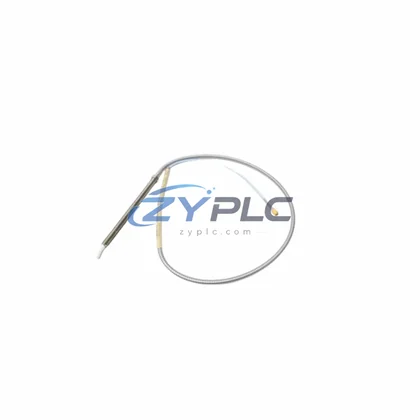
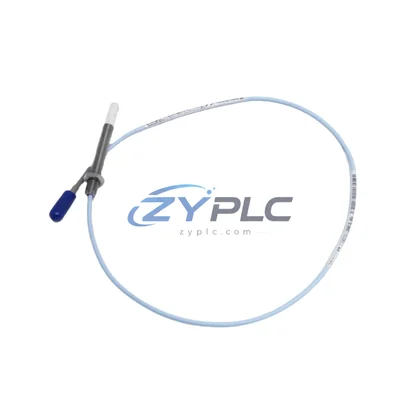
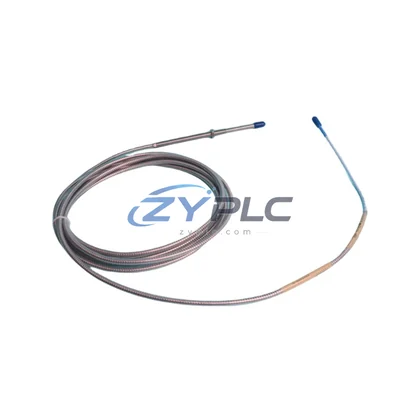
Bently Nevada 330102-40-70-10-02-CN Proximity Probe for 3300 XL: Precision Vibration Sensing Across the Full Control System Stack
In modern industrial automation and machinery protection environments, no sensor operates in isolation. The Bently Nevada 330102-40-70-10-02-CN proximity probe is engineered not merely as a standalone vibration transducer, but as a precision front-end element within the broader 3300 XL Machinery Protection System architecture. When integrated correctly across the control layer, I/O layer, network layer, power layer, HMI layer, and actuator layer, this probe delivers the signal fidelity and system consistency that rotating machinery protection demands in continuous process environments.
Whether deployed in turbine monitoring, compressor protection, pump shaft surveillance, or gearbox diagnostics, the 330102-40-70-10-02-CN functions as the primary sensing node that feeds real-time displacement data into the 3300 XL rack-based monitoring infrastructure. Its eddy-current operating principle ensures non-contact, high-resolution shaft position and vibration measurement, making it indispensable in applications where mechanical contact is not permissible and where signal continuity is mission-critical.
Product Specification Table
| Parameter |
Specification |
| Part Number / SKU |
330102-40-70-10-02-CN |
| Brand |
Bently Nevada |
| Series |
3300 XL Machinery Protection System |
| Product Type |
Eddy-Current Proximity Probe |
| System Role |
Primary vibration and position sensing node (I/O layer) |
| Operating Principle |
Eddy-current (non-contact) |
| Probe Cable Length |
40 inches (approx. 1.0 m) |
| Extension Cable Length |
70 inches (approx. 1.8 m) |
| Tip Diameter |
10 mm |
| Output Signal |
-18 VDC nominal (standard Bently Nevada output) |
| Supply Voltage |
-24 VDC (via 3300 XL driver/conditioner) |
| Sensitivity |
200 mV/mil (7.87 V/mm) |
| Linear Range |
Approx. 0–80 mil (0–2 mm) |
| Target Material |
AISI 4140 steel (standard); other materials require calibration |
| Communication / Integration |
Analog signal to 3300 XL monitor cards; compatible with System 1 software via rack I/O |
| Installation Environment |
Industrial; suitable for high-vibration, high-temperature rotating machinery environments |
| Connector Type |
02 series (standard Bently Nevada connector) |
| Country of Origin |
United States |
| Warranty |
warranty terms confirmed during quotation (ZYPLC) |
| system integration |
Fully supported within 3300 XL rack architecture |
System Compatibility Notes
The 330102-40-70-10-02-CN proximity probe is designed to operate as part of a tightly coordinated measurement chain within the Bently Nevada 3300 XL rack-based protection platform. Its signal output is conditioned by the 3300 XL proximitor/driver module (such as the 330180 series extension cable driver), which converts the raw eddy-current signal into a calibrated voltage proportional to shaft displacement. This conditioned signal is then routed to the 3300/16 or 3300/20 monitor cards housed within the 3300 XL rack, where alarm thresholds, danger setpoints, and trip logic are configured and enforced.
At the rack level, the 3300 XL rack power supply module (such as the 3300/05 or 3300/10 power supply) provides the regulated -24 VDC required by the probe-driver circuit, ensuring stable excitation voltage across all channels simultaneously. In redundant protection architectures, dual power supply configurations are employed to eliminate single points of failure at the power layer, maintaining continuous probe excitation even during supply module maintenance or failure events.
Network and data integration is achieved through the 3300 XL communication gateway or the Bently Nevada 3500/92 communication gateway (where cross-platform integration is required), which bridges the rack-level monitor data to plant-wide DCS or SCADA systems via Modbus TCP, OPC-DA, or OPC-UA protocols. This enables the vibration data captured by the 330102-40-70-10-02-CN to be consumed by higher-level control systems such as Emerson DeltaV or Honeywell Experion PKS for integrated process and machinery protection decision-making.
At the HMI layer, Bently Nevada System 1 software serves as the primary visualization and diagnostic platform, displaying real-time shaft centerline plots, orbit plots, trend data, and alarm histories sourced directly from the 3300 XL monitor cards connected to this probe. Operators and reliability engineers can configure alert and danger thresholds, review historical vibration signatures, and correlate machinery behavior with process variables — all within a unified software environment that supports system integration across the full protection system.
For installations requiring terminal block connectivity and field wiring management, 3300 XL I/O terminal modules and associated junction boxes provide organized, labeled termination points that simplify commissioning, reduce wiring errors, and accelerate fault isolation during maintenance cycles. The standardized connector format of the 330102-40-70-10-02-CN (02-series) ensures direct compatibility with these terminal assemblies without requiring field modification.
Industrial Application Notes
The 330102-40-70-10-02-CN proximity probe finds application across a wide spectrum of heavy industrial sectors where rotating machinery protection is non-negotiable:
Oil, Gas & Petrochemical: In upstream and downstream facilities, this probe monitors shaft vibration and radial displacement on centrifugal compressors, gas turbines, and booster pumps. Its non-contact measurement principle eliminates wear-related drift, ensuring that alarm setpoints remain accurate over extended operational periods between planned shutdowns. Integration with the 3300 XL rack allows automatic trip signals to be issued to the associated anti-surge control system or emergency shutdown (ESD) system when vibration exceeds danger thresholds.
Power Generation: Steam turbine and gas turbine generator sets in thermal and combined-cycle power plants rely on proximity probe arrays to monitor shaft eccentricity, differential expansion, and radial vibration simultaneously. The 330102-40-70-10-02-CN, deployed in multi-probe configurations around turbine bearing journals, feeds the 3300 XL monitor with the redundant measurement data required for turbine protection relay logic and automatic runback sequences.
Water & Wastewater Treatment: Large vertical turbine pumps and horizontal split-case pumps in municipal water infrastructure benefit from proximity probe monitoring to detect bearing wear, rotor imbalance, and misalignment before catastrophic failure. The 3300 XL system’s ability to integrate with SCADA platforms via Modbus enables remote monitoring of pump health from central control rooms, reducing the need for frequent manual inspections in hazardous or confined-space environments.
Mining & Minerals Processing: Ball mills, SAG mills, and large conveyor drive systems in mining operations subject rotating components to extreme mechanical loads and vibration environments. The robust construction of the 330102-40-70-10-02-CN, combined with the 3300 XL rack’s configurable alarm logic, supports condition-based maintenance programs that extend equipment life and reduce unplanned downtime in remote or high-cost operational environments.
Metallurgy & Steel Production: Rolling mill drives, continuous caster pinch rolls, and blast furnace blower trains require precise shaft monitoring to maintain product quality and prevent catastrophic mechanical failures. The 330102-40-70-10-02-CN’s high-resolution output and compatibility with the 3300 XL architecture make it suitable for these demanding applications, where vibration data must be correlated with process speed and load signals for meaningful condition assessment.
Product Compatibility FAQ
Q1: Is the 330102-40-70-10-02-CN directly compatible with existing 3300 XL racks without additional interface hardware?
Yes. The 330102-40-70-10-02-CN is a native 3300 XL series component and connects directly to the 3300 XL proximitor/driver module using the standard 02-series connector. No additional signal conditioning or interface hardware is required within the 3300 XL rack environment. The probe’s output voltage range and sensitivity (200 mV/mil) are factory-matched to the 3300 XL monitor card input specifications, ensuring plug-and-play compatibility within the existing rack architecture.
Q2: Can this probe be used in a redundant monitoring architecture, and how does it support system availability?
Absolutely. In critical machinery protection applications, redundant probe pairs are commonly installed at each bearing measurement plane — one probe serving as the primary measurement channel and a second as the backup or cross-check channel. The 3300 XL monitor cards support dual-channel input configurations that can be programmed for voting logic (e.g., 1-of-2 or 2-of-2 trip logic), ensuring that a single probe failure does not result in a spurious trip or, conversely, a missed danger condition. This redundant architecture, combined with the warranty terms confirmed during quotation coverage provided by ZYPLC, supports long-term system availability and minimizes the risk of unplanned production interruptions.
Q3: What is the recommended commissioning procedure for the 330102-40-70-10-02-CN, and what long-term maintenance considerations apply?
Commissioning begins with verifying the probe gap voltage at the target shaft surface using a calibrated DC voltmeter, confirming that the output falls within the linear range of the probe-driver system (typically -10 to -18 VDC for a properly gapped installation). The gap should be set per the Bently Nevada installation drawing for the specific shaft diameter and target material. Long-term maintenance involves periodic gap verification during planned outages, inspection of probe tip and cable for mechanical damage, and confirmation that extension cable connections remain secure and free of moisture ingress. ZYPLC’s warranty terms confirmed during quotation covers manufacturing defects and provides replacement support, while our technical team offers system integration guidance to ensure the probe continues to perform within the 3300 XL system architecture throughout its service life.