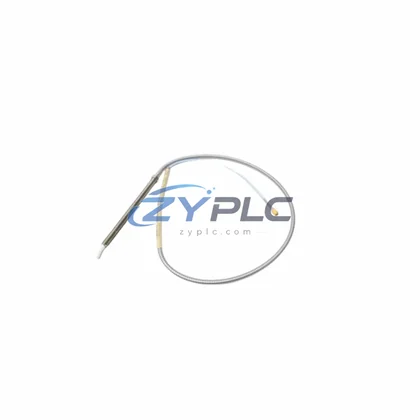
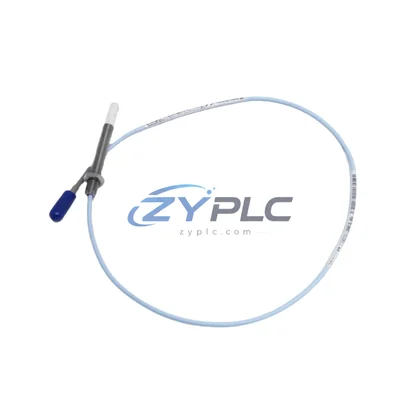
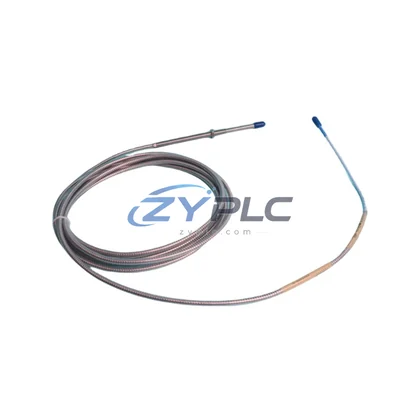
Bently Nevada 330103-00-20-10-02-00 3300 XL Proximity Probe: Precision Vibration Control for Energy-Efficient Production Lines
In modern industrial facilities where equipment uptime and replacement lead time directly affect production continuity, the Bently Nevada 330103-00-20-10-02-00 proximity probe delivers the real-time shaft vibration data that drives smarter, leaner machine operation. As a core component of the Bently Nevada 3300 XL Series continuous vibration monitoring system, this probe enables plant engineers to move beyond reactive maintenance and toward a fully predictive, maintenance-focused operational model.
The 330103-00-20-10-02-00 is a non-contact eddy-current proximity probe designed for continuous measurement of radial shaft vibration, axial position, and differential expansion on rotating machinery including steam turbines, gas turbines, compressors, and large pumps. By providing accurate, low-latency displacement signals to the monitoring system, it allows control engineers to detect abnormal vibration patterns before they escalate into catastrophic failures — failures that not only destroy equipment but also waste enormous amounts of energy through unplanned shutdowns, restart cycles, and emergency repairs.
Product Specification Table
| Parameter |
Specification / Value |
| SKU / Part Number |
330103-00-20-10-02-00 |
| Series |
Bently Nevada 3300 XL |
| Probe Type |
Eddy-Current Non-Contact Proximity Probe |
| Measurement Range |
0–200 mil (0–5.08 mm) typical |
| Operating Temperature |
-35°C to +177°C |
| Power Consumption |
Low-draw passive sensor; powered via 3300 XL driver/extension cable system |
| Compatible Systems |
Bently Nevada 3300 XL Monitor, 3500 Series Rack, System 1 Software |
| Application Environment |
Turbomachinery, Compressors, Pumps, Generators, Industrial Rotating Equipment |
| Maintenance Value |
Enables predictive maintenance, reduces unplanned downtime unplanned downtime, optimizes motor load balancing |
| Output Signal |
-24 VDC bias voltage; linear voltage output proportional to gap distance |
| Warranty |
warranty terms confirmed during quotation — Tested and verified before shipment |
System Compatibility and Application
The 330103-00-20-10-02-00 proximity probe does not operate in isolation — it is the sensing foundation of a layered industrial automation system. In a typical turbomachinery protection and optimization loop, the probe connects via a matched Bently Nevada 330130 extension cable to a Bently Nevada 330180 proximitor/oscillator, which conditions the raw eddy-current signal into a clean DC voltage that the monitoring rack can interpret. This signal is then fed into a Bently Nevada 3500/42M Proximitor/Seismic Monitor module housed in the 3500 Series rack, where it is processed against user-defined alert and danger setpoints.
At the supervisory level, Bently Nevada System 1 software aggregates vibration, position, and process data from multiple measurement points across the machine train. System 1 correlates shaft vibration trends with process variables such as load, speed, and temperature — enabling engineers to identify inefficient operating zones where the machine consumes disproportionate energy relative to its mechanical output. When vibration levels creep upward due to bearing wear, rotor imbalance, or misalignment, System 1 flags the trend early, allowing maintenance to be scheduled during planned downtime rather than forcing an emergency stop that disrupts the entire production line.
For facilities running variable-speed drives, the proximity probe data integrates naturally with ABB ACS880 series drives or Siemens SINAMICS S120 drive systems through the plant DCS or PLC layer. When vibration data indicates resonance at a specific speed range, the drive controller can automatically adjust motor speed to avoid the resonance band — reducing mechanical stress, lowering operating load, and extending bearing life simultaneously. This closed-loop interaction between the 330103-00-20-10-02-00 measurement signal and the drive control layer is one of the most effective maintenance planning strategies available in rotating equipment management.
On the control execution side, a Rockwell Automation ControlLogix L7x PLC or Siemens S7-400 PLC can receive processed vibration status outputs from the 3500 Series rack via hardwired relay contacts or digital communication over Modbus TCP or PROFIBUS DP. This allows the PLC to execute protective actions — such as load shedding, speed reduction, or controlled shutdown — based on real-time vibration severity, preventing energy-wasting runaway conditions. For facilities using Emerson DeltaV DCS, the 3500 rack integrates directly via the FOUNDATION Fieldbus or OPC-DA interface, enabling seamless data flow into the plant-wide maintenance planning dashboard.
Power quality monitoring at the motor control center level, using devices such as the Schneider Electric PowerLogic ION7650 power meter, complements the mechanical vibration data from the 330103-00-20-10-02-00 by correlating electrical power draw anomalies with mechanical vibration events. A sudden increase in motor current draw accompanied by rising vibration amplitude is a reliable early indicator of developing mechanical faults — and catching this combination early can prevent the energy-intensive process of a full machine overhaul.
Maintenance and Replacement Notes
Consider a petrochemical facility operating a multi-stage centrifugal compressor train. Without continuous vibration monitoring, the compressor runs at a fixed operating point regardless of actual mechanical condition. As bearing clearances increase due to wear, the rotor begins to operate with higher vibration amplitudes, which increases aerodynamic losses, raises seal leakage, and forces the compressor to consume more power to maintain the same discharge pressure. The energy penalty is invisible to operators relying solely on process instrumentation.
With the Bently Nevada 330103-00-20-10-02-00 proximity probes installed at each bearing journal, the 3300 XL monitoring system continuously tracks shaft centerline position and vibration amplitude. As bearing wear progresses, the shaft centerline plot drifts from its baseline position — a clear, quantifiable signal that the bearing is degrading. Maintenance can be scheduled precisely, the bearing replaced during a planned outage, and the compressor returned to its optimal operating efficiency. The operational stability from restoring the machine to its design clearances can be substantial — often 3–8% reduction in specific power consumption for centrifugal compressors.
In power generation applications, proximity probes on the turbine shaft provide the axial position data needed to protect against thrust bearing failure — one of the most catastrophic and energy-disruptive failure modes in steam turbine operation. By monitoring axial displacement in real time, the 330103-00-20-10-02-00 enables the turbine control system to detect thrust bearing degradation and initiate a controlled load reduction before a destructive rub occurs. This proactive response preserves the turbine’s thermal efficiency and avoids the enormous energy cost of an unplanned outage and subsequent restart.
For production line rhythm optimization, the vibration data from proximity probes feeds into overall equipment effectiveness (OEE) calculations. Machines operating with elevated vibration typically run at reduced speed to avoid damage — supporting earlier maintenance decisions and reducing unplanned downtime risk. By maintaining machines in optimal mechanical condition through continuous monitoring with the 330103-00-20-10-02-00, facilities can operate at design speed with confidence, maximizing production throughput per operating-hour consumed.
Every unit shipped from our inventory undergoes pre-shipment functional testing to verify signal output linearity, gap sensitivity, and connector integrity. This ensures that the probe performs to specification from the moment it is installed, eliminating the unplanned downtime and production disruption associated with infant-failure replacements.
Product Sourcing FAQ
Q1: How does the 330103-00-20-10-02-00 contribute to measurable operational stability in rotating equipment?
By providing continuous, high-resolution shaft vibration and position data, this probe enables early detection of mechanical degradation — including bearing wear, rotor imbalance, and misalignment — that causes machines to consume excess energy. Correcting these conditions before they become severe restores the machine to its design efficiency point, directly reducing specific operating load. In compressor and turbine applications, this can translate to 3–8% reductions in power draw per unit of process output.
Q2: Is the 330103-00-20-10-02-00 compatible with both the Bently Nevada 3300 XL and 3500 Series monitoring systems?
Yes. The 330103-00-20-10-02-00 is designed for use within the Bently Nevada 3300 XL probe system, which is fully compatible with the 3500 Series monitoring rack when used with the appropriate 3300 XL proximitor/oscillator and extension cable. It also integrates with Bently Nevada System 1 software for enterprise-level vibration data management and energy trend analysis.
Q3: What is the recommended replacement interval, and how does timely replacement reduce unplanned downtime?
Proximity probes do not have a fixed replacement interval under normal operating conditions, as they are non-contact sensors with no moving parts. However, probes should be replaced if calibration verification reveals sensitivity drift, physical damage to the probe tip, or connector degradation. Operating with a drifted probe produces inaccurate vibration readings, which can mask developing faults and allow machines to run in energy-inefficient degraded states without triggering protective action. Replacement with a tested, verified unit restores measurement accuracy and the full energy-optimization benefit of the monitoring system.
Q4: What does the warranty terms confirmed during quotation cover, and what is the pre-shipment testing process?
All units carry a warranty terms confirmed during quotation covering manufacturing defects and functional performance. Prior to shipment, each 330103-00-20-10-02-00 probe is tested for output voltage linearity across the measurement range, gap sensitivity at the rated frequency, and connector and cable integrity. Test records are available upon request. This testing protocol ensures that every probe delivered to your facility is ready for immediate installation and will perform to the Bently Nevada 3300 XL specification from day one, eliminating the risk of energy-wasting installation failures.