Bently Nevada 330104-08-15-10-02-05: Industrial Data Link and Smart Factory Connectivity for 3300 XL Vibration Monitoring Systems
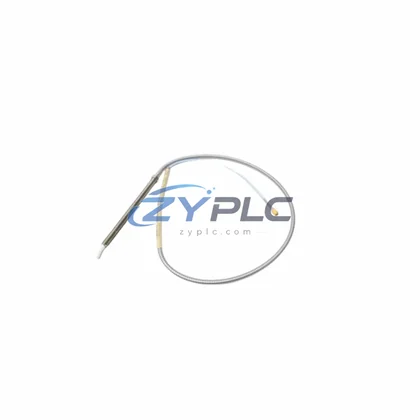
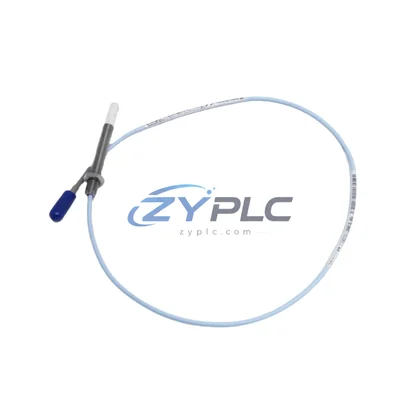
The Bently Nevada 330104-08-15-10-02-05 is a high-precision eddy-current proximity sensor engineered for continuous, real-time shaft vibration and position monitoring within the 3300 XL Series machinery protection architecture. In modern industrial facilities — spanning power generation, petrochemical processing, oil and gas compression, and rotating equipment-intensive manufacturing — the integrity of the data link between field-level sensing devices and upper-layer control and monitoring systems is paramount. This sensor serves as the foundational signal acquisition node in a layered automation chain, converting mechanical displacement into reliable analog signals that feed directly into protection monitors, SCADA platforms, and condition monitoring software.
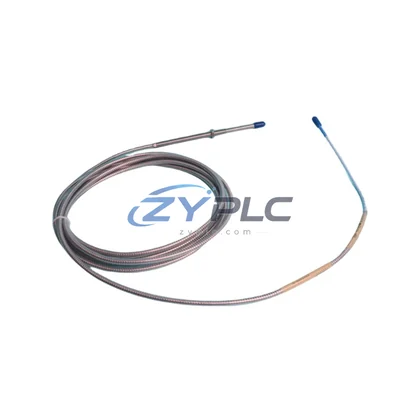
The 330104-08-15-10-02-05 operates on the proven eddy-current (non-contact) sensing principle, delivering a linear output voltage proportional to the gap between the probe tip and the conductive target surface. With an 8mm probe diameter, a 15-foot (4.57m) extension cable, and a standard -10V to -24V output range, this sensor integrates seamlessly into the Bently Nevada 3300 XL monitoring ecosystem. Its design ensures minimal signal degradation across long cable runs — a critical requirement in large turbine halls, compressor stations, and offshore platforms where field devices may be located hundreds of meters from the control room.
Compatibility & Integration Notes
| Attribute |
Specification |
| SKU / Part Number |
330104-08-15-10-02-05 |
| Brand / Manufacturer |
Bently Nevada (Baker Hughes) |
| Series |
3300 XL Proximity Transducer System |
| Sensor Type |
Eddy-Current Non-Contact Proximity Probe |
| Probe Diameter |
8 mm |
| Cable Length |
15 ft (4.57 m) Extension Cable |
| Output Signal |
Analog Voltage: -10 VDC to -24 VDC |
| Sensitivity |
200 mV/mil (7.87 V/mm) |
| Linear Range |
0 to 90 mil (0 to 2.29 mm) |
| Protocol / Interface |
Analog Signal (compatible with 3300 XL Monitors, 3500 Series Monitors) |
| Network Compatibility |
Bently Nevada 3300 XL, 3500 Machinery Protection System, System 1 Software |
| SCADA / HMI Integration |
Via 3300/3500 Monitor analog/relay outputs to DCS, SCADA, or PLC |
| Installation Environment |
Industrial: Turbines, Compressors, Pumps, Motors, Gearboxes |
| Operating Temperature |
-35°C to +85°C (probe); -40°C to +85°C (extension cable) |
| Origin |
United States |
| Warranty |
warranty terms confirmed during quotation |
Connected Automation Data Flow
In a complete rotating machinery protection architecture, the 330104-08-15-10-02-05 proximity probe is the first link in a critical data chain. The probe mounts directly adjacent to the shaft or thrust collar, continuously sensing radial vibration, axial position, or differential expansion depending on the measurement application. Its analog output travels through the matched extension cable to a Bently Nevada 3300 XL Proximitor Sensor (such as the 330180-X1-05 or 330130-040-00-00 driver), which conditions the signal and provides the calibrated voltage output to the monitoring rack.
Within the 3300 XL or 3500 Series monitoring rack, modules such as the 3500/40M Proximitor/Seismic Monitor or the 3500/42M Proximitor/Seismic Monitor receive the conditioned signal and apply alarm and danger setpoints. These monitors communicate with the plant-level control infrastructure — typically a DCS such as the Emerson DeltaV or Honeywell Experion PKS — via hardwired relay contacts or 4–20 mA analog outputs, or through the 3500 Rack Interface Module (RIM) using Modbus TCP or OPC-DA/UA protocols. This enables real-time vibration data to appear on operator HMI screens and SCADA dashboards without manual intervention.
For facilities running Bently Nevada System 1 condition monitoring software, the data path extends further: the 3500 rack feeds digitized vibration waveforms and trend data into System 1 via Ethernet, where engineers can perform spectrum analysis, orbit plots, and predictive maintenance scheduling. In parallel, edge gateways such as the GE Digital APM Connect or third-party IIoT gateways can aggregate this data alongside signals from other field devices — including Emerson AMS Device Manager nodes, Rockwell Automation ControlLogix PLCs managing auxiliary systems, and ABB ACS880 variable frequency drives controlling cooling fans and lube oil pumps — to provide a unified asset health dashboard accessible from the control room or remotely via secure VPN.
The 330104-08-15-10-02-05 is also fully compatible with redundant monitoring configurations. In critical turbine protection applications, dual-probe arrangements are standard: two probes mounted 90° apart on the same shaft journal feed independent channels of the 3500/40M monitor, ensuring that a single probe failure does not result in a loss of protection. The monitor’s voting logic and the plant DCS receive both channels, maintaining continuous protection even during maintenance activities on one channel. This redundancy architecture, combined with the sensor’s proven MTBF and the warranty terms confirmed during quotation coverage provided by ZYPLC, ensures that plant operators can maintain protection system availability targets exceeding 99.9%.
Solving Data Isolation in Industrial Sites
One of the most persistent challenges in rotating equipment monitoring is data isolation — the condition where vibration data exists at the field level but cannot be efficiently accessed, contextualized, or acted upon by operations, maintenance, and engineering teams. The 330104-08-15-10-02-05, as part of the Bently Nevada 3300 XL ecosystem, directly addresses this challenge through its role as the primary signal source in a fully integrated monitoring chain.
In older facilities, proximity probe signals were often terminated at standalone panel meters or strip chart recorders, with no connection to the plant DCS or SCADA system. Maintenance personnel had to physically visit the machinery to read vibration levels, and alarm responses were delayed by the time required to identify the affected machine and dispatch a technician. By integrating the 330104-08-15-10-02-05 into a 3500 Series rack with Modbus TCP or OPC-UA communication, plants can eliminate this data isolation entirely. Vibration trends, alarm states, and waveform data become available in real time on the operator HMI, in the SCADA historian, and in the condition monitoring software — enabling proactive maintenance decisions rather than reactive responses.
Protocol unification is another key benefit. The 3300 XL system’s analog output is a universal language understood by virtually every DCS, PLC, and SCADA platform in use today. Whether the plant control system is a Siemens SIMATIC S7-400, a Rockwell Automation ControlLogix L7x, or an ABB System 800xA, the 4–20 mA or relay outputs from the 3500 monitor can be wired directly to the controller’s analog input or digital input modules without any protocol conversion hardware. For facilities requiring higher-bandwidth data — such as full waveform capture for spectrum analysis — the 3500 RIM’s Ethernet port provides a direct path to System 1 or any OPC-UA-compatible SCADA platform, eliminating the need for intermediate gateways and reducing potential points of failure in the data chain.
Production line transparency is significantly enhanced when the 330104-08-15-10-02-05 is deployed as part of a comprehensive monitoring strategy. By combining shaft vibration data from proximity probes with process data from the DCS — such as load, speed, temperature, and flow — maintenance engineers can correlate mechanical behavior with process conditions, identifying root causes of vibration anomalies that would be invisible if the data streams remained isolated. This integrated view supports both immediate troubleshooting and long-term reliability improvement programs, reducing unplanned downtime and extending equipment service intervals.
Industrial Connectivity FAQ
Q1: Is the 330104-08-15-10-02-05 compatible with both the 3300 XL and 3500 Series monitoring systems?
Yes. The 330104-08-15-10-02-05 is a standard 3300 XL Series proximity probe and is fully compatible with all 3300 XL Proximitor Sensors and 3500 Series monitors that accept 3300 XL transducer inputs. When used with the 3500/40M or 3500/42M monitor modules, the probe’s analog output is digitized within the rack and made available for both protection functions and communication to SCADA or condition monitoring systems. Always verify the specific monitor module’s input specifications and the required Proximitor driver model to ensure a complete, calibrated system.
Q2: How does this sensor support remote diagnostics and SCADA integration?
The 330104-08-15-10-02-05 generates a continuous analog voltage signal that is processed by the 3300 XL Proximitor and then fed into the 3500 Series monitor rack. The rack communicates with plant SCADA and DCS systems via hardwired analog/relay outputs or, for digital integration, via the 3500 Rack Interface Module (RIM) using Modbus TCP or OPC-DA/UA. This enables real-time vibration data to appear on operator HMI screens, be logged in the SCADA historian, and be accessed remotely by condition monitoring engineers using Bently Nevada System 1 software — supporting predictive maintenance and remote diagnostics without requiring physical access to the machinery.
Q3: What does the warranty terms confirmed during quotation cover, and how does ZYPLC handle warranty claims?
All units of the 330104-08-15-10-02-05 supplied by ZYPLC are covered by a warranty terms confirmed during quotation against manufacturing defects and functional failures under normal operating conditions. Prior to shipment, each unit undergoes functional verification testing to confirm signal output, cable integrity, and connector condition. In the event of a warranty claim, ZYPLC’s technical team will assess the reported issue and arrange for replacement or repair as appropriate. For warranty inquiries or to initiate a claim, contact ZYPLC at plc.sales@zyplc.com or +86 19859288691.
Q4: Can the 330104-08-15-10-02-05 be used in hazardous area (Ex) installations?
The standard 330104-08-15-10-02-05 is designed for general industrial environments. For hazardous area installations requiring ATEX, IECEx, or FM certification, Bently Nevada offers specific variants of the 3300 XL proximity transducer system with appropriate Ex ratings. It is essential to verify the area classification and required certification before selecting the probe and associated Proximitor driver for hazardous area use. ZYPLC’s technical team can assist in identifying the correct certified variant for your specific installation requirements.