Bently Nevada 330194-18-25-50-00 Proximity Probe: Control System and Upstream–Downstream Coordination
In modern industrial automation, vibration monitoring is not an isolated measurement task — it is a foundational layer of the entire machine protection and condition monitoring architecture. The Bently Nevada 330194-18-25-50-00 proximity probe is engineered to serve as a precision sensing element within the 3300 Series monitoring system, delivering non-contact displacement and vibration data that flows upward through signal conditioning, processing, and ultimately into plant-wide control and safety logic. Understanding this probe’s role requires examining the full control system stack: from the physical sensing layer at the machine shaft, through the I/O and signal conditioning layer, into the monitoring and processing layer, and finally into the supervisory control and human-machine interface layer.
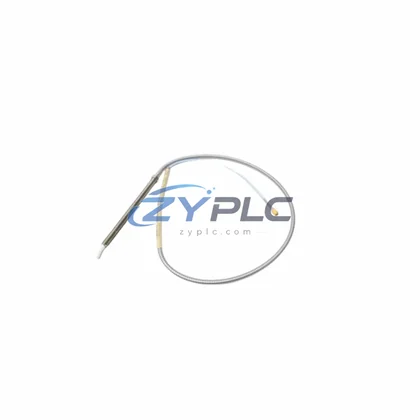
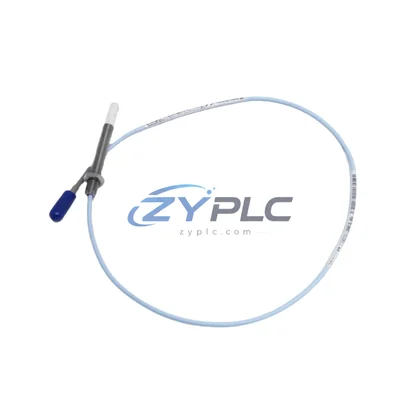
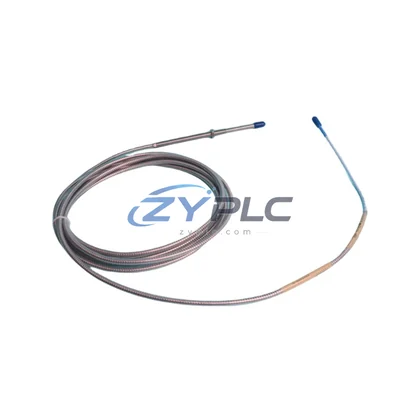
The 330194-18-25-50-00 is an 18-inch (457 mm) armored extension cable proximity probe with a 25-foot (7.62 m) integral cable and a 50-ohm driver, designed for direct integration with the Bently Nevada 3300 XL 8mm Proximity Transducer System. Its eddy-current sensing principle provides continuous, non-contact measurement of shaft radial vibration, axial position, and differential expansion — critical parameters for rotating machinery protection in turbines, compressors, pumps, and motors. The probe operates as part of a matched transducer system, and its performance is only fully realized when paired with the correct driver and monitor components within the 3300 Series architecture.
Product Specification Table
| Parameter |
Specification |
| Part Number |
330194-18-25-50-00 |
| Brand |
Bently Nevada |
| Series |
3300 XL 8mm Proximity Transducer System |
| System Role |
Non-contact eddy-current proximity sensing (radial vibration, axial position) |
| Probe Tip Diameter |
8 mm |
| Extension Cable Length |
18 inches (457 mm), armored |
| Integral Cable Length |
25 feet (7.62 m) |
| Driver Impedance |
50 ohm |
| Operating Temperature |
-35°C to +177°C (probe tip); -55°C to +105°C (cable) |
| Supply Voltage |
-24 VDC (nominal, via 3300 Series driver) |
| Output Signal |
-2 VDC to -18 VDC (linear range, eddy-current displacement) |
| Sensitivity |
200 mV/mil (7.87 V/mm) nominal |
| Linear Range |
80 mil (2.03 mm) nominal |
| Communication / Integration |
Analog signal to 3300 Series monitor; system integration with DCS/SCADA via monitor outputs |
| Installation Environment |
Rotating machinery bearing housings, turbine pedestals, compressor casings, pump bearing brackets |
| Certifications |
CE, ATEX (zone-dependent, per system configuration) |
| Warranty |
warranty terms confirmed during quotation (ZYPLC) |
| Origin |
USA |
System Compatibility Notes
The 330194-18-25-50-00 proximity probe does not function in isolation. Its value is realized through tight coordination with upstream and downstream components across multiple system layers. At the sensing layer, the probe is mechanically mounted in the bearing housing or proximity bracket, positioned at a precise gap from the rotating shaft. The eddy-current field generated by the probe tip responds to changes in shaft-to-probe distance, producing an analog voltage signal that is proportional to displacement.
This signal is routed through the armored extension cable to the Bently Nevada 3300 XL Driver (such as the 330180-X1-05 or 330130-040-00-00 series drivers), which conditions and buffers the raw probe output before passing it to the monitor. The driver is a critical intermediary — it provides the regulated -24 VDC excitation to the probe and converts the probe’s impedance-modulated signal into a calibrated voltage output. Without the correct matched driver, the probe’s sensitivity and linearity cannot be guaranteed.
From the driver, the conditioned signal enters the Bently Nevada 3300/16 Monitor or 3500/42M Proximitor Monitor, where it is processed against configurable alarm and danger setpoints. These monitors are typically rack-mounted in the 3500 Rack or 3300 Rack chassis, which provides the backplane power distribution and communication infrastructure. The rack accepts multiple monitor cards, allowing a single chassis to handle radial vibration, axial position, speed, and temperature channels simultaneously — a key advantage for turbine and compressor protection systems where multiple measurement points must be monitored in real time.
At the network and integration layer, the 3500 or 3300 monitor communicates with the plant DCS or SCADA system via relay outputs, 4–20 mA analog outputs, or digital communication modules such as the 3500/92 Communication Gateway, which supports Modbus, Profibus, or OPC protocols. This system integration capability allows the vibration data from the 330194-18-25-50-00 probe to be incorporated into the plant-wide process control loop — enabling operators to correlate shaft vibration trends with process variables such as flow, pressure, and temperature in real time.
At the power layer, the 3300 and 3500 racks are typically powered by dedicated 3500/15 Power Supply modules, which provide regulated DC power to all installed monitor cards and drivers. Redundant power supply configurations are available for critical applications, ensuring that a single power supply failure does not interrupt machine protection monitoring. This redundancy is particularly important in continuous-process industries such as petrochemicals, LNG, and power generation, where unplanned shutdowns carry significant safety and financial consequences.
At the human-machine interface layer, vibration data from the 330194-18-25-50-00 probe is typically displayed on the System 1 Evolution condition monitoring software platform, which aggregates data from multiple Bently Nevada monitors and provides trend analysis, alarm management, and predictive maintenance reporting. Operators and reliability engineers can view real-time shaft orbits, trend plots, and spectrum data, enabling early detection of developing faults such as unbalance, misalignment, bearing wear, and rotor instability.
In summary, the 330194-18-25-50-00 proximity probe is the foundational sensing element in a coordinated system that includes the 3300 XL driver, 3500 or 3300 monitor, rack chassis, power supply, communication gateway, and condition monitoring software — all working together to deliver continuous, reliable machine protection and system integration with the broader plant control architecture.
Industrial Application Notes
Power Generation (Steam and Gas Turbines): In combined-cycle and simple-cycle power plants, the 330194-18-25-50-00 is deployed at the HP, IP, and LP turbine bearing positions to monitor shaft radial vibration and axial position. The probe’s armored extension cable and high-temperature rating make it suitable for the elevated ambient temperatures found in turbine pedestals. Alarm and danger setpoints are configured in the 3500/42M monitor to initiate automatic turbine trip sequences if vibration exceeds safe limits, protecting the turbine from catastrophic damage during load transients or rotor instability events.
Petrochemical and Refinery Compressor Trains: Centrifugal and reciprocating compressors in ethylene, ammonia, and hydrogen service require continuous shaft monitoring to detect surge, rotor rub, and bearing degradation. The 330194-18-25-50-00 is installed at each compressor bearing, with its output integrated into the 3500 rack system and communicated to the plant DCS via the 3500/92 gateway. This system integration allows the compressor protection system to interact with anti-surge control logic, enabling coordinated response to developing instability conditions.
Water and Wastewater Treatment: Large vertical and horizontal pump stations use proximity probes to monitor shaft runout and bearing condition in submersible and surface-mounted pumps. The 330194-18-25-50-00’s robust armored cable construction provides reliable signal transmission in wet and chemically aggressive environments, while the 3300 Series monitor provides local alarm indication and remote SCADA integration for unmanned pump station applications.
Mining and Mineral Processing: Ball mills, SAG mills, and large conveyor drive motors in mining operations are subject to high vibration and shock loads. Proximity probes installed at the main bearing positions provide early warning of bearing wear and rotor eccentricity, allowing maintenance teams to schedule bearing replacements during planned shutdowns rather than responding to unplanned failures. The warranty terms confirmed during quotation and ready stock availability from ZYPLC ensure that replacement probes can be sourced quickly to minimize production downtime.
Metallurgy and Steel Production: Rolling mill drives, continuous casters, and large induction furnace motors require reliable shaft monitoring in high-temperature, high-vibration environments. The 330194-18-25-50-00’s extended temperature rating and armored cable construction make it well-suited for these demanding applications, where probe replacement access is often limited and long service life is essential.
Product Compatibility FAQ
Q1: Is the 330194-18-25-50-00 compatible with both the 3300 and 3500 Series monitor racks?
Yes. The 330194-18-25-50-00 is part of the Bently Nevada 3300 XL 8mm Proximity Transducer System and is designed to work with the matched 3300 XL driver. The conditioned output from the driver is a standard analog voltage signal (-2 to -18 VDC) that is compatible with both 3300 Series and 3500 Series monitor inputs. When integrating into a 3500 rack, ensure that the monitor card (such as the 3500/42M) is configured for the correct sensitivity and gap voltage range to match the 330194-18-25-50-00 and its paired driver. Always verify the complete transducer system (probe + extension cable + driver) is matched as a calibrated set for accurate measurements.
Q2: What installation and commissioning considerations apply when replacing a proximity probe in an operating machine protection system?
When replacing the 330194-18-25-50-00 in an existing installation, the new probe must be installed at the same gap distance as the original (typically 50 mil / 1.27 mm for 8mm probes on steel targets) and the gap voltage verified at the driver output before returning the monitor to service. The monitor’s OK relay and alarm setpoints should be checked after replacement to confirm correct operation. If the replacement probe is part of a redundant measurement pair, the system can remain in service during replacement with the redundant channel active. ZYPLC’s warranty terms confirmed during quotation covers the replacement probe from the date of shipment, and our technical team can provide commissioning support documentation upon request.
Q3: How does the 330194-18-25-50-00 support long-term maintenance planning and spare parts inventory strategy?
Proximity probes are wear items in rotating machinery protection systems — cable fatigue, connector corrosion, and mechanical damage from maintenance activities are the primary failure modes. A best-practice spare parts strategy for facilities operating 3300 or 3500 Series systems includes maintaining at least one matched probe-driver set per critical machine train in local inventory. ZYPLC stocks the 330194-18-25-50-00 and related 3300 Series components, with a warranty terms confirmed during quotation on all supplied parts. Our inventory management support helps reliability engineers plan probe replacement intervals based on operating hours and environmental conditions, reducing the risk of unplanned shutdowns due to probe failure.