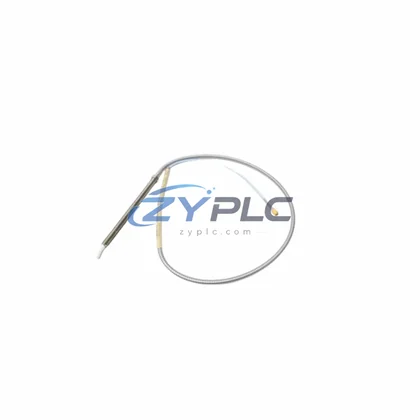
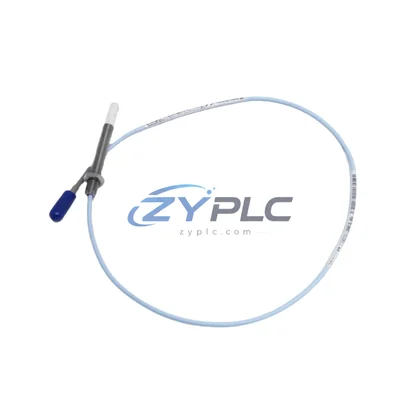
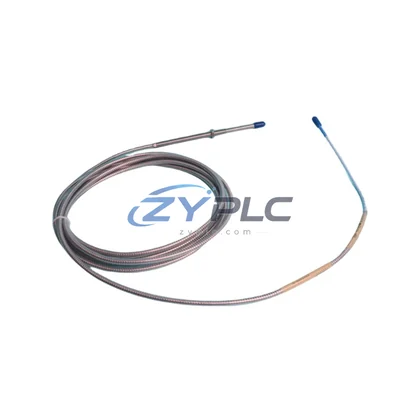
Bently Nevada 330400-01-CN Vibration Sensor: Compatibility and Replacement Notes
The Bently Nevada 330400-01-CN is a high-precision acceleration transducer engineered for seamless integration within the 3300 Series machinery protection architecture. Rather than functioning as a standalone measurement device, this sensor occupies a critical node in a layered industrial control system — bridging the physical process layer with the signal conditioning, monitoring, and supervisory control layers above it. Understanding its role within a complete automation hierarchy is essential for engineers designing reliable, scalable, and maintainable rotating machinery protection systems.
In modern industrial facilities — spanning power generation, petrochemical processing, water treatment, mining, metallurgy, and continuous manufacturing — vibration monitoring is not an isolated function. It is a foundational element of the overall control architecture. The 330400-01-CN feeds real-time acceleration data into the 3300 Series monitoring system, where signal conditioning modules process raw transducer output into actionable engineering units. This data then propagates upward through the control hierarchy to DCS platforms, SCADA systems, and historian databases, enabling both automated protective action and long-term trend analysis.
Product Specification Table
| Parameter |
Specification |
| System Role |
Field-level acceleration transducer for rotating machinery vibration monitoring |
| Compatible Platform |
Bently Nevada 3300 Series Machinery Protection System |
| Measurement Type |
Acceleration (vibration) |
| Output Signal |
Analog voltage signal compatible with 3300 Series monitor inputs |
| Mounting |
Stud or adhesive mount on bearing housings, gearboxes, or machine casings |
| Operating Environment |
Industrial — suitable for high-vibration, high-temperature plant environments |
| Communication Layer |
Hardwired analog signal; integrates with 3300 Series signal conditioning modules |
| Installation |
Direct field wiring to 3300 Series I/O terminal blocks |
| system integration |
Full system integration with 3300 Series monitors, TDI modules, and DCS gateways |
| Warranty |
warranty terms confirmed during quotation from date of shipment |
| Origin |
United States |
| Availability |
RFQ Available — fast global shipping |
System Compatibility Notes
The 330400-01-CN does not operate in isolation. Its value is fully realized when it is deployed as part of a coherent, multi-layer control system architecture. In a typical 3300 Series installation, the transducer is mounted directly on the machine casing or bearing housing and wired back to a 3300/16 Dual Voting Logic Monitor or a 3300/20 Four-Channel Monitor, which provides the signal conditioning, alarm setpoint management, and relay output functions necessary for automated machine protection.
At the rack level, the 3300 Series backplane — typically housed in a 3300/05 Rack — provides the structural and electrical backbone for all monitoring modules. Power is supplied through a dedicated 3300/15 Power Supply Module, which ensures stable, regulated DC power to all cards in the rack. Redundant power supply configurations are strongly recommended for critical machinery protection applications, and the 3300 Series architecture natively supports this through dual power supply slots.
For communication with higher-level control systems, the 3300/46 System 1 Interface Module or a compatible Modbus TCP/IP gateway bridges the 3300 Series rack to the plant DCS or SCADA network. This enables real-time vibration data from the 330400-01-CN to be displayed on operator workstations, logged in process historians, and used as inputs to advanced process control algorithms. In facilities using GE System 1 Evolution software, the transducer data is automatically contextualized within the machine train model, enabling spectrum analysis, trend monitoring, and predictive maintenance workflows.
At the field wiring level, 3300 Series terminal blocks and junction boxes provide organized, labeled termination points for transducer cables, reducing installation errors and simplifying future maintenance. For applications requiring intrinsic safety in hazardous areas, appropriate Zener barriers or galvanic isolators are installed between the transducer and the monitor input, maintaining signal integrity while meeting IECEx or ATEX requirements.
In multi-machine installations — such as compressor trains, turbine-generator sets, or pump arrays — multiple 330400-01-CN transducers are deployed across the machine train, with each channel mapped to a dedicated monitor input. The 3300/25 Keyphasor Module provides the once-per-revolution reference signal required for phase-referenced vibration analysis, enabling engineers to distinguish between imbalance, misalignment, looseness, and other fault modes. This level of diagnostic resolution is only achievable when the transducer, monitor, and Keyphasor module are properly coordinated within the same rack architecture.
Industrial Application Notes
The 330400-01-CN finds application across a broad spectrum of process industries where rotating machinery reliability is critical to production continuity and safety.
In power generation facilities — including gas turbines, steam turbines, and hydro generators — the transducer monitors bearing housing vibration to detect early-stage mechanical degradation before it progresses to catastrophic failure. The 3300 Series system provides the relay outputs necessary to initiate automatic machine shutdown when vibration levels exceed danger setpoints, protecting both equipment and personnel.
In petrochemical and refinery applications, the 330400-01-CN is deployed on centrifugal compressors, pumps, and agitators operating in continuous service. The harsh chemical environment and high process temperatures demand a transducer with robust construction and stable sensitivity over time — characteristics that define the 3300 Series sensor family. Integration with the plant DCS via Modbus or OPC-UA ensures that vibration alarms are visible to control room operators alongside process variables such as pressure, temperature, and flow.
In water and wastewater treatment plants, the transducer monitors large vertical pumps and blowers that are difficult to access for manual inspection. Remote vibration monitoring via the 3300 Series system enables condition-based maintenance scheduling, reducing unplanned downtime and extending equipment service life.
In mining and mineral processing operations, the 330400-01-CN is applied to crushers, mills, conveyors, and fans operating under high mechanical stress. The ability to detect bearing defects and structural resonances at an early stage allows maintenance teams to plan interventions during scheduled shutdowns rather than responding to emergency failures.
In packaging and discrete manufacturing lines, the transducer supports overall equipment effectiveness (OEE) improvement programs by providing continuous vibration data that feeds into predictive maintenance platforms. When integrated with MES or ERP systems via the plant historian, vibration trends can be correlated with production quality metrics, enabling root-cause analysis of quality deviations linked to mechanical condition.
Product Compatibility FAQ
Q1: Is the 330400-01-CN directly compatible with all 3300 Series monitor modules, and what wiring configuration is required?
The 330400-01-CN is designed for use within the Bently Nevada 3300 Series architecture and connects to compatible 3300 Series monitor inputs via standard two- or three-wire configurations depending on the specific monitor module. Engineers should verify the input impedance and signal range requirements of the target monitor — such as the 3300/16 or 3300/20 — against the transducer’s output specification before installation. Terminal block labeling and cable shielding practices should follow the 3300 Series installation manual to minimize noise pickup in electrically noisy plant environments.
Q2: Can the 330400-01-CN be used in a redundant monitoring architecture, and how does this affect system design?
Yes. Redundant vibration monitoring architectures are achievable within the 3300 Series platform by installing dual transducers on the same measurement point and routing each to an independent monitor channel. Voting logic modules within the 3300 Series rack can be configured to require agreement between channels before initiating a shutdown relay, reducing the risk of spurious trips while maintaining protective integrity. This approach is commonly specified for critical machinery in API 670-compliant installations. Our warranty terms confirmed during quotation covers the transducer under normal operating conditions within a properly designed redundant architecture.
Q3: What is the recommended approach for long-term maintenance and spare parts management for the 330400-01-CN in a multi-machine installation?
For facilities operating multiple machines protected by 3300 Series systems, maintaining a small buffer stock of 330400-01-CN transducers is strongly recommended to minimize mean time to repair (MTTR) following a sensor failure. All units supplied by ZYPLC are covered by a warranty terms confirmed during quotation and are sourced to ensure full compatibility with existing 3300 Series installations. Periodic calibration verification — comparing transducer output against a reference accelerometer — should be incorporated into the plant’s preventive maintenance schedule. Replacement transducers should be installed using the same mounting torque and cable routing as the original to ensure measurement consistency across the machine train.