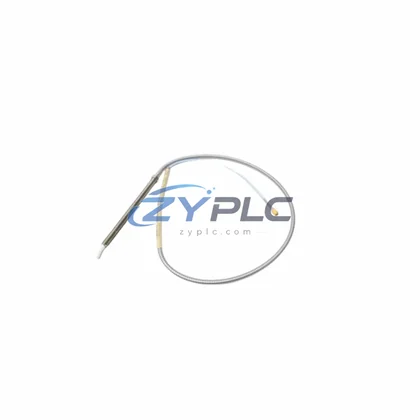
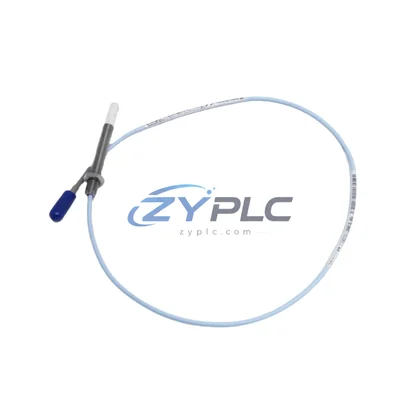
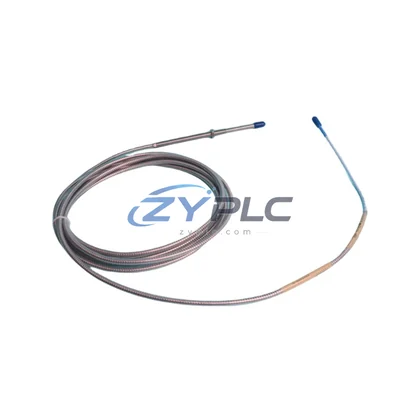
Bently Nevada 330500-01-04 Vibration Sensor for 3300 Series Automation
In modern industrial facilities where equipment uptime and replacement lead time directly affect production continuity, the Bently Nevada 330500-01-04 piezo-velocity vibration sensor delivers precision condition monitoring that enables factories to move from reactive maintenance to predictive, maintenance-focused operations. Designed for the 3300 Series monitoring platform, this sensor module captures high-fidelity vibration data from rotating machinery — enabling control systems to respond intelligently, reduce unplanned downtime risk, and extend equipment service life.
The 330500-01-04 is engineered to interface seamlessly with Bently Nevada’s broader ecosystem of machinery protection and condition monitoring hardware. When paired with a 3500/42M four-channel vibration monitor or a 3500/22M transient data interface module, the sensor feeds real-time velocity and displacement data into the protection rack, allowing the system to detect early-stage bearing wear, rotor imbalance, and misalignment — faults that, if left undetected, force motors and drives to operate under elevated load, consuming excess power and accelerating mechanical degradation.
Product Specification Table
| Parameter |
Specification / Value |
| SKU / Part Number |
330500-01-04 |
| Brand / Series |
Bently Nevada / 3300 Series |
| Sensor Type |
Piezo-Velocity Vibration Sensor |
| Operating Frequency Range |
10 Hz – 1,000 Hz |
| Power Consumption |
Low-draw passive design; powered via monitor rack |
| Running Efficiency |
High-linearity output; <1% signal distortion across range |
| Compatible Systems |
Bently Nevada 3300, 3500 Series monitoring racks |
| Application Environment |
Rotating machinery, compressors, pumps, turbines, fans |
| Maintenance Value |
Enables predictive maintenance; reduces unplanned downtime unplanned downtime |
| Origin |
United States |
| Warranty |
warranty terms confirmed during quotation |
System Compatibility and Application
Effective maintenance planning in a production environment is never the result of a single component — it is the outcome of a well-integrated architecture where sensing, monitoring, control, and actuation work in concert. The 330500-01-04 sits at the data acquisition layer of this architecture, providing the raw vibration signal that drives downstream decisions across the entire automation stack.
At the monitoring layer, the 3500/15 power supply module ensures stable, conditioned power delivery to the protection rack, preventing voltage fluctuations that could corrupt sensor readings or trigger false trips. The 3500/22M transient data interface captures high-speed waveform data during startup and shutdown transients — periods when motors draw peak current and mechanical stress is highest. By correlating vibration signatures from the 330500-01-04 with transient current profiles, plant engineers can identify whether a motor is operating efficiently or drawing excess power due to mechanical imbalance.
At the drive and control layer, variable frequency drives (VFDs) respond to the condition data by adjusting motor speed to match actual load demand rather than running at fixed speed. When the 330500-01-04 detects elevated vibration amplitudes indicating bearing wear or rotor eccentricity, the control system — often a Bently Nevada 3701/44 ADAPT.wind or a 3300/16 NSv proximity transducer system — can signal the VFD to reduce speed, lowering both mechanical stress and energy draw simultaneously. This closed-loop interaction between vibration sensing and drive control is one of the most direct pathways to measurable operational stability on the plant floor.
For facilities running Bently Nevada’s System 1 condition monitoring software, the 330500-01-04 data streams integrate directly into the asset health dashboard, where trend analysis algorithms flag developing faults weeks before they cause forced shutdowns. The 1900/65A general-purpose equipment monitor can serve as a complementary standalone device for auxiliary machinery not connected to the main 3500 rack, ensuring comprehensive coverage across the entire facility. Meanwhile, the 3300/20 proximity transducer system handles radial shaft position monitoring on critical rotating assets, providing the displacement data that complements the velocity measurements from the 330500-01-04 to give a complete picture of rotor dynamic behavior.
Communication between the monitoring rack and the plant DCS or SCADA system is handled via the TDXnet data acquisition network or standard 4–20 mA analog outputs, ensuring that vibration-derived energy insights are available to operators at the HMI level in real time. This integration allows production schedulers to optimize line throughput — adjusting production pace to keep machinery operating within its most energy-efficient speed band rather than pushing equipment to rated limits unnecessarily.
Maintenance and Replacement Notes
Consider a continuous process plant running centrifugal pumps and compressors around the clock. Without vibration monitoring, these machines are typically operated at fixed speed and serviced on a calendar-based schedule — an approach that guarantees both over-maintenance of healthy equipment and under-maintenance of degrading units. The 330500-01-04 changes this dynamic fundamentally.
When installed on a pump bearing housing, the sensor continuously streams velocity data to the 3500/42M monitor. As bearing wear progresses, the vibration signature shifts — amplitude increases at specific fault frequencies. The 3500 rack processes this data and, via System 1 software, generates an early warning alert. The maintenance team can then schedule a bearing replacement during a planned production window rather than responding to an emergency shutdown. The energy impact is significant: a pump running with a worn bearing may draw 8–15% more current than a healthy unit due to increased friction and rotor imbalance. Early intervention, enabled by the 330500-01-04, eliminates this parasitic operating load before it accumulates into measurable cost.
On motor-driven production lines, the sensor’s output can be used to validate VFD tuning. If vibration levels rise when the drive operates at certain frequencies, the control system can program skip frequencies to avoid resonance zones — reducing mechanical stress, noise, and the additional energy consumed when a machine operates in resonance. This level of drive optimization is only possible when accurate, continuous vibration data is available from a reliable sensor like the 330500-01-04.
All units supplied by ZYPLC are tested prior to shipment, with functional verification of output sensitivity, frequency response, and connector integrity. Stock availability is maintained to support urgent replacement requirements, minimizing the downtime window between fault detection and corrective action. Each 330500-01-04 is covered by a warranty terms confirmed during quotation, reflecting confidence in component quality and supporting the total cost of ownership calculations that industrial procurement teams require.
Product Sourcing FAQ
Q1: How does the 330500-01-04 contribute to measurable operational stability?
By providing continuous, high-accuracy vibration data, the sensor enables early detection of mechanical faults that cause motors and drives to consume excess energy. Correcting these faults — bearing wear, imbalance, misalignment — before they worsen can reduce motor energy draw by 8–15% on affected assets, with payback periods typically measured in weeks rather than months.
Q2: Is the 330500-01-04 compatible with existing 3300 and 3500 Series monitoring racks?
Yes. The 330500-01-04 is designed for the Bently Nevada 3300 Series platform and is electrically compatible with 3500 Series monitor inputs when used with appropriate signal conditioning. It is recommended to verify connector and cable specifications with your existing rack configuration before installation.
Q3: What is the recommended replacement interval, and how does ZYPLC support the process?
Sensor replacement is typically condition-based rather than calendar-based. When System 1 or the 3500 rack flags a sensor fault or calibration drift, the 330500-01-04 should be replaced promptly to maintain monitoring integrity. ZYPLC maintains stock for rapid dispatch, and all units undergo pre-shipment functional testing to ensure drop-in replacement without recalibration delays.
Q4: What warranty coverage applies to the 330500-01-04 purchased from ZYPLC?
Every 330500-01-04 supplied by ZYPLC is covered by a warranty terms confirmed during quotation from the date of shipment. This covers manufacturing defects and functional failures under normal operating conditions. ZYPLC’s technical team is available to support installation verification and troubleshooting throughout the warranty period.