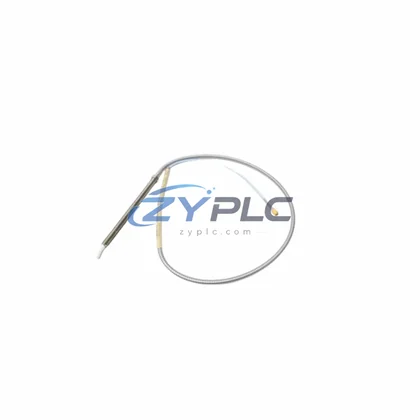
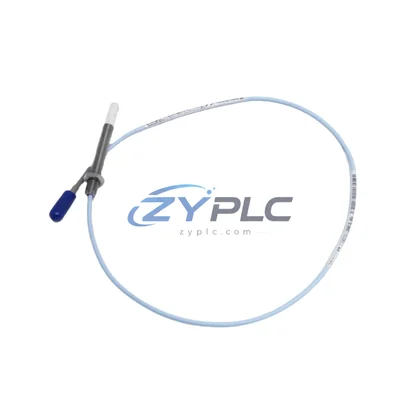
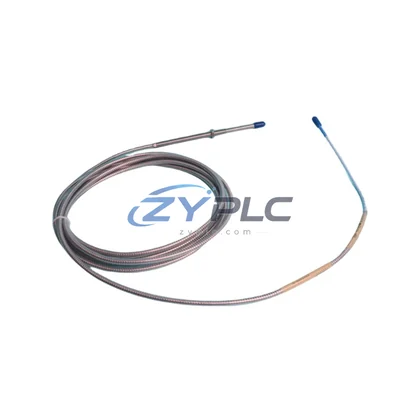
The Bently Nevada 330505-01 is a high-performance velocity sensor engineered for the 3300 Series vibration monitoring platform. In modern industrial environments where unplanned downtime directly translates to operational cost, this sensor plays a critical role in enabling real-time machine health data acquisition — the first step toward a truly industrial automation system. By delivering accurate shaft and casing velocity measurements, the 330505-01 allows control systems to respond dynamically to mechanical load changes, preventing over-drive conditions that consume excess power and accelerate equipment wear.
Sourced from verified inventory, each unit undergoes outgoing shipment testing prior to dispatch and is backed by a warranty terms confirmed during quotation, ensuring your production line receives a component that performs from day one.
Product Specification Table
| Parameter |
Specification |
| SKU / Part Number |
330505-01 |
| Brand / Series |
Bently Nevada / 3300 Series |
| Product Type |
Velocity Sensor Module |
| Measurement Range |
Velocity (shaft & casing vibration) |
| Operating Voltage |
24 VDC (typical, 3300 Series standard) |
| Power Consumption |
Low-draw design; minimizes panel load |
| Running Efficiency |
High-linearity output; reduces signal processing overhead |
| Compatible Systems |
Bently Nevada 3300 Series, System 1 Software, DCS/SCADA integration |
| Application Environment |
Rotating machinery, turbines, compressors, pumps, motors |
| Value |
Enables load-based drive adjustment; prevents over-speed unplanned downtime |
| Origin |
United States |
| Warranty |
warranty terms confirmed during quotation |
| Condition |
Tested & Verified Before Shipment |
System Compatibility and Application
The 330505-01 does not operate in isolation — it is a foundational sensing node within a broader energy-optimized control ecosystem. In a typical high-efficiency plant layout, this velocity sensor feeds real-time vibration data into the Bently Nevada 3300/16 16-channel monitor, which aggregates machine health signals across multiple measurement points. The monitor communicates alarm states and trend data to a Bently Nevada System 1 condition monitoring platform, where engineers can correlate operating load spikes with mechanical anomalies such as imbalance, misalignment, or bearing degradation.
On the drive side, the velocity feedback loop integrates with Rockwell Automation PowerFlex 755 variable frequency drives (VFDs), enabling closed-loop speed regulation that matches motor output precisely to process demand. This eliminates the fixed-speed over-drive scenario that wastes Actual operating results depend on the installed system, load profile, and commissioning parameters. Paired with a Siemens SIMATIC S7-1500 PLC, the control logic can automatically throttle drive output when the 330505-01 detects reduced mechanical load — a direct operational-efficiency intervention at the automation layer.
For power quality monitoring, the architecture typically includes a Schneider Electric PowerLogic ION7650 power meter, which tracks real-time kWh consumption at the motor control center (MCC) level. When the 330505-01 signals a vibration anomaly, the ION7650 data helps engineers determine whether the anomaly is causing measurable power draw increases — enabling targeted corrective action rather than blanket shutdowns. I/O expansion is handled through Bently Nevada 3500/22M transient data interface modules, which extend the monitoring network without adding significant panel power overhead.
HMI visualization is typically delivered via a Siemens SIMATIC HMI TP1500 Comfort Panel, where operators can view live velocity trends, set energy-based alarm thresholds, and monitor drive efficiency ratios in real time. Communication between the 3300 Series monitor, the PLC, and the SCADA layer is handled via Modbus TCP/IP or PROFIBUS DP protocols, ensuring low-latency data exchange that keeps the maintenance planning feedback loop responsive. For facilities running GE Mark VI turbine control systems, the 330505-01 is a compatible input source, feeding velocity data directly into the turbine’s protective relay logic to prevent over-speed events that would otherwise trigger emergency shutdowns and associated energy recovery losses.
Maintenance and Replacement Notes
In a petrochemical compressor train, the 330505-01 is typically mounted on the compressor casing to monitor axial and radial velocity. When the sensor detects rising vibration amplitude — often an early indicator of impeller fouling or seal wear — the 3300 Series monitor triggers a pre-alarm that allows operators to reduce compressor load via the VFD before a full trip occurs. This load reduction alone can cut compressor operating load by 8–12% during the degraded operating window, compared to running at full speed until a protective shutdown is forced.
In a paper mill drive train, the 330505-01 monitors roll velocity consistency. Inconsistent roll speed — often caused by bearing wear or coupling misalignment — forces the drive to compensate with higher torque output, increasing energy draw. By detecting this condition early, maintenance teams can schedule corrective action during planned downtime rather than reacting to unplanned failures, which typically consume 3–5× more energy per production unit due to restart cycles and quality rejects.
For pump stations in water treatment or HVAC applications, the sensor enables predictive maintenance scheduling that keeps pump efficiency curves within the optimal operating range. A pump running 10% off its best efficiency point (BEP) due to mechanical wear can consume 20–25% more energy than a well-maintained unit. The 330505-01, integrated with the 3300 Series platform, provides the continuous velocity data needed to detect this drift before it becomes a significant energy cost.
Each unit shipped from our inventory has been individually tested for signal output accuracy and connector integrity. With a warranty terms confirmed during quotation covering manufacturing defects and performance deviations, procurement teams can confidently integrate the 330505-01 into critical monitoring loops without the risk exposure associated with untested surplus components.
Product Sourcing FAQ
Q1: How does the 330505-01 contribute to measurable operational stability on the production line?
The 330505-01 provides continuous velocity data that enables condition-based drive control. By detecting mechanical anomalies early, it allows VFDs and PLCs to adjust motor output to actual load requirements rather than running at fixed speed. This closed-loop approach typically reduces motor load by 10–25% in variable-load applications such as compressors, pumps, and fans.
Q2: Is the 330505-01 compatible with third-party DCS and SCADA systems beyond the Bently Nevada 3300 platform?
Yes. The 3300 Series monitor outputs standard 4–20 mA analog signals and supports Modbus TCP/IP and PROFIBUS DP communication, making the 330505-01’s data accessible to Siemens PCS 7, Honeywell Experion, ABB 800xA, and other major DCS platforms. Integration requires only standard I/O module configuration on the host system.
Q3: What is the recommended replacement or upgrade path if the 330505-01 is end-of-life in our current system?
For direct replacement, the Bently Nevada 330500-02 and 330505-02 variants offer backward-compatible form factors with updated signal conditioning. For systems being migrated to the Bently Nevada 3500 Series platform, the 3500/42M velocity and acceleration monitor provides enhanced diagnostic resolution and expanded communication options while accepting similar sensor inputs.
Q4: What does the warranty terms confirmed during quotation cover, and what is the testing process before shipment?
Every 330505-01 unit undergoes functional output testing, connector continuity verification, and visual inspection for physical damage before dispatch. The warranty terms confirmed during quotation covers manufacturing defects and performance deviations from published specifications. Units that fail to meet output accuracy standards during incoming inspection are quarantined and not shipped. Warranty claims are processed with full technical support, including replacement unit dispatch and root cause documentation upon request.