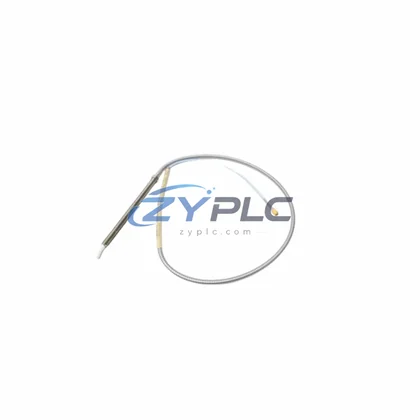
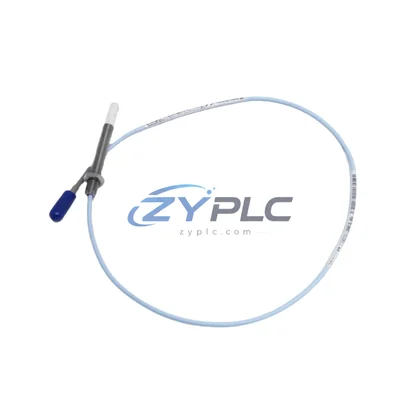
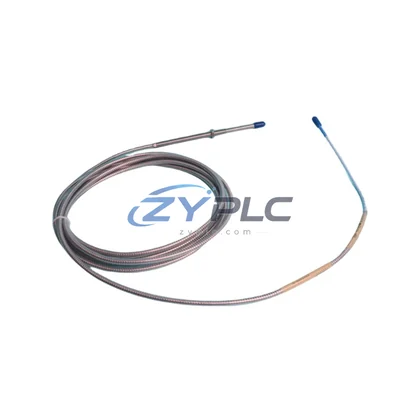
Bently Nevada 330854-080-24-CN Proximity Sensor for 3300 Series Automation
The Bently Nevada 330854-080-24-CN is a high-precision eddy-current proximity sensor engineered for continuous, non-contact measurement of shaft displacement, vibration, and position within the 3300 Series machinery protection system. In modern industrial facilities where energy efficiency and equipment uptime are inseparable goals, this sensor plays a foundational role in closing the loop between real-time machine health data and actionable control decisions. By delivering accurate, low-latency signals to the 3300 XL 8-mm Proximity Transducer System, it enables plant engineers to detect abnormal rotor behavior before it escalates into unplanned downtime or energy-wasting mechanical degradation.
Designed for demanding rotating machinery environments — including steam turbines, compressors, pumps, and gearboxes — the 330854-080-24-CN operates with a 24 VDC supply and provides a linear output signal that integrates directly with the 3300/16 Monitor or the 3500 Series Machinery Protection System. When paired with the 3300 XL Extension Cable and a compatible 3300 XL Proximitor Sensor, the complete measurement chain delivers sub-micron resolution, ensuring that even minor shifts in shaft centerline position are captured and logged for trend analysis. This level of measurement fidelity is what separates predictive maintenance from reactive repair — and it directly translates into reduced energy consumption by keeping rotating equipment operating within its optimal efficiency band.
Product Specification Table
| Parameter |
Specification / Value |
| SKU / Part Number |
330854-080-24-CN |
| Brand / Series |
Bently Nevada / 3300 Series |
| Sensor Type |
Eddy-Current Proximity Transducer |
| Supply Voltage |
24 VDC (nominal) |
| Measurement Range |
0–2.0 mm (80 mil linear range) |
| Output Signal |
–24 VDC proportional analog |
| Operating Temperature |
–35°C to +121°C |
| Compatible Systems |
3300 XL, 3300/16 Monitor, 3500 Series MPS |
| Application Environment |
Rotating machinery: turbines, compressors, pumps, gearboxes |
| Maintenance Value |
Prevents efficiency loss from shaft misalignment and bearing wear |
| Condition Monitoring Role |
Radial vibration, axial position, differential expansion |
| Warranty |
warranty terms confirmed during quotation — tested and verified before shipment |
System Compatibility and Application
The 330854-080-24-CN does not operate in isolation — it is the sensing front-end of a tightly integrated industrial automation system. In a typical high-efficiency plant configuration, the sensor feeds displacement data into the 3300/16 Monitor, which processes the signal and triggers alarm or trip outputs when vibration thresholds are exceeded. This prevents motors and driven equipment from running in degraded mechanical states that consume disproportionately more electrical energy than their design point.
Upstream of the sensor, the 3500/22M Transient Data Interface captures high-speed waveform data during startup and shutdown transients — the periods when rotating machinery is most vulnerable to energy spikes and mechanical stress. By correlating proximity sensor data with speed signals from a 3500/25 keyphasor module, engineers can perform precise phase-referenced vibration analysis, identifying imbalance or misalignment conditions that silently inflate energy consumption over weeks or months.
On the control execution side, the proximity sensor’s output integrates with Bently Nevada System 1 software, which aggregates data from multiple 3300 Series sensors across a plant to build a holistic picture of machinery health. When System 1 detects a developing bearing fault or rotor rub, it can trigger a recommendation to reduce load on the affected machine — a decision that, when acted upon promptly, avoids the energy penalty of running a mechanically compromised asset at full speed.
For facilities using variable frequency drives (VFDs) to regulate motor speed, the proximity sensor data provides the feedback needed to justify speed reductions during low-demand periods. A compressor showing elevated vibration at 3,000 RPM may run more efficiently — and with lower vibration amplitude — at 2,700 RPM, a setpoint adjustment that the 3300 Series monitoring data makes defensible to operations teams. The 3500/42M Vibration Monitor further extends this capability by providing four-channel vibration monitoring with direct relay outputs that can interface with a plant’s DCS or safety instrumented system (SIS).
In multi-machine train configurations, the 330854-080-24-CN is often deployed alongside the 3300 XL 5mm Proximity Transducer System on smaller auxiliary machines, creating a unified sensor network where energy consumption, vibration, and position data are all visible from a single monitoring platform. This architecture eliminates the blind spots that allow inefficient equipment to go undetected until a catastrophic failure forces an unplanned shutdown — the most energy-wasteful event in any production facility.
Maintenance and Replacement Notes
In petrochemical and power generation facilities, the 330854-080-24-CN has demonstrated measurable impact on production line energy efficiency through its role in early fault detection. Consider a centrifugal compressor train where shaft displacement begins to increase gradually due to bearing wear. Without proximity monitoring, the compressor continues to operate at its rated speed and load, consuming full electrical power while delivering progressively less compression efficiency as internal clearances widen. The unplanned downtimed in this scenario — measured in kilowatt-hours per unit of compressed gas — increases steadily until the bearing fails catastrophically.
With the 330854-080-24-CN installed and connected to a 3300/16 Monitor, the displacement trend is visible in real time. Maintenance teams can schedule a bearing replacement during a planned outage, restoring the compressor to its design efficiency point and eliminating the energy penalty of degraded operation. In facilities with multiple compressor trains, this capability — multiplied across dozens of machines — can reduce total electrical consumption by several percentage points annually.
The sensor also contributes to production line rhythm optimization. In continuous process industries, unplanned machine trips disrupt upstream and downstream equipment, forcing restart sequences that consume surge currents and thermal energy far in excess of steady-state operation. By providing early warning of developing faults, the 330854-080-24-CN allows operators to manage machine health proactively, maintaining the steady production cadence that minimizes unplanned downtime per unit of output.
Maintenance cost reduction is another direct benefit. Proximity sensors that provide accurate, reliable data reduce the frequency of unnecessary preventive maintenance interventions — bearing replacements performed on schedule rather than on condition, for example. Each avoided unnecessary maintenance event eliminates the energy and labor cost of disassembly, inspection, and reassembly, while also reducing the risk of introducing new faults during the maintenance process itself.
All units of the 330854-080-24-CN supplied by ZYPLC are subject to pre-shipment functional testing, verifying output linearity, supply current draw, and signal integrity across the full measurement range. This testing protocol ensures that every sensor delivered to a customer site performs to specification from day one, eliminating the energy and productivity losses associated with infant-failure replacements.
Product Sourcing FAQ
Q1: How does the 330854-080-24-CN contribute to operational stability in rotating machinery applications?
By providing continuous, high-resolution shaft displacement data to the 3300 Series monitoring system, the sensor enables early detection of mechanical faults — such as bearing wear, rotor imbalance, and misalignment — that cause rotating equipment to consume more electrical energy than its design point. Addressing these faults promptly, guided by proximity sensor data, keeps machinery operating at peak efficiency and minimizes unplanned downtime.
Q2: Is the 330854-080-24-CN compatible with the 3500 Series Machinery Protection System?
Yes. The 330854-080-24-CN is fully compatible with the 3500 Series MPS when used with the appropriate extension cable and Proximitor sensor. It is also compatible with the 3300/16 Monitor and other 3300 XL system components. For integration with third-party DCS or SIS platforms, the analog output signal can be conditioned using standard signal isolators or barriers.
Q3: What is the recommended replacement interval, and how does condition-based replacement reduce costs?
Rather than replacing proximity sensors on a fixed time interval, ZYPLC recommends condition-based replacement guided by output signal trend data from the 3300 Series monitor. Sensors showing stable output linearity and consistent gap voltage readings can remain in service beyond standard replacement intervals, reducing spare parts consumption and maintenance labor costs. When replacement is required, ZYPLC maintains inventory of the 330854-080-24-CN for rapid dispatch.
Q4: What does the warranty terms confirmed during quotation cover, and what is the pre-shipment testing process?
All 330854-080-24-CN units supplied by ZYPLC carry a warranty terms confirmed during quotation covering manufacturing defects and functional performance. Prior to shipment, each unit undergoes functional verification including output linearity testing, supply voltage compliance, and signal integrity checks. Units that do not meet specification are quarantined and not shipped. This testing protocol minimizes field failures and ensures that warranty claims are rare — and when they do occur, ZYPLC provides prompt replacement support.