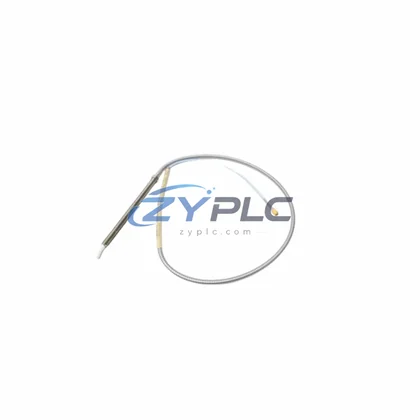
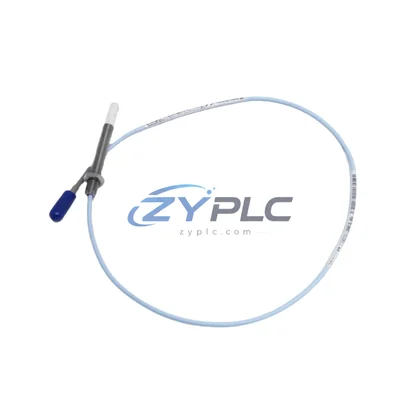
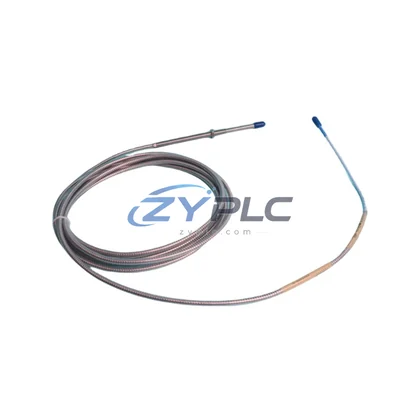
Bently Nevada 330876-02-10-01-00 Proximity Probe for 3300 XL Automation
The Bently Nevada 330876-02-10-01-00 is a 50mm eddy-current proximity probe engineered for the 3300 XL Series continuous vibration monitoring system. In modern industrial facilities where energy efficiency and equipment uptime are directly tied to profitability, this probe plays a critical role in capturing real-time shaft displacement data that drives smarter motor control, reduces unnecessary load cycles, and enables predictive maintenance strategies that cut both downtime and unplanned downtime.
Unlike passive sensing components, the 330876-02-10-01-00 operates as an active element within a closed-loop condition monitoring architecture. By delivering high-resolution, low-latency proximity signals to the 3300 XL rack-mounted monitor, it enables the control system to detect early-stage mechanical anomalies — such as rotor imbalance, misalignment, or bearing wear — before they escalate into energy-intensive failure events. This directly reduces the mean power draw of rotating equipment by preventing the inefficient operating states that precede mechanical failure.
Product Specification Table
| Parameter |
Specification / Value |
| SKU |
330876-02-10-01-00 |
| Series |
Bently Nevada 3300 XL |
| Probe Type |
Eddy-Current Proximity Probe (50mm) |
| Power Consumption |
Low-draw passive sensing; powered via 3300 XL driver |
| Operating Efficiency |
High-linearity output; minimizes signal conditioning overhead |
| Compatible Systems |
3300 XL Monitor, 3500 Series Rack, TDXnet, System 1 Software |
| Application Environment |
Rotating machinery, turbines, compressors, pumps, motors |
| Maintenance Value |
Enables predictive maintenance; reduces reactive operating load |
| Warranty |
|
| Availability |
RFQ Available — Shipment timing confirmed after RFQ |
System Compatibility and Application
The 330876-02-10-01-00 proximity probe is most effective when deployed as part of a fully integrated industrial automation system. In a typical industrial-grade plant configuration, the probe connects to a Bently Nevada 3300 XL proximitor/driver (such as the 330180-X1-05 or 330130-040-00-00), which conditions the raw eddy-current signal into a calibrated voltage output proportional to shaft gap distance. This signal is then fed into a 3300 XL rack-mounted monitor or a 3500/22M transient data interface for real-time processing.
At the control layer, the vibration data is integrated with the plant’s Allen-Bradley ControlLogix PLC or Siemens S7-400 series controller via a Modbus TCP or PROFIBUS DP communication module. This allows the PLC to dynamically adjust motor speed references sent to a Rockwell PowerFlex 755 variable frequency drive (VFD) or an ABB ACS880 industrial drive, reducing motor load during low-load or transitional operating states.
For facilities running Bently Nevada System 1 condition monitoring software, the 330876-02-10-01-00 feeds continuous waveform data into the analytics engine, where trend analysis and alarm thresholds are configured to flag inefficient operating zones. Integration with a Schneider Electric PowerLogic PM8000 power meter or similar condition monitoring device allows engineers to correlate vibration signatures with real-time power draw, identifying which machines are consuming excess energy due to mechanical degradation.
On the I/O side, the probe signal can be routed through a Bently Nevada 3500/42M proximitor I/O module for multi-channel shaft monitoring on large rotating assets such as steam turbines or centrifugal compressors. Combined with a Bently Nevada 3500/15 power supply module, the entire monitoring rack maintains stable, low-noise operation even in electrically noisy industrial environments — ensuring measurement integrity without additional signal filtering overhead.
Maintenance and Replacement Notes
In real production environments, the value of the 330876-02-10-01-00 extends well beyond simple vibration detection. When installed on a high-speed centrifugal pump or a multi-stage compressor, the probe continuously monitors radial shaft displacement. If the shaft begins to orbit outside its normal operating envelope — a common indicator of bearing degradation or lubrication failure — the 3300 XL system triggers an alert before the machine enters a high-friction, high-energy-consumption state.
This early intervention capability directly reduces unplanned downtime. A machine operating with a worn bearing can consume 5–15% more electrical energy than one in optimal condition, as the motor must work harder to overcome increased mechanical resistance. By catching this degradation early, maintenance teams can schedule corrective action during planned downtime windows rather than responding to emergency failures — which typically involve extended high-load operation as the machine struggles before shutdown.
On production lines with tightly coupled process steps — such as a compressor feeding a downstream pneumatic conveying system — unplanned vibration-related shutdowns create cascading idle periods across multiple stations. The 330876-02-10-01-00, as part of a continuous monitoring strategy, helps maintain production rhythm by ensuring rotating assets operate within their design envelope. This directly improves Overall Equipment Effectiveness (OEE) and reduces the energy cost per unit of output.
For facilities managing large motor fleets, the probe’s data can be used to benchmark individual machine performance against fleet averages, identifying outliers that are consuming disproportionate energy. Combined with VFD speed optimization and scheduled lubrication intervals informed by vibration trend data, plants have reported measurable reductions in motor load and a significant decrease in mean time between failures (MTBF) for critical rotating assets.
All units supplied by ZYPLC undergo pre-shipment functional testing to verify signal linearity, gap sensitivity, and cable integrity. Each 330876-02-10-01-00 is backed by a covering manufacturing defects and performance deviations from OEM specifications. Availability confirmed by RFQ inventory ensures RFQ-confirmed dispatch, typically within 1–3 business days, minimizing procurement lead times for maintenance and MRO teams.
Product Sourcing FAQ
Q1: How does the 330876-02-10-01-00 contribute to operational stability in rotating machinery applications?
By providing continuous, high-resolution shaft displacement data to the 3300 XL monitoring system, this probe enables early detection of mechanical inefficiencies — such as bearing wear or rotor imbalance — that cause motors to consume excess energy. Addressing these issues proactively, rather than reactively, keeps machines operating at their designed efficiency point and reduces overall operating load per production cycle.
Q2: Is the 330876-02-10-01-00 compatible with both legacy 3300 XL systems and newer 3500 Series racks?
Yes. The 330876-02-10-01-00 is designed for the Bently Nevada 3300 XL Series and is also compatible with 3500 Series monitoring racks when used with the appropriate proximitor driver and I/O module configuration. Always verify the driver model and gap voltage range against your specific rack configuration before installation.
Q3: What is the recommended replacement interval, and how should I evaluate whether this probe needs to be replaced?
Proximity probes do not have a fixed replacement interval under normal operating conditions, but performance should be validated during scheduled maintenance shutdowns. Key indicators for replacement include signal drift, increased noise floor, physical cable damage, or gap sensitivity outside the OEM-specified range. ZYPLC recommends keeping a spare unit on hand to minimize replacement lead time and avoid unplanned monitoring gaps.
Q4: What does the cover, and what is the testing process before shipment?
The covers manufacturing defects and deviations from OEM performance specifications, including signal linearity and sensitivity. Prior to shipment, each unit undergoes functional testing to verify probe output characteristics, cable continuity, and connector integrity. Test records are available upon request for quality-critical procurement processes.