Bently Nevada 330901-00-09-70-02-CN Proximity Probe for 3300: Compatibility and Replacement Notes
The Bently Nevada 330901-00-09-70-02-CN is a precision eddy-current proximity probe engineered for seamless integration within the Bently Nevada 3300 Series continuous machinery monitoring architecture. Rather than functioning as a standalone sensing element, this probe is designed as a foundational node within a layered automation hierarchy — one that spans the control layer, I/O layer, network layer, power layer, human-machine interface layer, and actuation layer. Understanding its role within this full-stack architecture is essential for engineers responsible for system consistency, redundancy design, and long-term maintenance efficiency in rotating machinery protection applications.
In a complete 3300 Series monitoring system, the 330901-00-09-70-02-CN probe operates in conjunction with the Bently Nevada 330130-080-00-00 extension cable and the 330180-X1-05 proximitor/oscillator, forming the three-component eddy-current measurement chain. This chain delivers a calibrated DC voltage output proportional to the gap between the probe tip and the observed shaft surface, providing the raw signal that feeds into the 3300/16 or 3300/20 monitor rack modules. The signal integrity of this chain directly determines the accuracy of radial vibration, axial position, and differential expansion measurements — all critical parameters in turbine, compressor, pump, and motor protection strategies.
At the control layer, the 3300 Series rack — populated with modules such as the 3300/16 Dual Voting Logic monitor or the 3300/20 Radial Vibration monitor — receives conditioned signals from the proximitor and applies configurable alarm and danger setpoints. These rack-level decisions interface upstream with distributed control systems (DCS) or safety instrumented systems (SIS) via relay outputs or 4–20 mA analog signals, ensuring that the vibration data captured by the 330901-00-09-70-02-CN probe is actionable at the plant-wide supervisory level. Integration with systems such as the Bently Nevada System 1 condition monitoring software platform further elevates this data into predictive maintenance workflows, enabling trend analysis, alarm rationalization, and fleet-wide asset health benchmarking.
At the I/O and network layers, the 3300 Series architecture supports both hardwired relay logic and communication-based integration. The 3300/55 Communication Gateway module enables Modbus RTU or Modbus TCP connectivity, allowing vibration data from the 330901-00-09-70-02-CN measurement chain to be transmitted to SCADA platforms, historian servers, or plant asset management systems without signal degradation. This network-layer transparency is particularly valuable in power generation, petrochemical, and water treatment facilities where centralized monitoring of multiple rotating assets is required across geographically distributed control rooms.
From a power layer perspective, the 3300 Series rack is designed for 24 VDC or 115/230 VAC operation, with optional redundant power supply configurations that ensure uninterrupted monitoring even during power module maintenance or failure events. The 330901-00-09-70-02-CN probe itself requires no local power — it draws its excitation signal from the proximitor, which in turn is powered through the monitor rack, simplifying field wiring and reducing potential failure points in the measurement loop.
At the human-machine interface layer, operators interact with the 3300 Series system through front-panel LED indicators on individual monitor modules, as well as through the System 1 software interface, which provides real-time waveform display, orbit plots, Bode diagrams, and cascade plots. This HMI integration ensures that the vibration data originating from the 330901-00-09-70-02-CN probe is presented in contextually meaningful formats that support both routine operator surveillance and detailed diagnostic investigations by rotating machinery specialists.
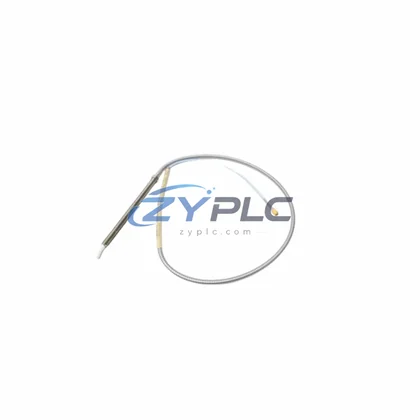
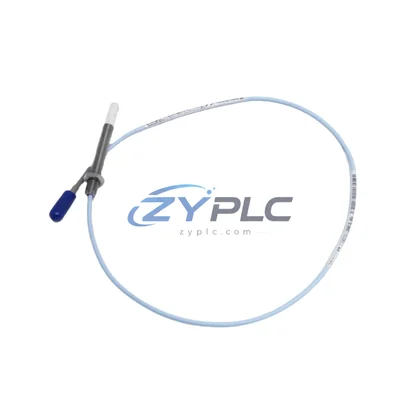
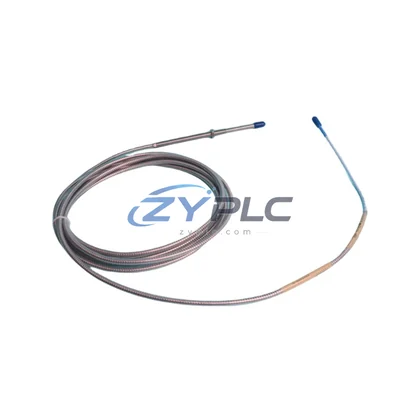
The 330901-00-09-70-02-CN probe features a 9 mm tip diameter, a 70 mm cable length to the connector, and a 02 mm radial gap range optimized for standard shaft observation in the 3300 Series calibration range. Its CN connector type ensures compatibility with the standard Bently Nevada interconnect ecosystem, eliminating the need for field-fabricated adapters that could introduce impedance mismatches or mechanical stress points at the connector interface. The probe body is constructed from stainless steel with a PTFE-jacketed cable, providing resistance to the oil mist, high-temperature, and chemically aggressive environments typical of turbomachinery bearing housings.
For system architects designing redundant monitoring configurations, the 330901-00-09-70-02-CN can be deployed in dual-probe arrangements on a single bearing journal, with each probe connected to an independent monitor channel. This XY probe configuration, combined with the 3300/16 Dual Voting Logic module, enables 2-out-of-2 or 2-out-of-3 voting logic for trip decisions, significantly reducing both spurious trips and missed danger events — a critical requirement in API 670 compliant machinery protection systems for the oil and gas industry.
ZYPLC maintains availability subject to RFQ confirmation of the 330901-00-09-70-02-CN and its associated system components, including extension cables, proximitors, and 3300 Series monitor modules, supporting rapid deployment for both new installations and emergency replacement scenarios. All units are supplied with a warranty terms confirmed during quotation and have undergone functional verification prior to shipment, ensuring that the measurement chain performs to Bently Nevada factory specifications from the moment of installation.
Product Specification Table
| Parameter |
Specification |
| System Role |
Eddy-Current Proximity Probe — Primary Sensing Element, 3300 Series Measurement Chain |
| SKU / Part Number |
330901-00-09-70-02-CN |
| Brand / Manufacturer |
Bently Nevada (Baker Hughes) |
| Compatible Series |
Bently Nevada 3300 Series Continuous Machinery Monitoring System |
| Probe Tip Diameter |
9 mm |
| Cable Length (Probe Body to Connector) |
70 mm |
| Radial Gap Range |
02 mm (standard 3300 Series calibration range) |
| Connector Type |
CN (Bently Nevada Standard Interconnect) |
| Output Signal |
DC voltage proportional to gap (via 330180-X1-05 Proximitor) |
| Electrical Interface |
Coaxial, matched impedance with Bently Nevada extension cable and proximitor |
| Operating Temperature |
-35°C to +177°C (probe body); cable rated per application environment |
| Housing Material |
Stainless Steel with PTFE-jacketed cable |
| Communication Capability |
Analog signal chain; network integration via 3300/55 Communication Gateway (Modbus RTU/TCP) |
| Installation Environment |
Turbomachinery bearing housings, compressor frames, pump bearing brackets, motor end shields |
| Compliance |
API 670 (Machinery Protection Systems) |
| Warranty |
warranty terms confirmed during quotation — all units functionally verified prior to shipment |
| Origin |
United States |
System Compatibility Notes
The 330901-00-09-70-02-CN proximity probe achieves its full diagnostic value only when integrated within a coherent, multi-layer control system architecture. The following describes the coordinated component ecosystem in which this probe operates:
The Bently Nevada 330130-080-00-00 extension cable connects the probe to the 330180-X1-05 Proximitor/Oscillator, which conditions the raw eddy-current signal into a calibrated DC voltage output. This voltage is then routed to the Bently Nevada 3300/16 Dual Voting Logic Monitor or the 3300/20 Radial Vibration Monitor, both of which are housed within the 3300 Series monitor rack — a DIN-rail or panel-mount enclosure that also accommodates the 3300/55 Communication Gateway for Modbus-based network integration.
At the supervisory level, the Bently Nevada System 1 Condition Monitoring Software aggregates data from multiple 3300 Series racks, enabling fleet-wide vibration trend analysis and predictive maintenance scheduling. For facilities requiring SIS-level integration, the relay outputs from the 3300 Series monitors interface directly with safety PLC platforms, ensuring that trip signals from the 330901-00-09-70-02-CN measurement chain are processed within the required response time for API 670 compliant machinery protection.
In XY redundant probe configurations, a second 330901-00-09-70-02-CN (or equivalent 9 mm probe from the 330900 series) is mounted 90° from the primary probe on the same bearing journal, with both probes connected to independent monitor channels within the same rack. This arrangement, combined with the 3300/16 Dual Voting Logic module, supports 2oo2 trip logic and provides full orbital motion characterization of the shaft — a capability essential for diagnosing rotor instability, oil whirl, and misalignment in high-speed turbomachinery.
Terminal blocks, cable glands, and EMC shielding components within the control cabinet complete the installation ecosystem, ensuring that the signal path from the 330901-00-09-70-02-CN probe tip to the DCS historian remains electrically clean and mechanically secure throughout the asset lifecycle.
Industrial Application Notes
The 330901-00-09-70-02-CN proximity probe is deployed across a wide range of industrial sectors where rotating machinery protection is a safety-critical requirement:
Power Generation: In gas turbine and steam turbine applications, the probe monitors shaft radial vibration and axial position at journal bearings, providing the early warning data necessary to prevent catastrophic bearing failures in baseload and peaking generation units. Integration with the plant DCS via the 3300/55 Communication Gateway enables operators to correlate vibration trends with load changes, fuel quality variations, and thermal transients.
Oil & Gas / Petrochemical: Centrifugal compressors, expanders, and high-speed pumps in refinery and gas processing facilities rely on API 670 compliant monitoring systems built around the 3300 Series architecture. The 330901-00-09-70-02-CN probe, installed at each bearing journal, provides the continuous vibration data required for both machinery protection and condition-based maintenance programs, reducing unplanned downtime in processes where a single compressor trip can result in significant production loss.
Water Treatment & Utilities: Large vertical turbine pumps and horizontal split-case pumps in water treatment and distribution facilities benefit from continuous vibration monitoring to detect impeller imbalance, cavitation, and bearing wear before they progress to failure. The 3300 Series architecture’s low maintenance requirements and long service life make it well-suited to the budget-constrained operational environment of municipal utilities.
Mining & Metallurgy: Ball mills, SAG mills, and large induced draft fans in mining and smelting operations operate in high-vibration, high-dust environments that accelerate bearing wear. The stainless steel construction and PTFE-jacketed cable of the 330901-00-09-70-02-CN provide the environmental robustness required for reliable long-term operation in these demanding conditions.
Packaging & Process Manufacturing: High-speed rotating equipment in packaging lines and continuous process manufacturing plants benefits from the 3300 Series’ ability to detect early-stage mechanical faults during scheduled production windows, enabling maintenance teams to plan interventions without disrupting production schedules.
Product Compatibility FAQ
Q1: Is the 330901-00-09-70-02-CN compatible with both the 3300 Series and the 3500 Series monitoring systems?
The 330901-00-09-70-02-CN is calibrated and specified for use within the Bently Nevada 3300 Series architecture. While the physical probe connector and cable construction are similar to probes used in the 3500 Series, the calibration coefficients and gap voltage curves are optimized for 3300 Series proximitors such as the 330180-X1-05. Using this probe with 3500 Series monitors without verifying calibration compatibility may result in measurement errors. ZYPLC recommends confirming the target monitor series before ordering and can advise on the correct probe part number for 3500 Series applications.
Q2: What is the recommended installation procedure for achieving accurate gap calibration in the field?
Field installation of the 330901-00-09-70-02-CN requires setting the probe-to-shaft gap within the linear range of the 3300 Series calibration curve — typically 1.0 mm to 2.0 mm for a 9 mm probe. Gap setting is performed using a non-ferrous feeler gauge or a calibrated gap-setting tool, with the proximitor output voltage monitored at the monitor rack terminal strip. The target gap voltage should be set to the midpoint of the linear range (approximately -10 VDC for standard 3300 Series calibration) to maximize the available measurement range in both the positive and negative directions. All installation procedures should be performed with the machine at rest and with the monitor rack in bypass mode to prevent spurious trips during commissioning.
Q3: What does the warranty terms confirmed during quotation cover, and what is the process for warranty claims?
The warranty terms confirmed during quotation provided by ZYPLC covers manufacturing defects, calibration failures, and premature component failure under normal operating conditions as defined by Bently Nevada’s published specifications for the 330901-00-09-70-02-CN. The warranty period begins from the date of shipment. To initiate a warranty claim, contact ZYPLC at plc.sales@zyplc.com or +86 19859288691 with the order reference number, a description of the observed failure mode, and photographic documentation of the installation. ZYPLC will arrange for replacement or repair within the warranty period, with priority processing for critical machinery protection applications.