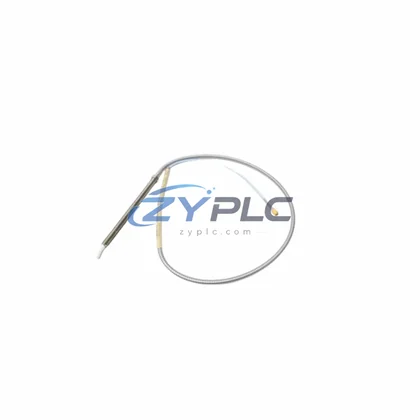
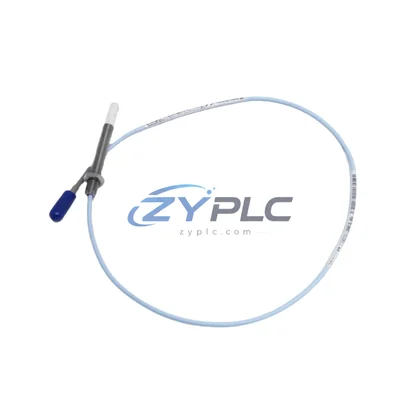
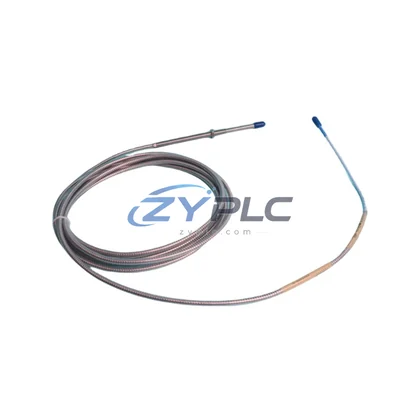
Bently Nevada 330910-00-07-10-02-05 Proximity Probe 3300 NSV: Precision maintenance-focused Machine Health Control
The Bently Nevada 330910-00-07-10-02-05 is a high-performance proximity probe engineered for the 3300 NSV (Non-contacting Vibration) monitoring system. Designed for continuous, real-time shaft vibration and position measurement in rotating machinery, this probe plays a critical role in reducing unplanned downtime, optimizing energy consumption, and extending equipment service life across heavy industrial environments including power generation, oil & gas, petrochemical, and large-scale manufacturing facilities.
In modern industrial plants where energy efficiency is a key operational KPI, the ability to detect early-stage mechanical anomalies — before they escalate into catastrophic failures — directly translates into measurable operational stability. The 330910-00-07-10-02-05 delivers the signal fidelity and measurement stability required to keep rotating assets running at their optimal efficiency point, avoiding the excess power draw that accompanies mechanical imbalance, misalignment, or bearing degradation.
Product Specification Table
| Parameter |
Specification / Value |
| SKU / Part Number |
330910-00-07-10-02-05 |
| Brand / Series |
Bently Nevada 3300 NSV System |
| Product Category |
Proximity Probe / Eddy-Current Transducer |
| Measurement Type |
Non-contacting shaft radial vibration & position |
| Operating Power Consumption |
Low-draw eddy-current design; minimal self-heating |
| Running Efficiency |
Continuous 24/7 monitoring with negligible energy overhead |
| Compatible Systems |
Bently Nevada 3300 NSV, 3500 Series Monitoring Rack |
| Application Environment |
Turbines, compressors, pumps, motors, gearboxes |
| Maintenance Value |
Early fault detection reduces motor overload & excess energy draw |
| Predictive Maintenance Support |
Yes — continuous vibration trending & alarm thresholds |
| Warranty |
Warranty and support terms confirmed before quote |
| Availability |
Confirmed via RFQ before quotation |
| Origin |
USA |
System Compatibility and Application
The 330910-00-07-10-02-05 proximity probe does not operate in isolation — it is the sensing front-end of a tightly integrated machine protection and maintenance planning architecture. Within a typical 3300 NSV installation, the probe connects to a Bently Nevada 3300 XL 8mm Extension Cable and a matched 3300 XL Proximitor Sensor (such as the 330180-X1-05 or 330130-040-00-00), which conditions the raw eddy-current signal into a calibrated DC voltage proportional to the gap between probe tip and rotating shaft.
This conditioned signal feeds directly into a Bently Nevada 3500/42M Proximitor / Seismic Monitor module housed within the 3500 Series Rack. The rack’s backplane communicates machine health data to the plant’s distributed control system (DCS) or safety instrumented system (SIS) via Modbus TCP, FOUNDATION Fieldbus, or Profibus DP — enabling the control layer to make real-time decisions about load shedding, speed reduction, or emergency shutdown before a mechanical fault drives energy consumption into dangerous territory.
On the drive side, when the 3500 rack detects rising vibration amplitude on a motor-driven compressor or pump, it can signal the associated variable frequency drive (VFD) — for example a Rockwell PowerFlex 755 or ABB ACS880 — to reduce rotational speed, directly cutting energy consumption in proportion to the cube of speed reduction. This closed-loop interaction between the proximity probe signal chain and the drive system is one of the most effective maintenance planning strategies available in rotating machinery applications.
For facilities running GE Mark VI or Emerson Ovation DCS platforms, the 3500 rack’s analog and digital outputs integrate seamlessly, allowing vibration data from the 330910-00-07-10-02-05 to populate energy dashboards alongside process variables such as flow rate, differential pressure, and motor current draw. When combined with a Bently Nevada System 1 Optimization & Diagnostic Software platform, maintenance engineers gain a unified view of machine efficiency trends, enabling data-driven decisions about when to schedule maintenance versus when to continue running — avoiding both premature shutdowns and energy-wasting degraded operation.
In multi-machine train configurations — such as a gas turbine driving a centrifugal compressor — multiple 330910-series probes are deployed at each bearing journal, with the 3500/25 keyphasor module providing the once-per-revolution reference signal needed for synchronous vibration analysis. This architecture allows engineers to distinguish between energy-wasting mechanical imbalance (correctable by balancing) and misalignment (correctable by realignment), rather than simply increasing power input to compensate for degraded mechanical efficiency.
Maintenance and Replacement Notes
In a typical continuous process plant — a refinery, LNG terminal, or large chemical facility — rotating machinery accounts for 60–70% of total electrical energy consumption. Even a 1–2% improvement in the average operating efficiency of pumps, compressors, and turbines translates into significant annual energy cost reductions. The Bently Nevada 330910-00-07-10-02-05 contributes to this efficiency improvement through several concrete mechanisms.
Eliminating unplanned downtime from mechanical degradation: As bearings wear, rotors become imbalanced, or couplings misalign, the affected machine draws progressively more current to maintain the same output. The 330910-00-07-10-02-05 detects these conditions at their earliest stage — often weeks or months before they become visible to operators — allowing maintenance teams to intervene during planned outages rather than running degraded equipment at elevated energy cost until failure.
Optimizing production line throughput: In batch manufacturing or continuous process lines, unplanned machine trips caused by undetected vibration faults disrupt production rhythm and force restart sequences that consume significant energy (motor inrush current, system repressurization, thermal cycling). By providing reliable early warning, the 330910-00-07-10-02-05 helps maintain consistent line throughput and eliminates the energy penalty of repeated start-stop cycles.
Supporting predictive maintenance scheduling: Rather than replacing components on fixed time intervals (which often means replacing still-functional parts, wasting both materials and the energy embodied in their manufacture), the continuous vibration data from the 330910-00-07-10-02-05 enables condition-based maintenance. Components are replaced when their actual condition warrants it, maximizing the useful life of every part in the rotating assembly.
Reducing cooling and auxiliary energy loads: Machines running with mechanical faults generate excess heat, which increases the load on cooling systems — fans, heat exchangers, and HVAC. By keeping rotating equipment in optimal mechanical condition, the 330910-00-07-10-02-05 indirectly reduces the energy consumed by auxiliary cooling infrastructure.
Every unit shipped by ZYPLC undergoes a full outgoing functional test verifying probe sensitivity, gap voltage linearity, and signal noise floor before dispatch. This ensures that the probe performs to Bently Nevada specification from day one of installation, with no unplanned downtimed on commissioning troubleshooting or early-life replacements. Warranty terms are confirmed during quotation.
Product Sourcing FAQ
Q1: How does the 330910-00-07-10-02-05 directly contribute to operational stability in a rotating machinery application?
By providing continuous, high-resolution shaft vibration and position data, this probe enables the control system to detect mechanical inefficiencies — imbalance, misalignment, bearing wear — before they cause significant unplanned downtime. Early detection allows corrective action during planned maintenance windows, keeping machines operating at their designed efficiency point rather than in a degraded, energy-intensive state.
Q2: Is the 330910-00-07-10-02-05 compatible with the Bently Nevada 3500 Series monitoring rack and existing plant DCS systems?
Yes. The 330910-00-07-10-02-05 is designed for use within the Bently Nevada 3300 NSV system and is fully compatible with the 3500 Series rack infrastructure. The 3500 rack supports standard industrial communication protocols including Modbus TCP, Profibus DP, and FOUNDATION Fieldbus, enabling seamless integration with major DCS platforms such as Emerson DeltaV, Honeywell Experion, ABB 800xA, and GE Mark VI.
Q3: Can this probe replace an existing 330910-series unit without recalibration of the entire monitoring system?
In most cases, yes — provided the replacement probe is the same part number (330910-00-07-10-02-05) and is used with the original matched Proximitor sensor and extension cable. The 3300 NSV system is calibrated as a matched set (probe + extension + Proximitor), so replacing only the probe with an identical part number maintains system calibration. ZYPLC recommends verifying gap voltage at installation to confirm correct sensitivity before returning the machine to service.
Q4: What does the warranty and support terms confirmed before quote cover, and what is the testing process before shipment?
The warranty and support terms confirmed before quote covers defects in materials and workmanship under normal operating conditions. Before shipment, every 330910-00-07-10-02-05 unit undergoes ZYPLC’s outgoing functional test protocol, which verifies probe tip sensitivity (mV/mil or mV/µm), gap voltage linearity across the measurement range, and signal noise floor. Units that do not meet Bently Nevada specification are quarantined and not shipped. The warranty period begins from the date of shipment.