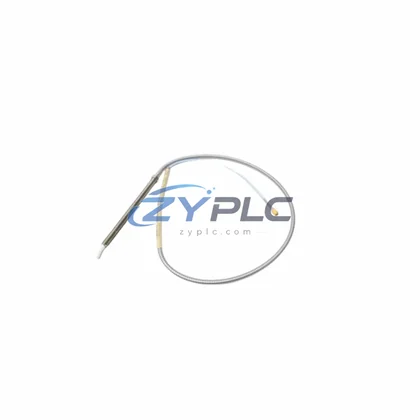
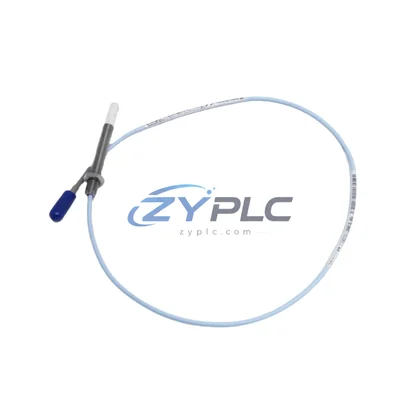
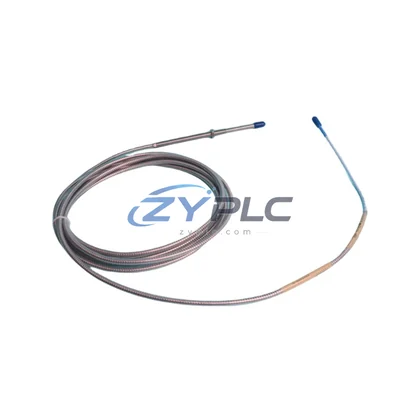
Bently Nevada 330980-50-CN Proximitor Sensor for 3300 Series: Control System Coordination and Upstream-Downstream Synergy
The Bently Nevada 330980-50-CN is a high-precision eddy-current Proximitor Sensor engineered for seamless integration within the Bently Nevada 3300 Series vibration monitoring architecture. Rather than functioning as a standalone measurement device, this sensor operates as a critical node within a layered industrial control system — connecting the mechanical signal acquisition layer to the condition monitoring, protection logic, and supervisory control layers above it. Understanding its role within the full system hierarchy is essential for engineers designing reliable, scalable, and maintainable rotating machinery protection systems.
Product Specification Table
| Parameter |
Specification |
| System Role |
Eddy-Current Proximitor Sensor — Signal Acquisition Layer |
| Compatible Platform |
Bently Nevada 3300 Series Vibration Monitoring System |
| Measurement Type |
Radial Vibration, Axial Position, Differential Expansion |
| Output Signal |
DC voltage proportional to gap distance (typically -18 VDC nominal) |
| Supply Voltage |
-24 VDC (from Proximitor power supply or monitor card) |
| Frequency Range |
DC to 10,000 Hz |
| Cable Length |
Compatible with standard 3300 extension cable assemblies |
| Operating Temperature |
-35°C to +85°C (sensor tip); electronics per housing rating |
| Communication / Integration |
Analog voltage output; integrates with 3300/15, 3300/20, 3500/22M monitor cards |
| Installation Environment |
Industrial rotating machinery: turbines, compressors, pumps, motors |
| Warranty |
warranty terms confirmed during quotation — covers manufacturing defects and functional performance |
System Compatibility Notes
The 330980-50-CN does not operate in isolation. Its value is fully realized only when it is correctly positioned within a coordinated control system architecture that spans multiple functional layers. In a typical turbomachinery protection system, this Proximitor Sensor feeds conditioned analog signals into a Bently Nevada 3300/15 Dual Vibration Monitor or a 3300/20 Radial Vibration Monitor, which processes the raw proximity voltage into engineering units and applies alarm and danger setpoints. These monitor cards are housed within a 3300 Series rack, which also accommodates power supply modules such as the 3300/05 Power Supply — ensuring stable, isolated -24 VDC delivery to the sensor circuit.
For systems requiring higher channel density or integration with plant-wide asset management platforms, the 330980-50-CN is equally compatible with the Bently Nevada 3500 Series platform. In this configuration, the sensor signal is routed through a 3500/22M Transient Data Interface or a 3500/42M Proximitor I/O Module, enabling high-speed waveform capture and integration with System 1 condition monitoring software via Ethernet or Modbus TCP. This system integration capability allows the sensor data to be correlated with process variables from the plant DCS — such as load, speed, and temperature — providing a complete picture of machine health across operating regimes.
At the field wiring layer, the 330980-50-CN is paired with a compatible 330130-080-00-00 Extension Cable and a 330100-50-00 Proximity Probe, forming a complete eddy-current measurement chain. The probe tip is mounted in a machined bracket at the shaft journal, while the extension cable routes the signal through the bearing housing to the Proximitor electronics mounted on the machinery skid. Proper cable routing, grounding, and shielding are critical to maintaining signal integrity in high-EMI environments such as those found near variable frequency drives or large motor starters.
For redundant protection architectures — common in API 670-compliant systems for critical turbomachinery — dual 330980-50-CN sensors are deployed at each measurement plane, with each sensor feeding an independent monitor channel. This redundancy eliminates single-point failure risk and supports online maintenance without process shutdown. The 3300 XL 8mm Proximity Transducer System and 330180-91-00 Proximitor are frequently deployed alongside the 330980-50-CN in such dual-redundant configurations, ensuring continuous protection even during sensor replacement or calibration activities.
At the supervisory layer, the processed vibration data is transmitted to a Bently Nevada 3500 Rack gateway or directly to the plant DCS via hardwired relay contacts or serial communication. Integration with SCADA platforms enables operators to monitor shaft vibration trends in real time, configure alarm acknowledgment workflows, and trigger automated shutdown sequences when danger thresholds are exceeded. This end-to-end signal flow — from the 330980-50-CN probe tip to the control room display — represents the full value of system integration in a modern rotating machinery protection system.
Industrial Application Notes
The 330980-50-CN finds application across a broad range of industries where rotating machinery reliability is critical to process continuity and safety. In power generation, it is deployed on steam turbine shaft journals to monitor radial vibration and detect early-stage bearing wear, rotor imbalance, or misalignment before they escalate to forced outages. In petrochemical and refinery applications, it protects centrifugal compressors and boiler feed pumps operating under continuous duty cycles, where unplanned downtime carries significant production and safety consequences.
In water treatment and municipal infrastructure, the sensor monitors large vertical turbine pumps and blower units, providing condition data that supports predictive maintenance scheduling and reduces reliance on time-based overhaul intervals. In mining and mineral processing, it is installed on ball mill pinion bearings and crusher drive shafts, where high shock loads and contamination make continuous vibration monitoring essential for asset protection. In metallurgical and steel plant environments, the 330980-50-CN operates on rolling mill drive trains and continuous caster pinch rolls, where precise shaft position monitoring is required to maintain product quality and prevent catastrophic bearing failures.
Across all these applications, the sensor’s compatibility with the Bently Nevada 3300 and 3500 Series platforms ensures that field data can be aggregated, trended, and acted upon within a unified condition monitoring framework — supporting both local protection logic and enterprise-level asset management strategies.
Product Compatibility FAQ
Q1: Is the 330980-50-CN compatible with both the 3300 Series and 3500 Series monitor platforms?
Yes. The 330980-50-CN outputs a standard eddy-current proximity voltage signal that is compatible with all Bently Nevada 3300 Series monitor cards (including the 3300/15 and 3300/20) as well as 3500 Series I/O modules such as the 3500/42M. When integrating with the 3500 platform, verify that the I/O module is configured for the correct transducer type and gap voltage range to ensure accurate engineering unit conversion and alarm setpoint calibration.
Q2: What are the key considerations for installing the 330980-50-CN in a redundant protection architecture?
For API 670-compliant redundant systems, each measurement plane should be equipped with two independent 330980-50-CN sensors, each connected to a separate monitor channel and power supply circuit. Ensure that the extension cables for each redundant channel are routed through separate conduits to prevent common-mode failure from cable damage. The warranty terms confirmed during quotation covers both sensors equally, and replacement units can be sourced from our inventory to minimize spare parts lead time during planned maintenance windows.
Q3: How does the warranty terms confirmed during quotation apply to field-installed sensors, and what does it cover?
The warranty terms confirmed during quotation on the 330980-50-CN covers manufacturing defects, calibration drift beyond published specifications, and functional failure under normal operating conditions. It does not cover damage resulting from improper installation, mechanical impact, or operation outside the specified environmental limits. For warranty claims, the sensor must be returned with documentation of the installation configuration and observed failure mode. Our technical team will assess the unit and provide a replacement or repair within the agreed service timeline, ensuring minimal disruption to your monitoring system architecture.