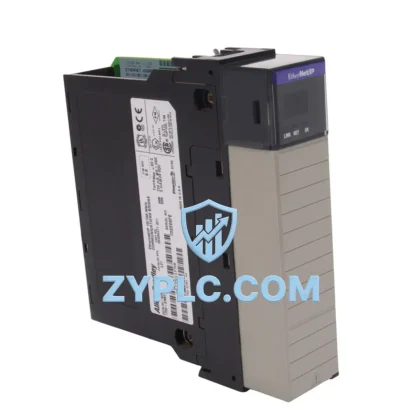
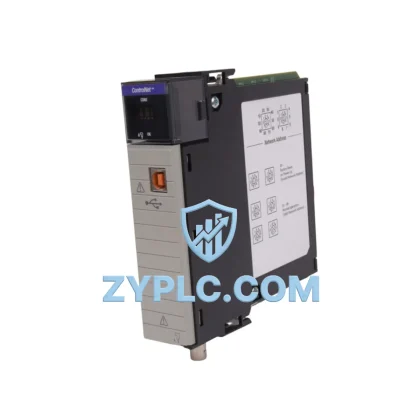
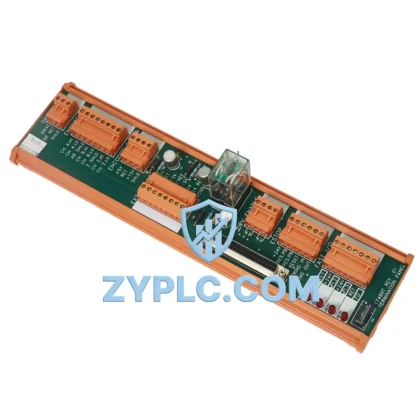
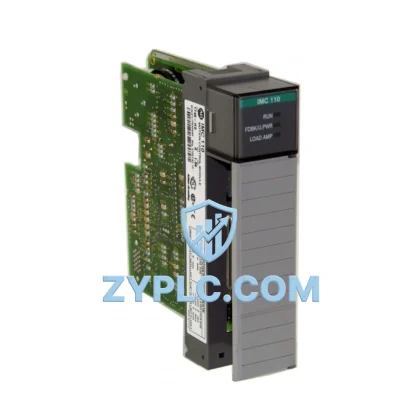
Bently Nevada 3500/42 System-Ready Proximitor Monitor for 3500 Architecture: Control System Architecture and Upstream-Downstream Coordination
In modern industrial automation, the reliability of a rotating machinery protection system depends not on any single module, but on the seamless coordination of every layer within the control architecture. The Bently Nevada 3500/42 Proximitor Monitor occupies a critical position within the 3500 Series machinery protection system, serving as the primary signal conditioning and processing node for proximity probe inputs used in radial vibration, thrust position, and differential expansion measurement. Understanding how this module integrates across the control layer, I/O layer, network layer, power layer, HMI layer, and actuation layer is essential for engineers designing or maintaining high-availability rotating equipment protection systems in power generation, petrochemical, oil and gas, mining, and heavy industrial environments.
The 3500/42 module is designed to accept input signals from Bently Nevada 3300 XL 8mm or 3300 5mm proximity transducer systems, converting raw eddy-current proximity signals into conditioned analog outputs and digital status data that feed directly into the 3500 Series rack backplane. Within the rack architecture, the module communicates with the 3500/20 Rack Interface Module (RIM), which serves as the primary communication gateway between the 3500 rack and plant-level DCS, SCADA, or historian systems via Modbus RTU, Modbus TCP/IP, or Ethernet protocols. This layered signal flow — from transducer to monitor module to rack interface to plant network — ensures that vibration and position data reaches the control room with minimal latency and maximum integrity.
At the power layer, the 3500/42 relies on the 3500/15 Power Supply Module, which provides regulated DC power to all modules within the rack. Redundant power supply configurations using dual 3500/15 units are standard practice in critical applications, ensuring that a single power supply failure does not interrupt machinery protection coverage. The power layer’s stability directly influences the measurement accuracy of the 3500/42, as voltage fluctuations can introduce baseline drift in proximity gap measurements — a concern that the 3500 Series architecture addresses through its regulated internal bus design.
At the I/O layer, the 3500/42 interfaces with the plant field wiring through the 3500/42 I/O Module, which provides terminal block connections for transducer power, signal input, and buffered output. The buffered output capability allows the 3500/42 to simultaneously feed the rack’s internal processing and an external data acquisition system or portable analyzer such as the ADRE 408 DSPi, enabling parallel condition monitoring without interrupting the protection function. This dual-output architecture is particularly valuable during commissioning and troubleshooting, where engineers need real-time waveform data without bypassing the protection system.
At the network and integration layer, the 3500/42 participates in the broader Contextual Integration framework of the 3500 Series system. Through the 3500/20 RIM, vibration channel data, alarm states, and module health status are made available to plant historians, DCS controllers such as the Emerson DeltaV or Honeywell Experion PKS, and asset management platforms. This Contextual Integration capability allows operations teams to correlate vibration trends with process variables — suction pressure, discharge temperature, lube oil flow — providing the contextual data necessary for informed maintenance decisions rather than reactive responses to alarm trips.
At the HMI layer, the 3500 System Display (3500/94) or plant-level SCADA screens present the 3500/42’s channel data in real time, displaying gap voltage, vibration amplitude in mils or microns, and alarm status for each configured channel. Operators can monitor radial vibration on both X and Y axes simultaneously, with the 3500/42 supporting up to two proximity input channels per module. For systems requiring higher channel density, multiple 3500/42 modules can be installed within the same 3500 rack, with the rack backplane managing inter-module communication transparently.
At the actuation and protection layer, the 3500/42 works in conjunction with the 3500/32 Relay Module to execute trip and alarm relay outputs when vibration or position measurements exceed configured setpoints. The relay module receives digital trip signals from the 3500/42 via the rack backplane and activates hardwired relay contacts connected to turbine trip solenoids, compressor shutdown circuits, or alarm annunciator panels. This hardwired trip path operates independently of the network communication layer, ensuring that machinery protection remains active even during network communication failures — a fundamental requirement of SIL-rated protection systems.
For systems requiring redundancy at the monitor level, the 3500/42 supports voting logic configurations in conjunction with additional monitor modules and the 3500/32 Relay Module’s configurable voting logic (1oo1, 1oo2, 2oo2, 2oo3). This redundancy architecture is commonly specified for critical compressors, steam turbines, and gas turbines where a spurious trip carries significant production cost, and where a missed trip carries safety risk. The 3500/42’s role in these voting architectures requires careful configuration of alert and danger setpoints, time delays, and channel defeat logic — all managed through the System 1 Evolution software platform.
Architecture Specification Table
| Parameter |
Specification |
| System Role |
Proximitor / Seismic Monitor Module — 3500 Series Rack |
| Input Channels |
2 proximity transducer input channels per module |
| Transducer Compatibility |
Bently Nevada 3300 XL 8mm, 3300 5mm proximity systems |
| Measurement Parameters |
Radial vibration, thrust position, differential expansion, eccentricity |
| Output — Buffered |
Buffered transducer output for external data acquisition |
| Output — Analog |
4–20 mA analog output per channel (optional I/O module) |
| Communication |
Rack backplane bus; Modbus RTU/TCP via 3500/20 RIM; Ethernet |
| Power Supply |
Supplied via 3500 rack backplane from 3500/15 Power Supply Module |
| Operating Temperature |
0°C to +65°C (32°F to 149°F) |
| Humidity |
5% to 95% non-condensing |
| Mounting |
3500 Series 19-inch rack, standard module slot |
| Approvals |
CE, FM, CSA; SIL 1 capable in appropriate system configuration |
| Warranty |
12-Month Warranty — covers module functionality, firmware, and hardware integrity |
Coordinated Control System Design
The 3500/42 Proximitor Monitor achieves its full protective capability only when properly coordinated with the surrounding modules and system components. A complete 3500 Series rack protecting a single-shaft steam turbine-generator set typically includes the 3500/15 Power Supply Module (with redundant pair), the 3500/20 Rack Interface Module for DCS and historian connectivity, the 3500/42 Proximitor Monitor for radial vibration and thrust position on the turbine and generator shafts, the 3500/40M Proximitor/Seismic Monitor for seismic (velocity) inputs on bearing housings, the 3500/32 Relay Module for hardwired trip and alarm relay outputs, and the 3500/22M Transient Data Interface for high-resolution waveform capture during startup, shutdown, and transient events.
Field wiring connects Bently Nevada 3300 XL 8mm proximity transducer systems — comprising the probe, extension cable, and proximitor — to the 3500/42 I/O module terminal blocks. The proximitor provides the oscillator-demodulator function, converting the eddy-current signal into a DC voltage proportional to the gap between the probe tip and the shaft surface. This DC voltage is the primary input to the 3500/42, which then applies engineering unit scaling, alarm setpoint comparison, and digital status encoding before placing the processed data on the rack backplane.
For plants using the System 1 Evolution asset performance management platform, the 3500/42’s data stream is available for trend analysis, alarm rationalization, and predictive maintenance modeling. Integration with plant DCS platforms such as Emerson DeltaV or ABB System 800xA via the 3500/20 RIM allows vibration alarm states to be displayed on process graphics alongside flow, pressure, and temperature variables, giving operators a unified view of machine and process health. The ADRE 408 DSPi portable data collector can connect to the 3500/42’s buffered outputs for detailed spectrum and waveform analysis without interrupting the protection function.
Application in Layered Automation Systems
The Bently Nevada 3500/42 Proximitor Monitor is deployed across a wide range of critical rotating equipment applications. In power generation, it protects steam turbines, gas turbines, and hydro generators, monitoring shaft radial vibration and thrust position to detect rotor instability, bearing wear, and axial displacement before they progress to catastrophic failure. In petrochemical and refining plants, the 3500/42 is installed on centrifugal compressors, pumps, and expanders in continuous process service, where unplanned shutdowns carry both safety and significant economic consequences.
In oil and gas upstream and midstream facilities, the 3500/42 protects gas compression trains and pipeline booster compressors operating in remote or unmanned locations, where the Contextual Integration capability of the 3500 Series system allows remote monitoring via SCADA without requiring on-site personnel for routine surveillance. In mining and minerals processing, the module is applied to large grinding mill drives, slurry pumps, and fan systems, where the harsh environment demands the 3500/42’s robust signal conditioning and its ability to maintain measurement accuracy in the presence of electrical noise from variable frequency drives.
In water and wastewater treatment facilities, the 3500/42 monitors large vertical turbine pumps and blower trains, providing early warning of bearing degradation and impeller imbalance. In pulp and paper and packaging production lines, it is integrated into the plant DCS to provide machine health data alongside process quality variables, enabling maintenance teams to schedule bearing replacements during planned production windows rather than responding to emergency failures. Across all these applications, the 3500/42’s 12-Month Warranty provides procurement and maintenance teams with confidence in module reliability from the point of installation through the initial operational period.
Architecture Engineering FAQ
Q1: Is the Bently Nevada 3500/42 compatible with all 3500 Series rack configurations, and can it be mixed with other 3500 monitor modules in the same rack?
Yes. The 3500/42 is designed for installation in any standard 3500 Series rack slot and is fully compatible with other 3500 Series monitor modules including the 3500/40M, 3500/44M, 3500/45, 3500/46M, and 3500/50. The rack backplane manages inter-module communication transparently, and the 3500/20 RIM aggregates data from all installed modules for network communication. Mixed-module rack configurations are standard practice and are fully supported by the System 1 Evolution configuration software. Ensure that the rack’s 3500/15 Power Supply Module capacity is sufficient for the total module complement installed.
Q2: How does the 3500/42 support long-term maintenance and what does the 12-Month Warranty cover?
The 3500/42 is designed for long service life with no field-serviceable components requiring routine replacement. Long-term maintenance consists primarily of periodic verification of transducer gap voltages, alarm setpoint review, and functional testing of trip relay outputs — all of which can be performed without removing the module from service using the 3500 Series rack’s channel bypass and defeat functions. The 12-Month Warranty covers hardware functionality, firmware integrity, and manufacturing defects from the date of shipment. Modules returned under warranty are tested against Bently Nevada factory acceptance criteria before reshipment or replacement, ensuring that returned-to-service modules meet original performance specifications.
Q3: What are the key commissioning steps for the 3500/42 in a new installation, and how is Contextual Integration configured?
Commissioning the 3500/42 begins with physical installation in the 3500 rack, followed by I/O module wiring verification and transducer gap voltage measurement at the buffered output terminals. System 1 Evolution software is used to configure channel engineering units, full-scale range, alert and danger setpoints, time delays, and relay voting logic. Contextual Integration with the plant DCS or historian is configured through the 3500/20 RIM’s communication settings, where Modbus register mapping or OPC-DA/UA tag assignments are defined to match the plant’s data architecture. Factory acceptance testing documentation should be reviewed to verify that all channel configurations match the machinery protection philosophy document before the system is placed in service.
© 2026 ZYPLC. All rights reserved.
Original Source: https://zyplc.com
Contact: +86 19859288691 | plc.sales@zyplc.com