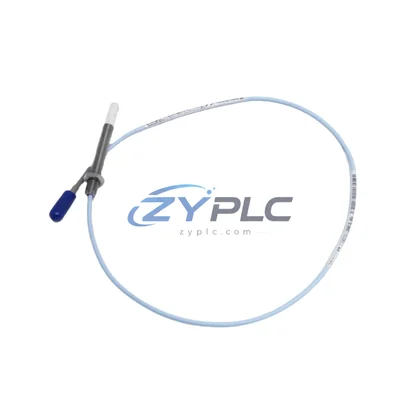
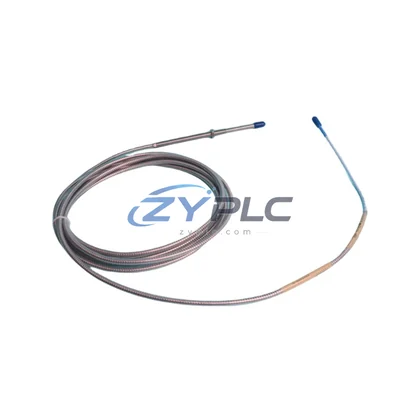
Bently Nevada 990-04-70-02-00 Industrial Network Interface for 3300 Series Systems: Precision Vibration Data Across the Smart Factory Data Link
The Bently Nevada 990-04-70-02-00 is a high-performance vibration transmitter engineered for the 3300 Series condition monitoring platform. Designed to operate at the intersection of rotating machinery protection and industrial network communication, this transmitter delivers real-time vibration amplitude signals that feed directly into SCADA systems, DCS controllers, PLC-based automation networks, and HMI visualization layers. In modern smart factory environments where data isolation is a critical operational risk, the 990-04-70-02-00 serves as a reliable signal source that bridges field-level machinery health data with upper-level control and monitoring infrastructure.
Whether deployed in turbine protection systems, compressor monitoring racks, or pump condition monitoring loops, the 990-04-70-02-00 integrates seamlessly within the broader Bently Nevada 3300 Series ecosystem — working alongside proximity probes, Keyphasor modules, and 3300/16 rack-mounted monitors to form a complete vibration monitoring chain. Its 4–20 mA analog output is universally compatible with industrial signal conditioners, remote I/O modules, and edge gateways, making it a foundational component in any IIoT-ready plant architecture.
Compatibility & Integration Notes
| Parameter |
Specification |
| SKU / Part Number |
990-04-70-02-00 |
| Brand |
Bently Nevada |
| Series |
3300 Series |
| Product Type |
Vibration Transmitter |
| Output Protocol |
4–20 mA Analog Signal |
| Interface Type |
2-Wire Transmitter Output |
| Transmission Capability |
Real-time vibration amplitude (overall vibration, RMS/Peak) |
| Network Compatibility |
DCS, PLC Analog Input Modules, Remote I/O, SCADA Signal Acquisition |
| System Application |
Rotating Machinery Protection, Condition Monitoring, Predictive Maintenance |
| SCADA / HMI Integration |
Compatible via analog-to-digital signal conversion at I/O layer |
| Mounting / Rack |
3300 Series Rack-Mounted Monitor System |
| Origin |
USA |
| Warranty |
warranty terms confirmed during quotation |
| Availability |
RFQ Available — shipment arranged after confirmation |
Connected Automation Data Flow
In a typical smart factory deployment, the 990-04-70-02-00 sits at the signal acquisition layer, converting mechanical vibration from rotating assets — such as turbines, pumps, fans, and compressors — into a standardized 4–20 mA analog signal. This signal is routed through the Bently Nevada 3300/16 rack monitor, which processes raw proximity probe data from Bently Nevada 3300 XL 8mm proximity transducers and conditions the output for downstream transmission.
From the rack monitor, the conditioned vibration signal enters the plant’s analog input infrastructure. In Emerson DeltaV DCS environments, the signal is received by DeltaV S-series analog input cards, which digitize the 4–20 mA value and make it available to the DCS control strategy. In Siemens-based plants, the signal feeds into Siemens ET 200SP remote I/O modules connected via PROFINET to a Siemens S7-1500 PLC, enabling real-time vibration trending within the TIA Portal engineering environment.
For facilities running Rockwell Automation architectures, the 990-04-70-02-00 output integrates with Allen-Bradley 1756 ControlLogix analog input modules, passing vibration data upstream to FactoryTalk View SCADA for operator visualization and alarm management. In parallel, edge computing platforms such as the Moxa UC-8112 industrial edge gateway can aggregate multiple 4–20 mA channels, apply local analytics, and forward processed data via MQTT or OPC-UA to cloud-based condition monitoring platforms.
At the HMI layer, operators interact with vibration trends through Weintek cMT Series HMI panels or Siemens SIMATIC HMI Comfort Panels, where real-time amplitude values, alarm thresholds, and historical trend data are displayed. The complete data chain — from the 990-04-70-02-00 transmitter through the 3300 Series rack, remote I/O, PLC, SCADA, and HMI — forms a closed-loop condition monitoring architecture that supports predictive maintenance decisions, reduces unplanned downtime, and enables remote diagnostics without requiring physical access to the machinery.
In multi-drive environments, the vibration data from the 990-04-70-02-00 is often correlated with speed feedback from ABB ACS880 variable frequency drives, allowing maintenance engineers to identify resonance conditions, bearing wear patterns, and rotor imbalance at specific operating speeds — a critical capability in variable-load industrial processes.
Solving Data Isolation in Industrial Sites
One of the most persistent challenges in industrial facilities is the fragmentation of machinery health data across incompatible systems. Vibration data captured at the field level often remains trapped within proprietary condition monitoring platforms, inaccessible to the plant’s SCADA, MES, or ERP layers. The Bently Nevada 990-04-70-02-00 addresses this challenge through its universal 4–20 mA analog output — a protocol-agnostic signal format that any industrial control system can receive, regardless of the underlying communication architecture.
By standardizing the vibration signal at the transmitter level, the 990-04-70-02-00 eliminates the need for proprietary gateways or protocol converters between the condition monitoring system and the plant control network. This simplifies system integration, reduces engineering overhead, and accelerates commissioning timelines. For facilities undergoing digital transformation, the transmitter’s compatibility with modern remote I/O and edge gateway platforms means that existing 3300 Series installations can be upgraded to support IIoT data flows without replacing the core monitoring hardware.
Remote diagnostics capabilities are further enhanced when the 990-04-70-02-00 is paired with network-connected I/O infrastructure. Maintenance teams can monitor vibration amplitude trends from centralized control rooms or remote operations centers, set alarm thresholds that trigger automated notifications, and correlate vibration events with process variables such as flow rate, temperature, and pressure — all without interrupting production. This level of production line transparency is essential for facilities targeting zero unplanned downtime and continuous improvement in overall equipment effectiveness (OEE).
System scalability is another key advantage. The 3300 Series rack architecture supports modular expansion, allowing additional vibration channels, axial position monitors, and temperature inputs to be added as the monitoring scope grows. Each new channel integrates into the same data flow architecture, ensuring that the plant’s SCADA and historian systems receive a consistent, unified stream of machinery health data across all monitored assets.
Industrial Connectivity FAQ
Q1: What communication protocols does the Bently Nevada 990-04-70-02-00 support, and how does it integrate with SCADA systems?
The 990-04-70-02-00 outputs a standard 4–20 mA analog signal, which is compatible with virtually all industrial SCADA, DCS, and PLC analog input modules. Integration with SCADA systems is achieved at the I/O layer, where the analog signal is digitized and made available to the SCADA historian and operator display. No proprietary protocol converter is required for standard SCADA integration.
Q2: How does the 990-04-70-02-00 perform in terms of signal transmission latency and network stability?
As an analog transmitter, the 990-04-70-02-00 provides continuous, real-time signal output with no digital communication latency. The 4–20 mA current loop is inherently noise-resistant and stable over long cable runs, making it well-suited for industrial environments with high electromagnetic interference. Signal integrity is maintained across the full transmission distance specified for the 3300 Series system.
Q3: Can the 990-04-70-02-00 be used in system expansion projects alongside newer digital communication platforms?
Yes. The 990-04-70-02-00 is fully compatible with hybrid architectures that combine legacy analog infrastructure with modern digital communication platforms. By connecting the analog output to an edge gateway or remote I/O module with digital uplink capability (PROFINET, EtherNet/IP, Modbus TCP), the transmitter’s data can be integrated into IIoT platforms, cloud historians, and advanced analytics systems without replacing the existing 3300 Series hardware.
Q4: What quality assurance and warranty coverage is provided for the 990-04-70-02-00?
All Bently Nevada 990-04-70-02-00 units supplied by ZYPLC undergo pre-shipment functional testing to verify output signal accuracy and hardware integrity. Each unit is covered by a warranty terms confirmed during quotation against manufacturing defects and operational failures under normal industrial use conditions. Availability is confirmed via RFQ for shipment arranged after confirmation, supporting urgent maintenance and replacement requirements.