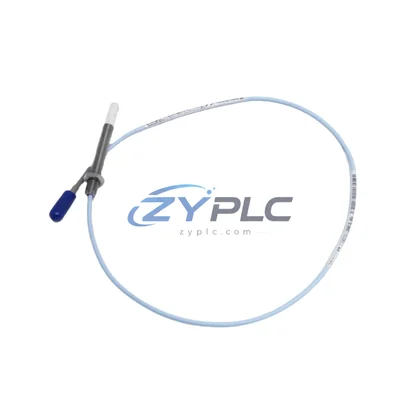
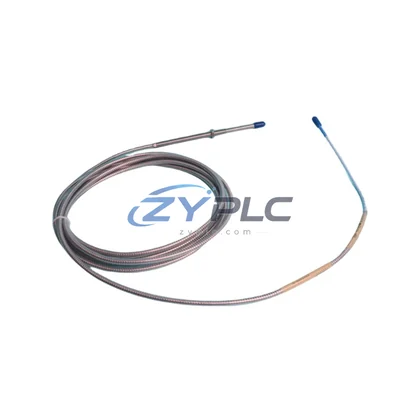
Bently Nevada 990-05-50-02-05 Vibration Transmitter for 990 Series
The Bently Nevada 990-05-50-02-05 is a precision vibration transmitter engineered for seamless integration within the Bently Nevada 990 Series machinery protection and condition monitoring architecture. Rather than functioning as a standalone instrument, this transmitter is designed to operate as a critical node within a layered automation system — bridging the gap between rotating machinery assets and the supervisory control layer. Its role spans the I/O layer and the signal acquisition layer, feeding real-time vibration data upward through the control hierarchy to enable informed decision-making at the DCS, SCADA, or safety system level.
In modern industrial facilities — whether in oil and gas, power generation, petrochemical processing, or heavy manufacturing — machinery protection systems must be tightly integrated with the broader plant control architecture. The 990-05-50-02-05 transmitter fulfills this requirement by delivering a conditioned 4–20 mA output signal that is directly compatible with distributed control system (DCS) analog input modules, safety instrumented system (SIS) input cards, and PLC analog input channels. This signal universality ensures that the transmitter can be incorporated into both legacy and modern control platforms without requiring signal conditioning intermediaries.
Product Specification Table
| Parameter |
Specification |
| Model / SKU |
990-05-50-02-05 |
| Brand |
Bently Nevada |
| Series |
990 Series Vibration Monitoring |
| System Role |
Vibration Signal Transmitter (I/O Layer) |
| Output Signal |
4–20 mA (industry standard analog) |
| Input Compatibility |
Proximitor / Seismic sensor inputs |
| Supply Voltage |
18–30 VDC (loop-powered) |
| Measurement Range |
0–50 mils pp (configurable per application) |
| Communication Capability |
Analog 4–20 mA; compatible with HART-enabled DCS inputs |
| Installation Environment |
Industrial panel / control cabinet; DIN rail or rack mount |
| Operating Temperature |
-40°C to +85°C |
| Ingress Protection |
IP20 (panel-mounted) |
| Warranty |
warranty terms confirmed during quotation — tested, verified, and ready to deploy |
| Origin |
USA |
System Compatibility Notes
The 990-05-50-02-05 transmitter achieves its full value when considered within the context of a complete machinery protection and process control architecture. At the sensor layer, it interfaces directly with Bently Nevada 3300 XL 8mm proximity probes or compatible seismic velocity sensors, converting raw vibration signals into a clean, loop-powered 4–20 mA output. This signal is then routed to the analog input modules of a DCS — such as those found in Emerson DeltaV or Honeywell Experion systems — or to dedicated safety logic solvers like the Bently Nevada 3500 Series rack-based protection system.
Within the 990 Series ecosystem, the 990-05-50-02-05 works in close coordination with the Bently Nevada 990-05-50-01-00 and 990-05-50-02-00 variants, which serve adjacent measurement channels within the same machinery protection panel. The transmitter’s output is typically wired into a marshalling cabinet equipped with terminal blocks such as the Phoenix Contact PTFIX or Weidmüller WDU series, before being routed to the DCS I/O cabinet. For redundant architectures, dual transmitter configurations are supported, with each channel feeding an independent input card to eliminate single points of failure in critical rotating equipment monitoring loops.
At the network and supervisory layer, the 4–20 mA signal from the 990-05-50-02-05 can be read by HART-capable multiplexers — such as the Pepperl+Fuchs HiDMux2700 or Emerson 475 Field Communicator — enabling remote diagnostics and loop calibration without interrupting the live process signal. This capability is particularly valuable in continuous process industries where planned shutdowns are infrequent and in-service diagnostics are essential for maintaining uptime. The transmitter’s output can also be integrated into a Bently Nevada System 1 software platform for trend analysis, alarm management, and predictive maintenance scheduling.
For power supply integrity, the 990-05-50-02-05 relies on a stable 24 VDC loop supply, typically sourced from a dedicated instrument power supply unit such as the Phoenix Contact QUINT-PS or Siemens SITOP series. In high-availability installations, redundant power supply modules with automatic switchover are recommended to ensure uninterrupted transmitter operation. The low power consumption of the 990-05-50-02-05 makes it compatible with zone-isolated power distribution schemes commonly used in hazardous area installations.
Industrial Application Notes
The 990-05-50-02-05 finds application across a broad spectrum of process industries where rotating machinery reliability is critical to operational continuity. In power generation facilities — including gas turbines, steam turbines, and large centrifugal compressors — this transmitter provides the real-time vibration data required by both the machinery protection system and the plant DCS, enabling operators to detect developing faults such as rotor imbalance, misalignment, or bearing degradation before they escalate to unplanned shutdowns.
In petrochemical and refinery environments, the 990-05-50-02-05 is deployed on critical rotating assets such as boiler feed pumps, reactor charge pumps, and air separation compressors. Its 4–20 mA output integrates directly into the plant’s safety instrumented system (SIS), where vibration thresholds are configured as process safety inputs. When vibration levels exceed defined alarm or trip setpoints, the SIS logic solver can initiate an automatic safe-state response — isolating the affected machine and protecting downstream process equipment from damage.
In water and wastewater treatment plants, the transmitter monitors large vertical turbine pumps and centrifugal blowers, where vibration monitoring is increasingly mandated by asset management programs. Mining and mineral processing operations deploy the 990-05-50-02-05 on SAG mills, ball mills, and slurry pumps, where harsh environmental conditions and high-value assets demand robust, reliable monitoring solutions. In all these applications, the transmitter’s compatibility with standard DCS analog input infrastructure means that integration into existing control architectures requires minimal engineering effort and no proprietary communication gateways.
For packaging and discrete manufacturing lines, the 990-05-50-02-05 can be integrated into a PLC-based control system — such as a Siemens S7-300/400 or Allen-Bradley ControlLogix platform — via standard analog input modules, providing machine-level vibration data to the production management system. This enables condition-based maintenance scheduling to be coordinated directly from the production control layer, reducing unplanned downtime and extending mean time between failures (MTBF) for critical drive components.
Product Compatibility FAQ
Q1: Is the 990-05-50-02-05 compatible with third-party DCS and SIS platforms, or is it limited to Bently Nevada system architectures?
The 990-05-50-02-05 outputs a standard 4–20 mA analog signal, which is universally compatible with any DCS, SIS, or PLC analog input module that accepts this signal type. It is not restricted to Bently Nevada or GE control platforms. Engineers can wire the transmitter output directly into Emerson DeltaV, Honeywell Experion, ABB 800xA, Siemens PCS 7, or Yokogawa CENTUM VP analog input cards without requiring signal conversion or protocol translation. HART communication capability (where supported by the receiving input card) further extends diagnostic access without additional hardware.
Q2: What are the installation and commissioning requirements for integrating the 990-05-50-02-05 into an existing control cabinet?
The transmitter is designed for panel or DIN rail mounting within a standard instrument control cabinet. Loop power (18–30 VDC) must be supplied from a dedicated instrument power rail, and the 4–20 mA signal wiring should be run in shielded twisted-pair cable, with the shield grounded at one end only to prevent ground loops. During commissioning, the transmitter output should be verified against a known vibration reference using a portable calibration shaker or by comparison with an adjacent channel. Zero and span adjustments can be performed in-service using a HART communicator connected across the loop terminals, minimizing the need for panel access during calibration.
Q3: What does the warranty terms confirmed during quotation cover, and how does it support long-term maintenance planning for critical rotating equipment?
Every 990-05-50-02-05 unit supplied by ZYPLC is covered by a warranty terms confirmed during quotation from the date of shipment, covering manufacturing defects, component failures, and performance deviations from published specifications. This warranty period aligns with typical annual maintenance turnaround cycles in process industries, ensuring that replacement units installed during a planned shutdown are covered through the next scheduled maintenance window. For long-term maintenance planning, ZYPLC supports RFQ sourcing for the 990-05-50-02-05 and compatible 990 Series components, enabling rapid like-for-like replacement without extended lead times. Our technical team is available to support installation verification and loop testing to confirm correct integration within your control architecture.