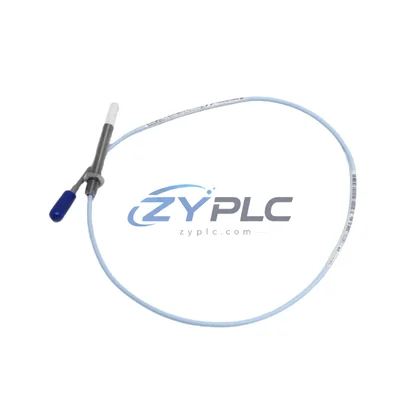
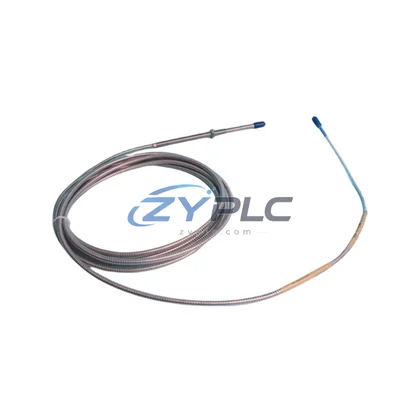
Bently Nevada 990-05-70-02-01 Vibration Transmitter for 990 Series
The Bently Nevada 990-05-70-02-01 is a precision vibration transmitter engineered to serve as a critical signal conditioning node within the 990 Series machinery protection architecture. Designed for seamless system integration into layered condition monitoring and control systems, this transmitter converts raw vibration sensor data into standardized 4-20 mA output signals suitable for distributed control system (DCS) inputs, programmable logic controller (PLC) analog modules, and dedicated machinery protection frameworks. Its role within the broader Bently Nevada ecosystem positions it as an essential bridge between field-level transducers and supervisory control layers, enabling real-time machinery health assessment across rotating equipment in power generation, petrochemical refining, pipeline compression, and heavy manufacturing environments.
Product Specification Table
| Parameter |
Specification |
| System Role |
Vibration Signal Transmitter / Conditioning Module |
| Series |
Bently Nevada 990 Series |
| Output Signal |
4-20 mA proportional to vibration amplitude |
| Input Compatibility |
Proximity probes, velocity sensors, accelerometers |
| Power Supply |
24 VDC nominal (loop-powered capable) |
| Communication |
Analog 4-20 mA; compatible with HART-enabled environments |
| Mounting |
DIN rail or panel mount within control cabinets |
| Operating Temperature |
-40°C to +85°C |
| Enclosure Rating |
IP20 (panel-mounted configuration) |
| Certification |
CE, ATEX Zone 2 (hazardous area variants) |
| Warranty |
warranty terms confirmed during quotation from ZYPLC |
System Compatibility Notes
Within a complete Bently Nevada machinery protection architecture, the 990-05-70-02-01 vibration transmitter operates in concert with multiple system-level components to deliver comprehensive rotating equipment surveillance. The transmitter receives conditioned signals from field-installed proximity probes such as the Bently Nevada 330180-51-00 proximity sensor, which captures shaft displacement data at the bearing housing level. Signal integrity from probe tip to transmitter input depends on proper extension cable routing, typically utilizing Bently Nevada 330130-080-00-00 extension cables that maintain impedance matching across long cable runs in industrial environments.
At the rack level, the 990-05-70-02-01 integrates with the Bently Nevada 990-04-70-02-00 chassis system, which provides centralized power distribution and signal backplane connectivity for multiple transmitter channels. Power conditioning for the entire 990 rack assembly is managed through dedicated power supply modules such as the Bently Nevada 990-08-70-02-00, ensuring clean DC power delivery free from electrical noise that could compromise vibration measurement accuracy.
For facilities requiring comprehensive machinery diagnostics beyond simple vibration amplitude, the transmitter output feeds into the Bently Nevada 3500 System monitoring platform. The 3500/22M Transient Data Interface module captures dynamic waveform data for orbit analysis, spectrum evaluation, and transient event recording during machine startups and coastdowns. Meanwhile, the 3500/42M Proximitor/Seismic Monitor module provides continuous online protection with configurable alarm setpoints and relay outputs for emergency shutdown integration.
Communication gateway modules such as the Bently Nevada 3500/92 Communication Gateway enable the transmission of vibration data from the local monitoring rack to plant-wide DCS platforms including Honeywell Experion, Emerson DeltaV, and ABB 800xA systems. This architectural connectivity ensures that machinery health information is accessible to operations personnel at both local control panels and centralized control rooms, supporting predictive maintenance strategies that reduce unplanned downtime.
The signal chain architecture also accommodates redundancy requirements in critical service applications. Dual-redundant transmitter configurations using paired 990-05-70-02-01 units with voting logic at the DCS input level provide fault-tolerant vibration monitoring for turbine generators, compressor trains, and reactor feed pumps where single-point-of-failure elimination is mandated by safety integrity level (SIL) requirements.
Industrial Application Notes
In power generation facilities, the 990-05-70-02-01 transmitter monitors bearing vibration on steam turbines, gas turbines, and generator sets where continuous operation is critical to grid stability. The transmitter’s 4-20 mA output integrates directly with turbine control system analog input cards, enabling automated load reduction or trip sequences when vibration levels exceed configurable thresholds. Combined with the Bently Nevada 330400-01-00 accelerometer for high-frequency bearing defect detection, the system provides comprehensive coverage from sub-synchronous shaft instabilities through high-frequency rolling element bearing faults.
Petrochemical and refining applications leverage the 990-05-70-02-01 for centrifugal compressor monitoring in hydrocracker, reformer, and ethylene plant service. The transmitter’s wide operating temperature range and hazardous area certification options support installation in Zone 2 classified environments adjacent to process equipment. Integration with the plant’s safety instrumented system (SIS) through dedicated analog channels ensures that machinery protection functions remain independent of the basic process control system (BPCS), maintaining separation of protection layers as required by IEC 61511 functional safety standards.
Water treatment and municipal infrastructure applications utilize the transmitter for pump vibration monitoring across raw water intake, treatment process, and distribution booster stations. The cost-effective 990 Series architecture provides machinery protection capabilities scaled appropriately for rotating equipment assets where full 3500 System deployment may exceed budget constraints while still requiring reliable continuous monitoring with alarm notification capabilities.
Mining and mineral processing operations deploy the 990-05-70-02-01 on SAG mills, ball mills, crusher drives, and conveyor systems where harsh environmental conditions demand robust signal conditioning with wide temperature tolerance. The transmitter’s DIN rail mounting facilitates installation within motor control centers (MCCs) and local junction boxes positioned near monitored equipment, minimizing analog signal cable runs and associated signal degradation.
Product Compatibility FAQ
Q1: What system components are required to build a complete 990 Series vibration monitoring architecture around the 990-05-70-02-01?
A complete system requires proximity probes or accelerometers matched to the target measurement (shaft vibration, casing vibration, or bearing defect detection), appropriate extension cables for signal routing, the 990-04-70-02-00 rack chassis for multi-channel installations, a dedicated 990-08-70-02-00 power supply module, and DCS or PLC analog input channels to receive the 4-20 mA output. For advanced diagnostics, integration with the 3500 System platform adds waveform capture, spectrum analysis, and networked communication capabilities.
Q2: Is the 990-05-70-02-01 compatible with third-party DCS and PLC platforms for system-level integration?
Yes. The transmitter produces a standard 4-20 mA analog output signal that is universally compatible with any DCS, PLC, or SCADA system equipped with analog input modules. No proprietary communication protocol is required for basic vibration amplitude monitoring. For enhanced digital communication, HART protocol overlay on the 4-20 mA loop enables remote configuration and diagnostic access through HART-compatible asset management systems without interrupting the live analog measurement signal.
Q3: What warranty and supply assurance does ZYPLC provide for the 990-05-70-02-01?
ZYPLC provides a comprehensive warranty terms confirmed during quotation on the Bently Nevada 990-05-70-02-01 vibration transmitter, covering manufacturing defects and functional performance. All units undergo pre-shipment verification testing to confirm signal accuracy and loop integrity. ZYPLC maintains strategic inventory positioning to support urgent replacement requirements for critical machinery protection applications, minimizing lead times for maintenance turnaround and capital project schedules.