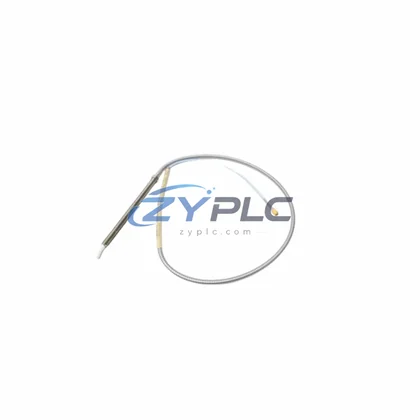
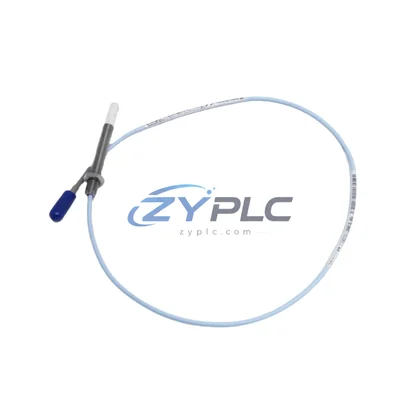
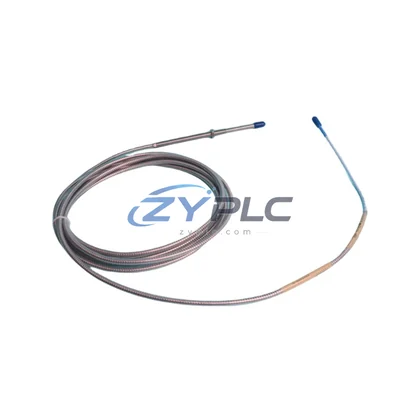
Bently Nevada 990-06-70-01-05: Industrial Vibration Data Link for Smart Factory Connectivity
The Bently Nevada 990-06-70-01-05 is a high-precision vibration transmitter engineered for continuous machinery health monitoring in demanding industrial environments. Designed as a core node in the industrial data chain, this 990 Series transmitter converts raw mechanical vibration signals from rotating equipment into a standardized 4-20mA analog output — enabling seamless integration with PLCs, DCS controllers, SCADA platforms, HMI systems, and edge gateways across the smart factory network. Whether deployed on turbines, compressors, pumps, or motors, the 990-06-70-01-05 delivers real-time vibration data that drives predictive maintenance, reduces unplanned downtime, and supports full production line transparency.
Compatibility & Integration Notes
| Parameter |
Specification |
| SKU |
990-06-70-01-05 |
| Brand / Series |
Bently Nevada / 990 Series |
| Output Protocol |
4-20mA Analog (Industry Standard) |
| Interface Type |
2-Wire Transmitter Output |
| Measurement Type |
Vibration (Velocity / Acceleration) |
| Network Compatibility |
Compatible with DCS, PLC, SCADA, HMI, Edge Gateway inputs |
| Power Supply |
18–30 VDC (Loop Powered) |
| System Application |
Rotating Machinery Monitoring, Predictive Maintenance, Condition-Based Monitoring |
| Origin |
United States |
| Warranty |
warranty terms confirmed during quotation |
Connected Automation Data Flow
In a modern smart factory, the 990-06-70-01-05 sits at the very beginning of the industrial data chain — capturing vibration signals directly from rotating machinery and transmitting them upstream through a structured, multi-layer network architecture.
At the field level, the transmitter interfaces with proximity probes and accelerometers mounted on critical assets such as gas compressors, steam turbines, and centrifugal pumps. Its 4-20mA output feeds directly into the analog input modules of a Bently Nevada 3500 Series Machinery Protection System, which performs real-time threshold monitoring and generates alarm outputs when vibration levels exceed safe operating limits. The 3500 rack’s communication modules then forward structured condition data to the plant DCS or PLC layer — for example, a Rockwell Automation ControlLogix L7x PLC or a Siemens S7-400 controller — via hardwired I/O or fieldbus connections.
At the network layer, a Moxa NPort 5150 Serial-to-Ethernet Device Server or a ProSoft Technology MVI56E-MNET Modbus TCP/IP communication module bridges legacy serial data streams from the 3500 rack into the plant Ethernet backbone, making vibration data accessible to higher-level systems without protocol barriers. This converted data flows into a Wonderware System Platform SCADA or GE iFIX HMI environment, where operators visualize real-time vibration trends, configure alarm setpoints, and generate maintenance reports from a centralized control room.
For remote monitoring and diagnostics, an Advantech WISE-5231 Industrial IoT Edge Gateway aggregates the 4-20mA signals from multiple 990-06-70-01-05 transmitters across the plant floor, applies edge analytics, and pushes summarized condition data to cloud-based asset management platforms via MQTT or OPC-UA. This architecture enables maintenance engineers to perform remote diagnostics, review vibration trend histories, and schedule predictive maintenance interventions without requiring physical site access.
Power continuity for the entire monitoring loop is maintained by a Phoenix Contact QUINT-PS/1AC/24DC/10 industrial power supply, ensuring stable 24VDC loop power to the 990-06-70-01-05 and its associated field instruments even during grid fluctuations. The result is a fully connected, end-to-end vibration monitoring data chain — from rotating shaft to SCADA dashboard — built on proven industrial standards and designed for 24/7 operational reliability.
Solving Data Isolation in Industrial Sites
One of the most persistent challenges in industrial facilities is the fragmentation of machinery health data across incompatible systems. Legacy vibration monitoring equipment often operates in isolation, with no standardized protocol to share data with modern PLC networks, SCADA platforms, or enterprise asset management systems. The Bently Nevada 990-06-70-01-05 directly addresses this problem through its universal 4-20mA analog output — a protocol understood by virtually every industrial controller, I/O module, and data acquisition system on the market today.
By standardizing the vibration signal at the field level, the 990-06-70-01-05 eliminates the data silos that prevent maintenance teams from correlating vibration trends with process variables such as temperature, pressure, and flow rate. When integrated with a plant-wide historian or SCADA system, this transmitter enables production line transparency — giving operations managers a complete, real-time view of machinery health across every asset in the facility.
Remote monitoring capability is another critical advantage. With the 990-06-70-01-05 feeding data into an edge gateway or DCS remote I/O module, maintenance engineers can monitor vibration levels from any location, receive automated alarm notifications via email or SMS, and initiate remote diagnostic sessions without dispatching field technicians. This capability is particularly valuable for offshore platforms, remote pumping stations, and multi-site manufacturing operations where travel costs and response times are significant concerns.
System scalability is built into the 990 Series architecture. Additional transmitters can be added to the monitoring network without redesigning the existing infrastructure, allowing facilities to expand their condition monitoring coverage incrementally as operational requirements grow. Each unit shipped by ZYPLC undergoes pre-shipment functional testing to verify output accuracy and loop integrity, and is backed by a warranty terms confirmed during quotation covering manufacturing defects and performance deviations.
Industrial Connectivity FAQ
Q1: What communication protocol does the 990-06-70-01-05 use, and is it compatible with my existing PLC or DCS?
The 990-06-70-01-05 outputs a standard 4-20mA analog signal, which is universally compatible with analog input modules on virtually all major PLC and DCS platforms, including Rockwell Automation, Siemens, ABB, Honeywell, and Emerson systems. No special protocol converter or gateway is required for basic integration.
Q2: How does this transmitter support real-time monitoring and alarm response in a SCADA environment?
The 4-20mA output provides a continuous, real-time representation of vibration amplitude. When connected to a SCADA or DCS analog input, the system can be configured to trigger alarms at user-defined vibration thresholds, enabling immediate operator response and automated shutdown sequences to protect critical machinery.
Q3: Can the 990-06-70-01-05 be integrated into an existing Bently Nevada 3500 Series protection system?
Yes. The 990 Series transmitters are designed to complement the Bently Nevada 3500 Series Machinery Protection System. The 4-20mA output from the 990-06-70-01-05 can feed directly into the 3500 rack’s analog input modules, providing an additional layer of continuous vibration monitoring alongside the rack’s built-in proximity probe channels.
Q4: What warranty and pre-shipment testing does ZYPLC provide for this unit?
Every 990-06-70-01-05 supplied by ZYPLC is covered by a warranty terms confirmed during quotation against manufacturing defects and performance failures. Prior to shipment, each unit undergoes functional output verification and loop integrity testing to ensure it meets Bently Nevada factory specifications. Availability is confirmed via RFQ for shipment arranged after confirmation with full traceability documentation.