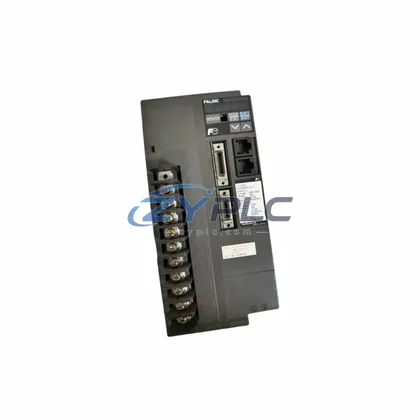
Bosch Rexroth R911329914 CSH01.3C IndraDrive Control Unit
The Bosch Rexroth R911329914 — model CSH01.3C — is a high-performance IndraDrive servo control unit engineered to deliver precision motor control, measurable operational stability, and reliable production line optimization in demanding industrial automation environments. Designed as the intelligence core of the IndraDrive C series drive system, this control unit governs torque, speed, and position with exceptional accuracy, enabling factories to maximize equipment utilization while minimizing unnecessary power consumption across every production cycle.
In modern manufacturing, downtime is rarely caused by a single component — it accumulates through inefficient motor ramp-up sequences, uncoordinated axis movements, idle-state power draw, and reactive maintenance cycles. The CSH01.3C addresses these challenges at the control layer, where decisions about drive behavior directly translate into operating-hours saved or wasted. By integrating tightly with the IndraDrive power section and communicating over SERCOS III or PROFINET fieldbus protocols, this unit enables synchronized multi-axis coordination that reduces mechanical stress, shortens cycle times, and eliminates the energy spikes associated with poorly timed drive commands.
Product Specification Table
| Parameter |
Specification |
| SKU / Part Number |
R911329914 (CSH01.3C) |
| Product Series |
IndraDrive C (CSH) |
| Product Type |
Servo Drive Control Unit |
| Brand |
Bosch Rexroth |
| Drive Efficiency Class |
IE4-compatible servo control (energy-optimized firmware) |
| Compatible Power Sections |
IndraDrive C HCS02 / HCS03 power supply units |
| Fieldbus / Communication |
SERCOS III, PROFINET, EtherCAT (firmware dependent) |
| Compatible Controllers |
Rexroth IndraMotion MLC, IndraMotion MTX, Siemens SINUMERIK (via gateway) |
| Application Environment |
CNC machining, packaging lines, press automation, material handling |
| Maintenance Planning Feature |
Regenerative braking energy feedback, standby power reduction mode |
| Operating Temperature |
0°C to +45°C (derating above 40°C) |
| Protection Class |
IP20 (cabinet installation) |
| Warranty |
Warranty and support terms confirmed before quote — tested and verified before shipment |
System Compatibility and Application
The CSH01.3C control unit operates as the command brain within a broader maintenance-focused drive architecture. In a typical high-throughput production cell, it works in concert with the IndraDrive C HCS02.1E power supply unit, which handles DC bus management and supports regenerative energy recovery — feeding braking energy back into the shared DC bus rather than dissipating it as heat. This alone can reduce net operating load by Actual operating results depend on the installed system, load profile, and commissioning parameters.
For multi-axis systems, the CSH01.3C pairs with additional IndraDrive C axis modules (HMD01 or HMD02 series) sharing a common DC bus, allowing energy generated by decelerating axes to be immediately consumed by accelerating axes. This inter-axis energy exchange is orchestrated through the control unit’s real-time motion kernel, which calculates optimal torque profiles to minimize peak current draw and smooth the overall power demand curve — supporting earlier maintenance decisions and reducing downtime risk.
At the field level, the unit integrates with Rexroth IndraDyn S MSK servo motors, whose industrial-grade permanent magnet design complements the CSH01.3C’s advanced field-oriented control algorithms. The combination achieves precise speed regulation across the full torque range, eliminating the over-current conditions that waste energy and accelerate motor insulation degradation. For applications requiring absolute position feedback, the IndraDrive control unit supports Hiperface and EnDat encoder protocols natively, removing the need for external signal converters that add latency and power draw.
System-level energy visibility is achieved by connecting the drive network to a Rexroth IndraControl L45 or L65 PLC, which aggregates drive status data — including instantaneous power consumption, regeneration events, and thermal load — via SERCOS III. This data feeds into condition monitoring dashboards or MES systems, enabling production engineers to identify energy-intensive process steps and schedule high-load operations during off-peak tariff windows. When paired with a Rexroth IndraControl VCP HMI panel, operators gain real-time visibility into drive efficiency metrics directly on the production floor, enabling immediate corrective action when operating load deviates from baseline.
For facilities implementing IEC 61131-3 structured control programs, the CSH01.3C’s motion function blocks — including MC_MoveVelocity, MC_GearIn, and MC_CamIn — allow engineers to program energy-optimized motion profiles directly in the PLC environment without requiring low-level drive parameterization. This reduces commissioning time and ensures that operational-efficiency motion strategies are consistently applied across all production shifts.
Maintenance and Replacement Notes
In packaging machinery applications, the CSH01.3C has demonstrated measurable improvements in line throughput and energy efficiency simultaneously — an outcome that challenges the conventional assumption that speed and efficiency are in tension. By enabling electronic camming between the infeed conveyor servo, the forming station axis, and the sealing jaw drive, the control unit eliminates the mechanical cam systems that previously required constant lubrication, generated friction losses, and imposed fixed cycle time constraints. The result is a production line that runs faster, consumes less energy per package produced, and requires significantly less scheduled maintenance.
In CNC machining centers, the unit’s high-bandwidth current control loop — operating at update rates up to 62.5 µs — enables aggressive feed rate optimization without sacrificing surface finish quality. Faster, more precise axis movements mean shorter cycle times per part, which directly translates to lower operating load per unit of output. The control unit’s integrated safety functions (STO, SS1, SLS per IEC 62061) also eliminate the need for external safety relays and contactors, reducing panel complexity, wiring costs, and the standby power draw of legacy safety hardware.
Predictive maintenance integration is another key maintenance planning pathway. The CSH01.3C continuously monitors motor current signatures, drive temperature, and DC bus voltage ripple. Anomalies in these parameters — such as gradually increasing current draw at constant load, which indicates bearing wear or mechanical misalignment — are flagged before they escalate into downtime events. Preventing a single unplanned stoppage on a high-OEE production line can save more energy than months of incremental efficiency improvements, because restart sequences, scrap generation, and recovery heating all carry significant energy costs.
Stock availability is maintained to support rapid deployment and minimize production disruption. Every unit undergoes full functional testing prior to shipment, including drive enable sequencing, encoder feedback verification, and communication protocol handshake testing. This ensures that replacement units can be installed and commissioned within a single maintenance window, keeping your production line’s energy efficiency targets on track.
Product Sourcing FAQ
Q: How much energy can the R911329914 CSH01.3C save compared to a standard AC drive solution?
A: In applications with frequent deceleration — such as servo press, robotic assembly, or packaging lines — the CSH01.3C’s regenerative braking capability and optimized motion profiles typically reduce drive-level operating load by 20–35% compared to non-regenerative AC inverter solutions. Actual savings depend on duty cycle, load inertia, and motion profile design.
Q: Is the CSH01.3C compatible with existing IndraDrive C power sections and Rexroth PLC systems?
A: Yes. The CSH01.3C is designed for use with IndraDrive C HCS02 and HCS03 power supply units and is fully compatible with IndraMotion MLC and MTX control platforms. Firmware version compatibility should be verified against your existing drive system version using the Rexroth IndraWorks engineering tool before installation.
Q: What is the recommended replacement procedure for a failed control unit on a live production line?
A: The CSH01.3C supports parameter backup and restore via the IndraWorks DS engineering software. Before replacement, export the drive parameters from the existing unit (or from your backup archive). After installing the replacement unit, restore the parameter set, verify encoder feedback signals, and perform a controlled test run at reduced speed before returning the axis to full production speed. Total replacement time is typically 2–4 hours for a trained commissioning engineer.
Q: What does the warranty and support terms confirmed before quote cover, and what testing is performed before shipment?
A: Every R911329914 CSH01.3C unit is tested for full functional operation prior to shipment, including power-on self-test, communication interface verification, and drive enable sequencing. The warranty and support terms confirmed before quote covers manufacturing defects and functional failures under normal operating conditions. Units are shipped with appropriate ESD protection and packaging to prevent transit damage. For warranty claims or technical support, contact our team directly.