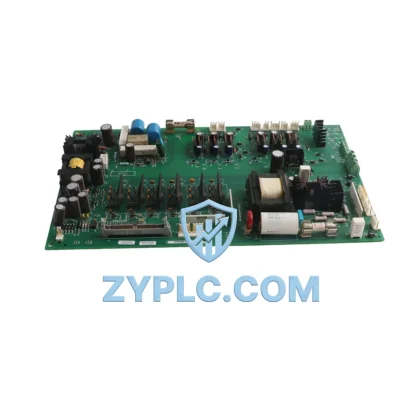
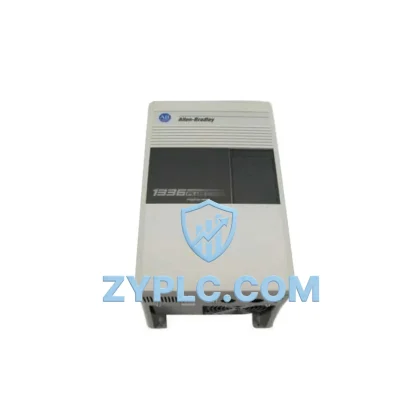
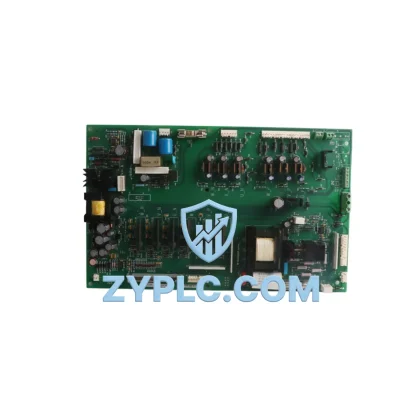
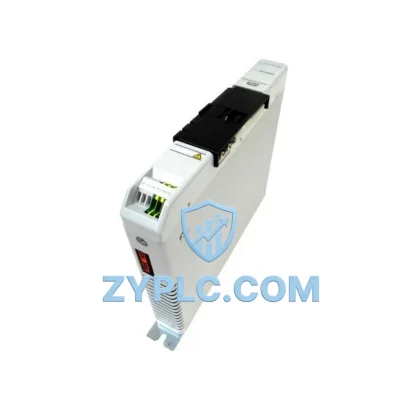
Boston Gear IN587 DC Motor Controller System-Ready Drive for Beta II Architecture
In modern layered automation environments, every component in the control hierarchy must perform with precision, communicate without ambiguity, and integrate without friction. The Boston Gear IN587 DC Motor Controller — rated for 1/6 to 3HP DC motor loads, configured with the RBA2S 32-point interface and paired with the CN7600 / CN76122-485A communication modules — is engineered to fulfill exactly that role within the Beta II drive architecture. Whether deployed in a standalone drive cabinet or embedded within a multi-axis coordinated motion system, the IN587 delivers the electrical stability, signal fidelity, and contextual integration that modern industrial facilities demand.
The IN587 is not simply a speed controller. It is a system-level component designed to occupy a defined position within the control stack — receiving setpoint commands from the supervisory layer, executing closed-loop speed and torque regulation at the drive layer, and feeding status data back to the monitoring layer. This bidirectional data flow is what separates a well-architected automation system from a collection of isolated machines.
Architecture Specification Table
| Parameter |
Specification |
| System Role |
DC Motor Drive Controller — Beta II Drive Architecture |
| SKU |
DC MTR CTLRS (1/6-3HP) RBA2S 32POINTS IN587-16 CN7600 CN76122-485A |
| Power Range |
1/6 HP to 3 HP DC Motor Load |
| Interface Module |
RBA2S — 32-Point I/O Interface |
| Communication Module |
CN7600 / CN76122-485A (RS-485 Serial) |
| Communication Protocol |
RS-485 / Modbus RTU (via CN76122-485A) |
| Drive Series |
Beta II |
| Control Mode |
Closed-Loop Speed & Torque Regulation |
| Installation Environment |
Industrial Control Panel / Drive Cabinet |
| Origin |
United States |
| Warranty |
12-Month Warranty — Verified Pre-Shipment Testing |
Coordinated Control System Design
The IN587’s value is best understood in the context of the complete Beta II drive system. At the supervisory layer, a Programmable Logic Controller — such as a Rockwell Automation ControlLogix L7x or a Siemens S7-300 CPU — issues speed reference and enable commands via the RS-485 network established by the CN76122-485A communication adapter. The CN7600 network interface module bridges the drive’s internal register map to the plant-wide Modbus RTU network, allowing the PLC to read actual motor speed, current draw, fault codes, and drive status in real time without requiring dedicated analog wiring for each feedback signal.
At the I/O layer, the RBA2S 32-point interface board connects the IN587 to the broader signal infrastructure of the control cabinet. Digital inputs from safety relays, motor thermistors, and limit switches are routed through the RBA2S, while digital outputs drive contactor coils, pilot lights, and interlock circuits. This structured I/O architecture eliminates ad hoc wiring and ensures that every signal entering or leaving the drive is documented, testable, and replaceable without disturbing adjacent circuits.
In multi-drive installations — such as a coordinated conveyor line or a multi-zone mixing system — multiple IN587 units share the same RS-485 bus, each assigned a unique node address. The PLC polls each drive sequentially, collecting speed feedback and issuing updated setpoints within a single scan cycle. This architecture supports up to 32 nodes on a single RS-485 segment, making it practical to control an entire production line from a single communication port on the controller.
At the human-machine interface layer, an HMI panel — such as a Weintek MT8000 series or a Maple Systems HMI5000 — connects to the same Modbus RTU network and provides operators with real-time drive status, speed trends, and fault history. Operators can adjust speed references, acknowledge faults, and initiate controlled stops directly from the HMI without requiring PLC program changes. This reduces the burden on engineering staff during routine production adjustments and empowers operators to respond to process variations independently.
Power distribution to the IN587 is managed through a coordinated panel design that includes a dedicated DC bus fuse, an input line reactor to suppress voltage transients, and a properly rated circuit breaker sized to the 3HP maximum load. In redundant drive architectures, a bypass contactor assembly — controlled by the PLC’s safety relay output — allows the motor to be switched to direct-on-line operation in the event of a drive fault, maintaining production continuity while the drive is serviced.
Application in Layered Automation Systems
The Boston Gear IN587 is deployed across a wide range of industrial sectors where precise DC motor control and reliable system integration are non-negotiable requirements.
In packaging and material handling facilities, the IN587 controls conveyor belt drives, accumulation zones, and divert mechanisms. The RS-485 network allows the line PLC to synchronize belt speeds across multiple zones, ensuring smooth product flow and preventing jams at transfer points. The 32-point RBA2S interface provides the I/O density needed to monitor belt tension sensors, jam detectors, and e-stop circuits within a single drive module.
In water and wastewater treatment plants, the IN587 drives mixer agitators, sludge pumps, and chemical dosing systems. The Modbus RTU protocol allows SCADA systems — such as Wonderware InTouch or Ignition by Inductive Automation — to monitor motor current as a proxy for fluid viscosity, enabling process engineers to detect changes in sludge consistency before they cause pump overload. The 12-month warranty and verified pre-shipment testing are particularly valued in this sector, where unplanned downtime carries regulatory and environmental consequences.
In metal processing and rolling mill applications, the IN587 provides the torque regulation needed to maintain consistent strip tension across multi-stand rolling lines. The closed-loop speed control mode, combined with the PLC’s tension feedback algorithm, allows the drive to compensate for roll wear and material thickness variations in real time. The RS-485 communication link ensures that the PLC receives actual motor speed data — not just a commanded reference — enabling true closed-loop tension control at the system level.
In pharmaceutical and food processing environments, the IN587’s structured I/O architecture supports the documentation requirements of GMP-regulated facilities. Every signal connection is defined, labeled, and traceable through the RBA2S interface, simplifying the validation process and reducing the time required for IQ/OQ/PQ documentation.
Architecture Engineering FAQ
Q1: Is the IN587 compatible with existing Beta II drive cabinets, and can it replace an older IN587-16 unit without rewiring?
Yes. The IN587 with the IN587-16 designation is a direct form-fit-function replacement for earlier Beta II drive modules. The RBA2S 32-point interface board uses the same connector pinout and mounting footprint as the original design, allowing the new unit to be installed in an existing cabinet without modifying the field wiring. The CN7600 and CN76122-485A communication modules retain their original node address settings after replacement, minimizing recommissioning time. Always verify firmware compatibility with the existing PLC program before energizing the replacement unit.
Q2: How does the CN76122-485A communication module affect network stability in a multi-drive RS-485 installation?
The CN76122-485A implements a half-duplex RS-485 transceiver with automatic transmit/receive direction control, eliminating the need for manual RTS/CTS handshaking in the PLC communication driver. In multi-drop installations with up to 32 nodes, the module’s 120-ohm termination resistor should be enabled only on the two physical endpoints of the RS-485 bus — not on intermediate nodes. Proper termination prevents signal reflections that can cause intermittent communication errors at higher baud rates. The recommended baud rate for stable multi-node operation is 9600 or 19200 bps, with a polling timeout of at least 50ms per node.
Q3: What does the 12-Month Warranty cover, and what pre-shipment testing is performed on the IN587?
Every IN587 unit supplied by ZYPLC is covered by a 12-month warranty against manufacturing defects and functional failures under normal operating conditions. Prior to shipment, each unit undergoes a verified functional test that includes power-on self-test, I/O interface continuity check via the RBA2S board, communication register read/write verification via the CN7600 module, and closed-loop speed regulation test at 25%, 50%, and 100% of rated load. A test report is available upon request. Warranty claims are processed within 5 business days, with replacement units dispatched from in-stock inventory to minimize customer downtime.
© 2026 ZYPLC. All rights reserved.
Original Source: https://zyplc.com
Contact: +86 19859288691 | plc.sales@zyplc.com