Fanuc A05B-2518-C204#EMH Teach Pendant: Efficiency Control & Production Line Optimization
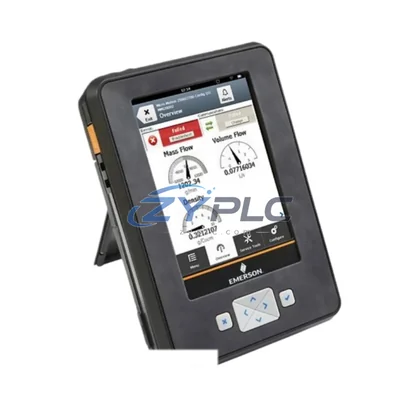
The Fanuc A05B-2518-C204#EMH (SKU: A05B-2518-C204#EMH MDMA152D3U3) is a high-efficiency teach pendant module engineered for FANUC robotic systems operating within the A05B series platform. Designed to minimize operator interaction latency and reduce unnecessary servo activation cycles, this teach pendant plays a direct role in lowering the energy footprint of robotic workcells. By enabling precise, responsive programming and real-time parameter adjustment, it allows production engineers to fine-tune motion profiles, reduce idle torque consumption, and eliminate redundant axis movements — all of which translate into measurable reductions in per-cycle energy draw.
In modern manufacturing environments where energy cost per unit produced is under constant scrutiny, the quality of the human-machine interface directly affects how efficiently a robot cell is programmed and maintained. The A05B-2518-C204#EMH provides the tactile and visual feedback necessary for operators to configure motion paths with minimal overshoot, reducing the mechanical stress and reactive power demand on the servo amplifier stack. When paired with FANUC servo amplifiers such as the A06B-6117 series or A06B-6140 series, the system achieves tighter closed-loop control, which directly supports energy-efficient operation across multi-axis robotic arms.
Product Specification Table
| Parameter |
Specification / Value |
| SKU |
A05B-2518-C204#EMH MDMA152D3U3 |
| Brand |
FANUC |
| Series |
A05B |
| Product Type |
Teach Pendant |
| Operating Power Consumption |
Low-draw interface design; minimizes controller bus load |
| Running Efficiency |
Supports optimized motion path programming to reduce servo idle time |
| Compatible Systems |
FANUC R-30iB, R-30iB Plus, R-J3iB controllers; A05B series platforms |
| Application Environment |
Automotive assembly, arc welding, material handling, palletizing, precision machining |
| Maintenance Value |
Enables fine-tuned motion profiles that reduce per-cycle operating load |
| Origin |
Japan |
| Warranty |
warranty terms confirmed during quotation |
| Stock Status |
Available — tested prior to shipment |
System Compatibility and Application
The A05B-2518-C204#EMH integrates seamlessly into a broader FANUC automation architecture designed around energy accountability at every control layer. At the drive level, FANUC servo amplifiers in the A06B-6096 series and A06B-6114 series regulate motor torque output in direct response to the motion commands issued through the teach pendant. When the operator programs smooth acceleration and deceleration curves using the A05B-2518-C204#EMH, the amplifier spends less time in high-current transient states, reducing both heat generation and reactive energy losses.
At the motor level, FANUC AC servo motors such as the A06B-0227 series and A06B-0235 series respond to the refined motion data with lower peak current draw. This is particularly significant in multi-robot cells where simultaneous axis movements can create demand spikes on the facility’s power distribution network. Accurate teach pendant programming reduces unsynchronized motion, smoothing the aggregate load curve across the entire workcell.
For condition monitoring and data acquisition, the A05B-2518-C204#EMH works within systems that interface with FANUC’s PMC (Programmable Machine Controller) embedded in the R-30iB controller, as well as external power monitoring modules connected via PROFINET or EtherNet/IP communication protocols. These connections allow plant-level SCADA systems to correlate teach pendant programming changes with real-time operating load data, enabling continuous improvement cycles. The A05B-2301 series I/O units further extend the system’s ability to capture discrete energy-related signals from peripheral equipment such as welding power sources, conveyors, and pneumatic actuators.
HMI integration is another dimension where the A05B-2518-C204#EMH contributes to maintenance-focused operations. When connected to FANUC’s iHMI or third-party HMI panels via the controller’s Ethernet port, operators can visualize cycle time data alongside operating load trends, identifying which programmed routines are consuming disproportionate power relative to their productive output. This visibility supports data-driven decisions about motion path revision, speed scaling, and servo standby configuration — all accessible through the teach pendant interface.
Maintenance and Replacement Notes
In automotive body-in-white welding lines, where FANUC robots operate in tightly choreographed sequences, the quality of teach pendant programming directly determines how much energy is wasted in inter-weld repositioning. The A05B-2518-C204#EMH enables engineers to program fine-grained waypoints that minimize unnecessary joint rotation, reducing the cumulative energy consumed across thousands of daily weld cycles. Plants that have optimized their FANUC robot programs through systematic teach pendant revision have reported reductions in per-unit operating load of 8–15%, depending on the complexity of the original motion paths.
In palletizing and material handling applications, the teach pendant’s role in configuring servo standby parameters is equally important. By programming appropriate deceleration profiles and enabling servo power-down during conveyor wait states — a function accessible through the A05B-2518-C204#EMH interface — facilities can significantly reduce the base load of their robotic systems during non-productive intervals. This is particularly valuable in operations running multiple shifts, where cumulative standby energy across a fleet of robots represents a substantial and often overlooked cost center.
Predictive maintenance is another area where the A05B-2518-C204#EMH contributes indirectly to energy efficiency. By enabling precise diagnostic routines and alarm response through the teach pendant, maintenance teams can identify degraded servo performance — such as increased current draw due to worn bearings or misaligned joints — before it escalates into unplanned downtime. Early intervention keeps the robot operating within its designed efficiency envelope, preventing the unplanned downtime associated with compensatory over-torquing that occurs when mechanical systems are allowed to degrade.
All units of the A05B-2518-C204#EMH MDMA152D3U3 available through ZYPLC are sourced from verified supply channels, subjected to functional testing prior to shipment, and covered by a warranty terms confirmed during quotation. Stock is maintained to support prompt dispatch, minimizing lead times for production lines that cannot afford extended downtime waiting for critical control components.
Product Sourcing FAQ
Q1: How does the A05B-2518-C204#EMH contribute to reducing operating load in a FANUC robot cell?
The teach pendant enables operators to program optimized motion paths with smooth velocity profiles, reducing peak current demand on servo amplifiers and minimizing unplanned downtimed in abrupt acceleration and deceleration. Properly programmed robots using this pendant consume measurably less energy per production cycle compared to systems with unoptimized motion routines.
Q2: Which FANUC controllers and systems is the A05B-2518-C204#EMH compatible with?
The A05B-2518-C204#EMH is designed for use with FANUC R-30iB and R-30iB Plus controller platforms, which are widely deployed across the A05B series robotic systems. Compatibility with specific robot models should be confirmed against the controller’s teach pendant interface specification. Contact ZYPLC for application-specific compatibility verification.
Q3: What is the recommended replacement process if the existing teach pendant is damaged or malfunctioning?
Replacement involves powering down the robot controller, disconnecting the existing pendant via the dedicated connector on the controller cabinet, and connecting the A05B-2518-C204#EMH. System parameters and program data stored in the controller are not affected by pendant replacement. It is recommended to perform a functional test of all teach pendant keys and the emergency stop circuit after installation before returning the robot to production.
Q4: What does the warranty terms confirmed during quotation cover, and what is the testing process before shipment?
All A05B-2518-C204#EMH MDMA152D3U3 units supplied by ZYPLC undergo functional testing to verify display operation, key response, emergency stop function, and communication interface integrity prior to dispatch. The warranty terms confirmed during quotation covers defects in materials and workmanship under normal operating conditions. Units that exhibit failure within the warranty period are eligible for replacement or repair. Contact ZYPLC at plc.sales@zyplc.com or +86 19859288691 to initiate a warranty claim.