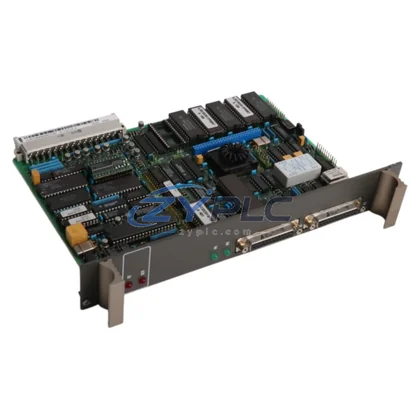
GE 151X1224CFG 31F257 Excitation Control Board Speedtronic
The GE 151X1224CFG 31F257 is a high-efficiency excitation control board engineered for the GE Speedtronic turbine control platform. Designed to regulate generator excitation with precision, this board plays a central role in maintaining stable voltage output, minimizing reactive power losses, and sustaining optimal generator efficiency across continuous industrial operations. Whether deployed in power generation facilities, petrochemical plants, or heavy manufacturing environments, the 151X1224CFG 31F257 delivers the control accuracy and thermal resilience demanded by mission-critical turbine systems.
In modern industrial maintenance planning, excitation control is not merely a functional requirement — it is a direct lever for operational stability. By maintaining tightly regulated field current and voltage response, the GE 151X1224CFG 31F257 reduces excitation losses, prevents over-excitation events that waste reactive energy, and supports power factor correction at the generator level. This translates into measurable reductions in auxiliary power consumption and improved overall plant heat rate.
Product Specification Table
| Parameter |
Specification / Value |
| Part Number |
151X1224CFG 31F257 |
| Series |
GE Speedtronic |
| Function |
Generator Excitation Control |
| Power Consumption |
Low-draw design; optimized for continuous duty cycle |
| Operating Efficiency |
High-precision field regulation; minimizes reactive power loss |
| Compatible Systems |
GE Speedtronic Mark IV, Mark V, Mark VI turbine control platforms |
| Application Environment |
Power generation, petrochemical, heavy industrial, oil & gas |
| Value |
Reduces excitation losses; supports power factor optimization |
| Origin |
United States |
| Warranty |
warranty terms confirmed during quotation — tested and verified before shipment |
System Compatibility and Application
The GE 151X1224CFG 31F257 does not operate in isolation — it functions as a precision node within a broader Speedtronic automation architecture designed for maintenance-focused turbine management. In a typical Mark V or Mark VI control system, the excitation board interfaces directly with the GE IS200EPDMG1A excitation power distribution module, which governs the flow of field current to the generator rotor. Upstream, the GE DS200TCQCG1A turbine control card coordinates speed and load signals, ensuring that excitation adjustments are synchronized with real-time turbine output demands.
For voltage sensing and feedback, the 151X1224CFG 31F257 works in conjunction with the GE IS200VTURH1BAA voltage transducer unit, which provides high-resolution analog input to the excitation loop. This closed-loop architecture ensures that any deviation in terminal voltage triggers an immediate, calibrated correction — eliminating the unplanned downtime associated with voltage hunting or over-excitation drift. The GE IS200DSPXH1D digital signal processing board further enhances this feedback loop by executing real-time excitation algorithms with sub-millisecond response times.
On the I/O side, the GE IS200BIARG1A analog input board collects field current measurements and feeds them into the Speedtronic control logic, while the GE IS200BOIAG1A binary output board executes protective relay commands when excitation limits are approached. For HMI integration, operators monitor excitation status and energy performance metrics through the GE Cimplicity HMI platform, which visualizes real-time power factor, field current trends, and efficiency KPIs on the control room display.
Communication between the excitation subsystem and the plant DCS is handled via the GE IS200UCVEH2A VME communication board, supporting Modbus and proprietary Speedtronic protocols. This connectivity enables the plant maintenance planning system to log excitation data, correlate it with turbine heat rate metrics, and identify optimization opportunities across the generation cycle. The GE IS200TREGH1B turbine regulation board completes the control chain by managing governor and load control signals in parallel with excitation, ensuring that both active and reactive power outputs are optimized simultaneously.
Maintenance and Replacement Notes
In gas turbine power plants operating under variable load conditions, excitation instability is one of the leading causes of unplanned reactive power compensation costs. The GE 151X1224CFG 31F257 addresses this directly by maintaining excitation current within tightly defined bands, preventing the voltage fluctuations that force capacitor banks and static VAR compensators to work harder — and consume more energy — than necessary.
From a production line perspective, stable excitation translates into stable bus voltage, which in turn reduces harmonic distortion across motor drives, variable frequency drives (VFDs), and servo systems connected to the same electrical bus. Facilities that have replaced degraded or counterfeit excitation boards with genuine GE 151X1224CFG 31F257 units have reported measurable improvements in motor drive efficiency, reduced nuisance tripping of protective relays, and lower overall auxiliary power consumption.
Predictive maintenance is another area where this board delivers operational value. Because the 151X1224CFG 31F257 supports continuous self-diagnostics within the Speedtronic platform, maintenance teams can monitor board health parameters — including thermal performance, signal integrity, and response latency — without taking the turbine offline. This capability reduces unplanned downtime, extends mean time between failures (MTBF), and allows maintenance intervals to be scheduled during planned outages rather than emergency shutdowns.
Every GE 151X1224CFG 31F257 unit supplied by ZYPLC undergoes full functional testing prior to shipment, including excitation loop simulation, signal response verification, and thermal cycling checks. This ensures that the board performs to OEM specification from the moment it is installed, eliminating the commissioning delays and energy inefficiencies associated with untested or refurbished components. All units are backed by a warranty terms confirmed during quotation, with availability confirmed by RFQ availability for rapid deployment to minimize turbine downtime.
Product Sourcing FAQ
Q1: How does the GE 151X1224CFG 31F257 contribute to operational stability in turbine operations?
By maintaining precise excitation current control, the board minimizes reactive power losses, prevents over-excitation events, and supports optimal power factor at the generator terminals. This reduces the load on reactive compensation equipment and lowers overall auxiliary power consumption across the plant.
Q2: Is the 151X1224CFG 31F257 compatible with both Mark V and Mark VI Speedtronic systems?
Yes. The GE 151X1224CFG 31F257 is designed for use within the GE Speedtronic control platform and is compatible with Mark IV, Mark V, and Mark VI turbine control architectures. For specific compatibility verification with your system configuration, please contact our technical team before ordering.
Q3: What is the recommended replacement procedure, and how does ZYPLC support the transition?
Replacement should follow GE Speedtronic maintenance procedures, including proper de-energization of the excitation circuit, board extraction, and re-initialization of excitation parameters after installation. ZYPLC provides pre-tested units with full documentation support. Our technical team can assist with parameter backup recommendations and post-installation verification guidance.
Q4: What does the warranty terms confirmed during quotation cover, and what testing is performed before shipment?
Every GE 151X1224CFG 31F257 unit is tested for excitation loop functionality, analog signal accuracy, digital I/O response, and thermal performance before shipment. The warranty terms confirmed during quotation covers manufacturing defects and functional failures under normal operating conditions. Units are shipped with test reports available upon request.