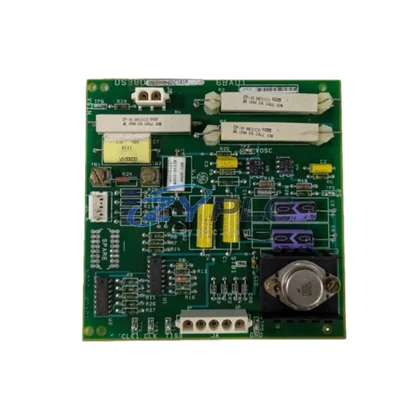
GE 8709-CA-08-RDSP1: Industrial Data Link and Signal Interface for Mark V Turbine Control Systems
The GE 8709-CA-08-RDSP1 is a relay and signal processing card engineered for deployment within GE’s Mark V and Mark VI turbine control platforms — one of the most widely installed distributed control architectures in power generation, oil and gas, and industrial turbomachinery applications. Rather than functioning as a passive signal conduit, this card serves as a critical node in the plant’s data link chain, bridging the gap between field-level relay logic, analog signal conditioning, and the supervisory control layer. In facilities where turbine availability directly determines revenue and operational continuity, the 8709-CA-08-RDSP1 provides the signal integrity and processing consistency that control engineers depend on across the full lifecycle of the installation.
Within the Mark V control architecture, the 8709-CA-08-RDSP1 occupies the I/O and signal processing layer, receiving discrete relay outputs and analog process signals from field-mounted sensors — including thermocouple arrays, vibration probes, pressure transmitters, and speed pickups — and conditioning them for reliable transmission to the Mark V’s core control processors. The card interfaces directly with the Mark V’s TCEA and TCCA core processor boards, which execute the turbine’s protection, sequencing, and load control logic. Signal fidelity at this interface is non-negotiable: any degradation in relay response time or analog accuracy propagates directly into the turbine’s control decisions, making the quality and condition of the 8709-CA-08-RDSP1 a system-level concern rather than a component-level one.
The data flow through the 8709-CA-08-RDSP1 begins at the field terminal layer, where signals from Mark V terminal boards — including the TBCI contact input board and TBQC terminal board — are routed into the card’s relay and signal conditioning circuits. Processed signals are then passed upstream to the Mark V’s I/O processors, which aggregate data from multiple signal processing cards across the control panel. This aggregated data is transmitted over the Mark V’s internal communication bus to the UCSA and UCSB processor modules, which execute the turbine’s real-time control algorithms and generate output commands to actuators, fuel valves, and inlet guide vane controllers.
At the network and supervisory layer, the Mark V system — with the 8709-CA-08-RDSP1 contributing reliable signal data — communicates with plant SCADA systems and historian platforms via the Mark V HMI workstation running GE’s Cimplicity or ToolboxST software. This vertical integration, from field relay through signal processing card to supervisory visualization, is what enables operators to monitor turbine exhaust temperatures, shaft vibration trends, and fuel flow rates in real time. The 8709-CA-08-RDSP1’s role in maintaining clean, noise-free signal data is therefore directly linked to the quality of the process data visible at the HMI and SCADA level.
For facilities operating Mark VI or Mark VIe upgrades alongside legacy Mark V panels, the 8709-CA-08-RDSP1 supports hybrid architecture deployments where older signal processing hardware must coexist with newer I/O modules. In these configurations, the card’s standardized form factor and electrical interface allow it to be retained within the existing panel while upstream communication is modernized. This approach significantly reduces retrofit capital expenditure by preserving functional field wiring and terminal board infrastructure while upgrading the control processor and network communication layers.
Remote diagnostics and predictive maintenance are increasingly important in turbine control environments, and the 8709-CA-08-RDSP1 supports these objectives by providing stable, repeatable signal outputs that enable trend analysis at the SCADA and historian level. When signal drift or relay contact degradation is detected through historical data comparison, maintenance teams can plan targeted card replacements during scheduled outages rather than responding to unplanned trips. ZYPLC maintains verified inventory of the 8709-CA-08-RDSP1 to support both planned maintenance cycles and emergency sourcing requirements, with all units undergoing functional testing prior to shipment.
Long-term parts availability is a persistent challenge in Mark V installations, as GE has transitioned its turbine control product line toward the Mark VIe platform. ZYPLC’s inventory strategy addresses this challenge directly, maintaining stock of critical signal processing cards — including the 8709-CA-08-RDSP1 — to support the installed base of Mark V systems that will remain in service for years to come. All units are supplied with a Warranty and support terms confirmed before quote, providing procurement and maintenance teams with the assurance needed for both capital spares programs and emergency replacement sourcing.
Compatibility & Integration Notes
| Parameter |
Specification |
| System Role |
Relay & Signal Processing Interface — Mark V/VI Turbine Control |
| SKU / Part Number |
8709-CA-08-RDSP1 |
| Brand / Manufacturer |
GE (General Electric Automation & Controls) |
| Series |
Mark V / Mark VI Turbine Control Platform |
| Signal Types Supported |
Discrete relay contacts; analog process signals (thermocouple, RTD, 4–20 mA) |
| Interface Compatibility |
Mark V TCEA/TCCA core processors; TBCI/TBQC terminal boards |
| Communication Bus |
Mark V internal I/O bus; upstream to UCSA/UCSB processor modules |
| SCADA/HMI Integration |
Via Mark V HMI (Cimplicity / ToolboxST); Ethernet to plant historian |
| Protocol Support |
Mark V proprietary I/O bus; Modbus RTU (via gateway); OPC (via HMI server) |
| Network Compatibility |
Mark V, Mark VI, Mark VIe hybrid panel configurations |
| Operating Temperature |
0°C to +60°C |
| Mounting |
Mark V panel card rack (standard GE card cage) |
| Product Origin |
United States |
| Warranty |
Warranty and support terms confirmed before quote (ZYPLC tested & verified) |
Connected Automation Data Flow
The 8709-CA-08-RDSP1 achieves its full value within a coordinated Mark V signal chain. At the field level, discrete contact signals from turbine protection relays and limit switches are routed through the TBCI contact input terminal board, which feeds directly into the relay processing circuits of the 8709-CA-08-RDSP1. Simultaneously, analog process variables — exhaust thermocouple arrays, compressor inlet pressure transmitters, and lube oil temperature sensors — are conditioned through the card’s analog signal processing circuits before being passed to the I/O processor layer.
The processed signal data is aggregated by the Mark V’s UCSA processor module, which executes the turbine’s real-time protection and sequencing logic. Output commands generated by the UCSA are transmitted to actuator driver cards — including the SDCC servo driver card and TTUR turbine trip relay board — which translate digital control commands into physical actuator movements on fuel control valves and inlet guide vanes. This closed-loop signal path, anchored by the 8709-CA-08-RDSP1 at the input conditioning stage, determines the turbine’s response speed and protection accuracy.
At the network layer, the Mark V panel communicates with the plant’s DCS or SCADA system via the Mark V HMI workstation, which runs GE’s Cimplicity SCADA software and aggregates turbine data for operator visualization and alarm management. For facilities integrating Mark V data into broader plant information systems, an OPC server hosted on the HMI workstation publishes real-time turbine parameters — including those derived from signals processed by the 8709-CA-08-RDSP1 — to plant historian platforms such as OSIsoft PI or Wonderware InTouch. This data pathway enables long-term trend analysis, predictive maintenance scheduling, and regulatory compliance reporting without requiring modifications to the Mark V panel hardware.
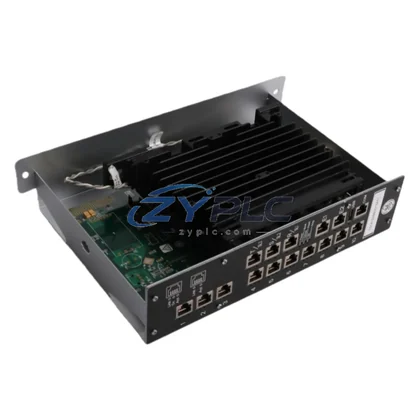
In hybrid modernization projects, the 8709-CA-08-RDSP1 coexists with newer Mark VIe I/O modules and IS200 series cards within the same control cabinet, allowing phased upgrades that preserve existing field wiring while modernizing the control processor and Ethernet communication infrastructure. Industrial-grade managed Ethernet switches on the control network segment provide the VLAN segmentation and traffic prioritization needed to isolate turbine control data from plant IT networks, maintaining communication determinism across the full data link from field relay to SCADA server.
Solving Data Isolation in Industrial Sites
One of the most persistent challenges in Mark V turbine installations is data isolation — the condition where critical process signals exist within the turbine control panel but cannot be efficiently accessed by plant-level monitoring, maintenance, or optimization systems. The 8709-CA-08-RDSP1 addresses this challenge at its root by ensuring that relay and analog signals are processed with sufficient fidelity and consistency to support reliable upstream data integration.
Protocol fragmentation is a related challenge in facilities operating mixed-generation turbine control hardware. Mark V panels use a proprietary internal I/O bus that predates modern industrial Ethernet standards, creating a communication boundary between the turbine control layer and plant-level systems that use Modbus TCP, OPC-UA, or PROFINET. The solution in most installations is a gateway architecture: the Mark V HMI workstation acts as a protocol bridge, translating the Mark V’s internal data into OPC or Modbus formats accessible to plant SCADA and MES systems. The 8709-CA-08-RDSP1’s role in this architecture is to ensure that the signal data entering the Mark V’s processor layer is accurate and stable — because any signal quality issue at the card level will propagate as data quality issues at every layer above it.
Remote monitoring and diagnostics present additional complexity in turbine installations, particularly in remote power generation sites, offshore platforms, and pipeline compressor stations where on-site maintenance resources are limited. By maintaining verified spare inventory of the 8709-CA-08-RDSP1, ZYPLC enables maintenance teams to implement a rapid-replacement strategy: when remote diagnostics identify a degraded signal processing card, a tested replacement unit can be dispatched immediately, minimizing the diagnostic-to-repair interval and reducing turbine downtime. This RFQ-based availability strategy, combined with the Warranty and support terms confirmed before quote on all supplied units, directly addresses the operational risk associated with aging Mark V hardware in critical applications.
Production line transparency — the ability to see real-time turbine performance data at the plant management level — depends on the integrity of the signal chain from field device through the 8709-CA-08-RDSP1 to the SCADA and historian layer. Facilities that invest in maintaining high-quality signal processing hardware at the card level consistently report fewer nuisance trips, more accurate performance trending, and lower unplanned maintenance costs over the turbine’s operational life.
Industrial Connectivity FAQ
Q1: Can the 8709-CA-08-RDSP1 be used in both Mark V and Mark VI turbine control panels without modification?
A: The 8709-CA-08-RDSP1 is primarily designed for Mark V panel configurations. Compatibility with Mark VI panels depends on the specific rack and backplane configuration of the installation. In hybrid Mark V/Mark VI upgrade projects, the card is typically retained in the Mark V section of the panel while new Mark VI I/O modules are added for expanded functionality. ZYPLC recommends verifying the panel drawing and card cage configuration before ordering to confirm direct compatibility.
Q2: How does signal processing card quality affect SCADA data accuracy and remote monitoring reliability?
A: Signal processing card condition directly determines the quality of data available at every layer above it in the control architecture. A degraded 8709-CA-08-RDSP1 may introduce signal noise, relay contact bounce, or analog offset errors that appear as process variable fluctuations at the SCADA and historian level. These data quality issues can trigger nuisance alarms, corrupt trend data, and reduce the effectiveness of predictive maintenance analytics. Replacing aging or suspect cards with tested units — such as those supplied by ZYPLC under Warranty and support terms confirmed before quote — is the most effective way to restore data integrity across the full signal chain.
Q3: What is the typical lead time for 8709-CA-08-RDSP1 units, and how does ZYPLC support emergency sourcing requirements?
A: ZYPLC maintains verified inventory of the 8709-CA-08-RDSP1 to support both planned maintenance and emergency sourcing scenarios. For emergency requirements, units can typically be dispatched within 24–48 hours of order confirmation, with international shipping via DHL or FedEx Express to minimize transit time. All units are functionally tested prior to shipment and covered by a Warranty and support terms confirmed before quote. To initiate an emergency order or request a quotation, contact ZYPLC at plc.sales@zyplc.com or +86 19859288691.
Q4: How should the 8709-CA-08-RDSP1 be handled and installed to ensure long-term reliability in turbine control panels?
A: The 8709-CA-08-RDSP1 should be handled using ESD-safe procedures, including grounded wrist straps and anti-static packaging, during removal and installation. The card should be inserted into the Mark V card cage with the panel de-energized where possible, and all connector seating should be verified before power restoration. Operating environment conditions — particularly temperature, humidity, and vibration levels — should be maintained within GE’s published specifications for the Mark V panel. ZYPLC supplies all units in protective anti-static packaging with functional test documentation included.