GE DS200DCFBG1BNC System-Ready Power Supply for Mark V Architecture
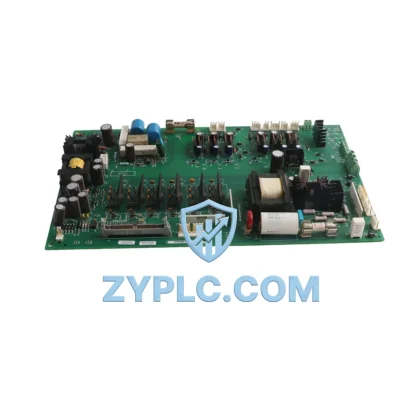
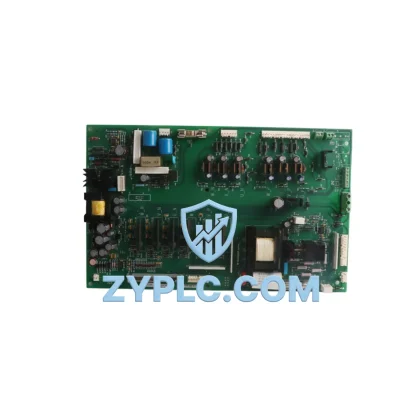
The GE DS200DCFBG1BNC is a DC power supply board engineered for deployment within the GE Mark V turbine control system architecture. As a foundational power layer component, this board ensures stable, regulated DC voltage distribution across the Mark V control rack, directly supporting the operational continuity of the CPU, I/O, and communication modules that depend on consistent power delivery. In multi-layer automation environments — spanning control, I/O, network, power, HMI, and actuator layers — the DS200DCFBG1BNC serves as the electrical backbone that enables every upstream and downstream component to perform within specification.
Within the Mark V platform, the DS200DCFBG1BNC interfaces directly with the main control rack, supplying regulated power to processor boards such as the DS200TCQCG1BHF (Turbine Control Quad Core Board) and the DS200TCDAG1AAA (Turbine Control Diagnostic Board). Its regulated output supports the signal integrity required by I/O boards including the DS200IOCAG1B and DS200DSPCH1ADA, which handle analog and digital signal conditioning for field instrumentation. The power supply board’s architecture is designed to minimize voltage ripple and transient interference, which is critical in turbine environments where sensor accuracy and actuator response time directly affect system safety and efficiency.
From a system architecture perspective, the DS200DCFBG1BNC is not an isolated component — it is a node in a tightly integrated control hierarchy. The Mark V system’s redundancy architecture, which may include dual or triple-redundant CPU configurations using boards such as the DS200TCPSG1A, relies on the power supply layer to maintain uninterrupted operation during single-point failures. When one power supply board is under maintenance or replacement, the system’s redundant power path ensures that the DS200SDCIG1B (Signal Distribution and Conditioning Interface) and communication gateway modules continue to operate without interruption, preserving turbine uptime and preventing costly unplanned shutdowns.
Network and communication stability within the Mark V architecture also depends on the power supply layer. Communication modules such as the DS200TCRAG1AAA (Turbine Control Relay and Analog Board) and Ethernet or serial gateway cards require clean, stable power to maintain protocol integrity across Modbus, ARCNET, and proprietary GE communication buses. Any power instability at the board level can cascade into communication timeouts, false alarms, or loss of supervisory control — making the DS200DCFBG1BNC a critical enabler of network-layer reliability.
For HMI integration, the Mark V system’s operator interface — typically running on GE’s Cimplicity or third-party SCADA platforms — depends on the control rack’s power stability to maintain real-time data exchange. The DS200DCFBG1BNC supports this by ensuring that the rack’s backplane voltage remains within tolerance, allowing the HMI to receive accurate process variables, alarm states, and control feedback without data corruption or communication loss.
At the actuator and execution layer, the power supply board indirectly supports the performance of servo valve drivers, relay output modules, and speed control circuits by maintaining the electrical environment in which these components operate. Boards such as the DS200VPBLG1AEE (Valve Position Board) and associated relay modules depend on stable rack power to execute precise control commands from the CPU layer without voltage-induced timing errors.
Architecture Specification Table
| Parameter |
Specification |
| System Role |
DC Power Supply Board — Mark V Control Rack Power Layer |
| Compatible Platform |
GE Mark V Turbine Control System |
| Series |
DS200 Series |
| Board Type |
Power Supply / Voltage Regulation Board |
| Input Voltage |
DC Input (nominal rack supply voltage, Mark V specification) |
| Output |
Regulated DC voltage for rack backplane distribution |
| Communication Compatibility |
ARCNET, Modbus RTU, GE Proprietary Bus |
| Mounting |
Mark V Control Rack — Standard DS200 Form Factor |
| Operating Temperature |
0°C to 60°C (standard industrial panel environment) |
| Humidity |
5% to 95% non-condensing |
| Installation Environment |
Control cabinet / turbine control room enclosure |
| Warranty |
12-Month Warranty — Covered by ZYPLC |
| Condition |
Tested, inspected, ready for system integration |
Coordinated Control System Design
The DS200DCFBG1BNC is most effectively deployed as part of a coordinated Mark V control system architecture. In a typical turbine control cabinet, this power supply board works in concert with the following components to deliver a complete, integrated control solution:
The DS200TCQCG1BHF Turbine Control Quad Core Board serves as the primary CPU, executing control logic and managing system-wide process variables. The DS200TCDAG1AAA Diagnostic Board monitors system health and fault conditions, relying on stable power from the DS200DCFBG1BNC to maintain accurate diagnostic reporting. I/O expansion is handled by the DS200IOCAG1B I/O Controller Board and the DS200DSPCH1ADA Digital Signal Processor, both of which require clean DC power for accurate analog-to-digital conversion and digital output switching.
Communication between the Mark V rack and plant-level SCADA or DCS systems is managed through the DS200TCRAG1AAA Relay and Analog Board, which interfaces with field devices and transmits process data upstream. The DS200SDCIG1B Signal Distribution and Conditioning Interface ensures that field signals are properly conditioned before reaching the CPU layer. For redundancy-critical applications, the DS200TCPSG1A provides additional processing capacity, and the DS200VPBLG1AEE Valve Position Board manages servo valve feedback loops at the execution layer. Together, these components form a complete, layered control architecture in which the DS200DCFBG1BNC’s power delivery function is indispensable.
Application in Layered Automation Systems
The GE DS200DCFBG1BNC finds application across a broad range of industrial sectors where the Mark V turbine control platform is deployed. In power generation facilities — including gas turbine, steam turbine, and combined-cycle plants — the board supports continuous turbine operation by maintaining rack power stability during load fluctuations and grid disturbances. In oil and gas processing facilities, the Mark V system controls compressor trains and gas turbine-driven pumps, where the DS200DCFBG1BNC ensures that control rack integrity is maintained in harsh, vibration-prone environments.
In petrochemical and refinery applications, the board supports the Mark V’s role in managing critical rotating equipment, where unplanned downtime carries significant safety and financial consequences. Mining and minerals processing operations use the Mark V platform to control large drive systems and conveyor infrastructure, relying on the power supply board to sustain control rack operation in dusty, high-vibration environments. In water and wastewater treatment facilities, the DS200DCFBG1BNC supports pump and blower control systems where continuous operation is essential for regulatory compliance and public health.
For metallurgical and steel production plants, the Mark V system manages furnace controls and rolling mill drives, where the power supply board’s voltage regulation capability directly affects process consistency and product quality. Across all these applications, the DS200DCFBG1BNC’s role as a power layer component makes it a universal enabler of Mark V system reliability, regardless of the specific process being controlled.
Architecture Engineering FAQ
Q1: Is the DS200DCFBG1BNC compatible with all Mark V control rack configurations, including redundant CPU setups?
A: Yes. The DS200DCFBG1BNC is designed for the standard DS200 series rack form factor used across Mark V configurations, including simplex, dual-redundant, and triple-redundant (TMR) CPU architectures. Its regulated DC output is compatible with all standard Mark V backplane voltage requirements, making it suitable for both single-rack and multi-rack system expansions. For TMR configurations, we recommend verifying the rack slot assignment with your system documentation to ensure correct power domain alignment.
Q2: What is the recommended procedure for replacing the DS200DCFBG1BNC in a live Mark V system, and how does the 12-Month Warranty apply?
A: For live system replacement, GE Mark V best practice recommends switching the affected rack to its redundant power path before removing the DS200DCFBG1BNC, ensuring that CPU and I/O boards remain powered throughout the swap. The replacement board should be visually inspected and bench-tested prior to installation. All DS200DCFBG1BNC units supplied by ZYPLC are covered by a 12-Month Warranty from the date of shipment, covering manufacturing defects and functional failures under normal operating conditions. Warranty claims are processed directly through ZYPLC’s technical support team.
Q3: How does the DS200DCFBG1BNC support long-term maintenance planning and spare parts inventory strategy for Mark V systems?
A: Given the Mark V platform’s extended service life in many industrial facilities, maintaining a spare DS200DCFBG1BNC in inventory is a recognized best practice for minimizing mean time to repair (MTTR) in the event of power supply board failure. ZYPLC maintains stock of tested DS200DCFBG1BNC units to support rapid deployment, reducing the risk of extended turbine downtime due to parts unavailability. For facilities operating multiple Mark V racks, a ratio of one spare power supply board per three to five racks is a commonly recommended inventory strategy among industrial maintenance engineers.
© 2026 ZYPLC. All rights reserved.
Original Source: https://zyplc.com
Contact: +86 19859288691 | plc.sales@zyplc.com