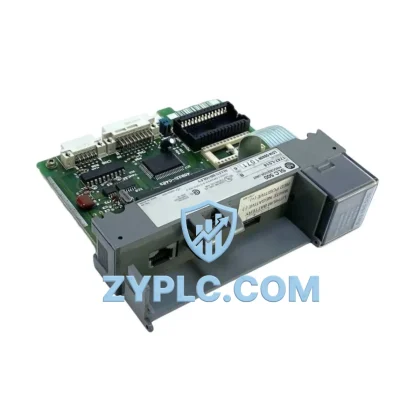
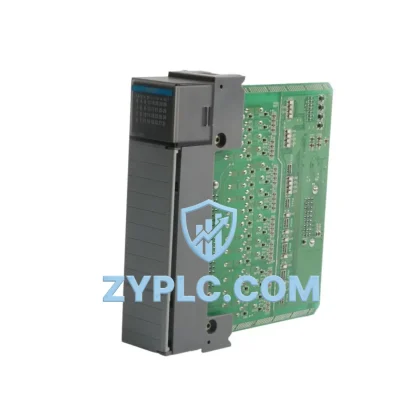
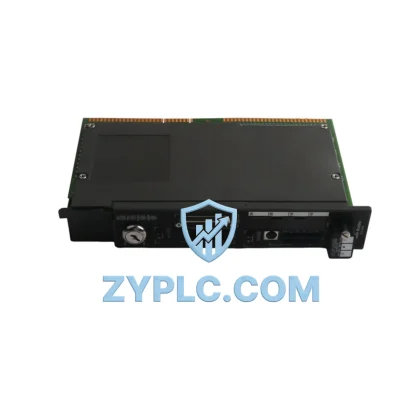
GE DS200DSPCH1ADA System-Ready Digital Signal Processor for Mark V Control Architecture
The GE DS200DSPCH1ADA is a high-performance Digital Signal Processor (DSP) board engineered as a core computational component within the GE Mark V Turbine Control System. Rather than functioning as a standalone module, the DS200DSPCH1ADA is deeply embedded in the layered control architecture of gas turbine, steam turbine, and combined-cycle power generation systems. Its role spans the control layer, I/O coordination layer, and communication backbone — making it a critical enabler of system-wide consistency, real-time signal processing, and long-term operational reliability.
In a complete Mark V control panel, the DS200DSPCH1ADA works in close coordination with the DS200TCQCH1A I/O terminal board, the DS200SDCCG1A speed and dynamics control card, and the DS200TCEAG1A terminal board assembly. These components share a common backplane architecture, allowing the DSP board to receive, process, and distribute real-time analog and digital signals across the turbine’s protective and regulatory loops. The board’s signal processing capability directly supports the sequencing logic managed by the DS200TCPSG1A power supply board and the DS200TCRAG1A relay output board, ensuring that control commands are executed with microsecond-level precision.
At the network and communication layer, the DS200DSPCH1ADA interfaces with the Mark V’s internal IONET communication bus, enabling synchronized data exchange between the <R>, <S>, and <T> redundant control processors. This triple-redundant architecture is a defining feature of the Mark V platform, and the DSP board’s compatibility with all three processor channels ensures that no single point of failure can interrupt turbine operation. When paired with the DS200TCQCH1A and DS200DSPCH1ADA in a redundant configuration, the system achieves the fault-tolerant performance required by power utility and petrochemical operators.
From an I/O layer perspective, the DS200DSPCH1ADA processes thermocouple inputs, RTD signals, 4–20 mA analog loops, and discrete digital I/O channels that feed into the turbine’s exhaust temperature control, fuel valve positioning, and vibration monitoring subsystems. These signals are conditioned and routed through the board’s onboard DSP firmware to the DS200TCEAG1A terminal board, which provides the physical wiring interface to field instrumentation. The board’s high-speed processing ensures that temperature exceedances, overspeed events, and flame-out conditions are detected and acted upon within the system’s defined response time windows.
For human-machine interface (HMI) integration, the DS200DSPCH1ADA supports data uplink to the Mark V’s CIMPLICITY-based operator workstation environment, where turbine performance trends, alarm histories, and control setpoints are visualized. Engineering teams can use the HMI layer to monitor DSP board health, review signal quality diagnostics, and adjust control parameters without interrupting turbine operation. This contextual integration between the DSP board and the HMI layer is essential for predictive maintenance programs and long-term asset management strategies.
In the power supply layer, the DS200DSPCH1ADA operates within the Mark V panel’s regulated DC power distribution network, typically supplied by the DS200TCPSG1A power supply module. The board’s low-power DSP architecture minimizes thermal load within the control cabinet, contributing to the overall thermal stability of the panel — a critical factor in high-ambient-temperature installations such as offshore platforms, desert power plants, and tropical industrial facilities.
Architecture Specification Table
| Parameter |
Specification |
| System Role |
Digital Signal Processor — Mark V Control Layer |
| Compatible Platform |
GE Mark V Turbine Control System |
| Processor Architecture |
Dedicated DSP with real-time signal conditioning |
| Signal Types Supported |
Thermocouple, RTD, 4–20 mA analog, discrete digital I/O |
| Communication Interface |
IONET internal bus; compatible with <R>, <S>, <T> processors |
| Redundancy Support |
Triple-redundant processor architecture (TMR) |
| Power Supply Compatibility |
Mark V regulated DC panel power (DS200TCPSG1A) |
| Installation Environment |
19″ rack-mount Mark V control panel; DIN-rail compatible backplane |
| Operating Temperature |
0°C to +60°C (standard industrial range) |
| Humidity Tolerance |
5%–95% RH, non-condensing |
| Electrical Isolation |
Optocoupler-isolated I/O channels |
| Firmware |
GE Mark V DSP firmware; field-upgradeable |
| Warranty |
12-Month Warranty — covers full board functionality and signal integrity |
| Origin |
United States |
| Availability |
In-stock; ready for immediate dispatch |
Coordinated Control System Design
Deploying the DS200DSPCH1ADA within a Mark V control system requires a holistic understanding of the panel’s modular architecture. The board occupies a dedicated slot within the Mark V’s VME-style backplane, where it communicates directly with the DS200SDCCG1A speed and dynamics control card to manage turbine acceleration ramps, load rejection responses, and frequency regulation events. In parallel, the DS200TCQCH1A I/O terminal board aggregates field wiring from thermocouples and pressure transmitters, feeding conditioned signals into the DSP board’s analog input channels.
For relay output and protective tripping functions, the DS200DSPCH1ADA coordinates with the DS200TCRAG1A relay output board, which drives solenoid valves, trip relays, and alarm annunciators based on the DSP board’s processed logic outputs. In redundant panel configurations, a second DS200DSPCH1ADA may be installed in the <S> or <T> processor slot, with the IONET bus arbitrating between the three processor channels to select the median voted output — a core feature of the Mark V’s Triple Modular Redundancy (TMR) design.
Communication gateways such as the IS200ESELH1A Ethernet adapter or the DS200TCPSG1A-integrated serial ports extend the Mark V’s connectivity to plant DCS networks, SCADA systems, and remote monitoring platforms. This network layer integration allows the DS200DSPCH1ADA’s real-time data to be aggregated into plant-wide historian databases, supporting compliance reporting, performance benchmarking, and predictive maintenance analytics. The board’s contextual integration capability ensures that data flows seamlessly from the turbine control layer to the enterprise asset management layer without protocol conversion bottlenecks.
Application in Layered Automation Systems
The DS200DSPCH1ADA finds its primary application in power generation facilities operating GE Frame 5, Frame 6, Frame 7, and Frame 9 gas turbines, where the Mark V control system is the standard platform for turbine sequencing, protection, and load control. In combined-cycle plants, the board supports coordinated control between the gas turbine, heat recovery steam generator (HRSG), and steam turbine, ensuring that exhaust temperature profiles and steam conditions remain within design limits during load transients.
In petrochemical and refinery applications, the DS200DSPCH1ADA is deployed in compressor train control systems, where it manages anti-surge control loops, suction pressure regulation, and motor protection sequences. The board’s high-speed DSP architecture ensures that surge detection and valve actuation occur within the millisecond response windows required by API 670 machinery protection standards.
For water treatment and pumping station applications, the Mark V platform — anchored by the DS200DSPCH1ADA — provides reliable pump sequencing, flow control, and pressure regulation across multi-pump installations. The board’s compatibility with 4–20 mA transmitters and discrete digital I/O makes it well-suited for integration with flow meters, level sensors, and variable frequency drives in water infrastructure projects.
In mining and metallurgical facilities, the DS200DSPCH1ADA supports kiln drive control, conveyor sequencing, and crusher protection systems, where the Mark V’s robust TMR architecture provides the fault tolerance required for continuous 24/7 operations. The board’s long-term availability through specialist suppliers such as ZYPLC ensures that aging Mark V installations can be maintained without costly platform migrations.
Architecture Engineering FAQ
Q1: Is the DS200DSPCH1ADA compatible with all Mark V panel configurations, including simplex and TMR systems?
Yes. The DS200DSPCH1ADA is designed for use in both simplex (<R> processor only) and Triple Modular Redundancy (TMR) configurations (<R>, <S>, <T> processors). In TMR systems, three DS200DSPCH1ADA boards operate in parallel, with the IONET bus performing median voting to select the correct output. This architecture ensures that a single board failure does not interrupt turbine operation, making it suitable for critical power generation and process control applications.
Q2: What is the recommended procedure for replacing a DS200DSPCH1ADA in a live Mark V system?
In TMR configurations, the DS200DSPCH1ADA can be replaced in a hot-standby procedure: the faulty processor channel is isolated via the Mark V diagnostic interface, the board is physically replaced, and the new board is synchronized to the active processor channels before being brought back online. In simplex configurations, a planned turbine shutdown is required. ZYPLC recommends pre-staging a tested replacement board and coordinating with the site’s control system engineer to minimize downtime. All replacement boards supplied by ZYPLC are covered by a 12-Month Warranty.
Q3: How does the 12-Month Warranty apply to the DS200DSPCH1ADA, and what does it cover?
ZYPLC’s 12-Month Warranty covers the DS200DSPCH1ADA against defects in materials, workmanship, and signal processing functionality under normal operating conditions. The warranty period begins from the date of shipment. In the event of a board failure within the warranty period, ZYPLC will provide a replacement board or repair service at no additional cost. The warranty does not cover damage resulting from incorrect installation, overvoltage events, or unauthorized firmware modifications. For warranty claims or technical support, contact ZYPLC at plc.sales@zyplc.com or +86 19859288691.
© 2026 ZYPLC. All rights reserved.
Original Source: https://zyplc.com
Contact: +86 19859288691 | plc.sales@zyplc.com