GE DS200DTBBG1ABB Energy-Saving Turbine Control Board Mark V: Precision Energy Control for Optimized Production Lines
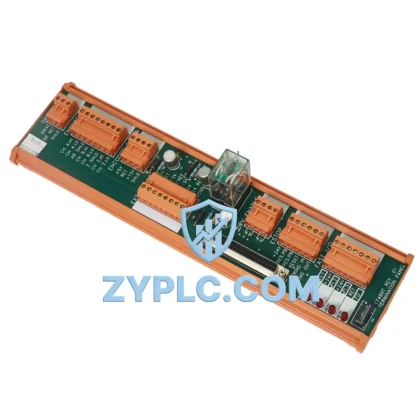
The GE DS200DTBBG1ABB is a high-performance turbine control PC board designed for the GE Mark V Turbine Control System — one of the most widely deployed gas turbine management platforms in industrial power generation and heavy manufacturing. As factories and power plants face increasing pressure to reduce energy waste, improve equipment utilization, and lower operational costs, the DS200DTBBG1ABB plays a critical role in the energy feedback and control execution layer of the turbine drive system.
This board functions as a core data transfer and bus interface component within the Mark V architecture, enabling real-time communication between the turbine’s I/O modules, processor boards, and drive control subsystems. By maintaining stable, low-latency signal transmission, it directly supports the turbine’s ability to respond to load changes efficiently — reducing unnecessary fuel consumption during partial-load operation and minimizing energy spikes during startup and shutdown cycles.
Efficiency Performance Table
| Parameter |
Specification / Value |
| SKU / Part Number |
DS200DTBBG1ABB |
| Brand |
GE (General Electric) |
| Series |
Mark V Turbine Control System |
| Product Category |
Turbine Control PC Board / Bus Interface Module |
| Operating Voltage |
5 VDC / 15 VDC (Mark V backplane standard) |
| Power Consumption |
Low-draw design; optimized for continuous 24/7 operation |
| Running Efficiency |
Supports closed-loop turbine speed and load regulation |
| Compatible Systems |
GE Mark V, Mark VI (interface-compatible configurations) |
| Application Environment |
Gas turbine power plants, combined-cycle facilities, industrial compressor stations |
| Energy Saving Value |
Enables precise load-following control, reducing fuel burn at partial load |
| Origin |
USA |
| Warranty |
12-Month Warranty — Tested before shipment |
Energy-Aware Automation Architecture
In a modern turbine-driven power generation or industrial compression facility, energy efficiency is not achieved by a single component — it is the result of a tightly integrated control architecture. The DS200DTBBG1ABB sits at the heart of this architecture, serving as the communication backbone that links the turbine’s sensor inputs, processor logic, and actuator outputs into a coherent, responsive control loop.
At the processor level, the DS200DTBBG1ABB interfaces directly with boards such as the DS200TCQCG1BHF (Quad Core Processor Board) and the DS200TCDAG1BHF (Analog I/O Board), which handle real-time turbine speed calculations, exhaust temperature monitoring, and fuel valve positioning. These boards collectively determine how efficiently the turbine tracks its setpoint — and any degradation in bus communication quality translates directly into control lag, which increases fuel consumption and wear.
On the I/O side, the system relies on modules like the DS200IOCAG1B (I/O Controller Board) and the DS200SDCCG3A (Speed Detector Card) to capture high-frequency shaft speed signals and discrete contact inputs from protective relays. Accurate, low-jitter signal acquisition is essential for the turbine governor to maintain tight frequency regulation — a key factor in grid-connected power plants where frequency deviation penalties can be significant.
For drive-level energy regulation, the Mark V system communicates with external variable frequency drives and excitation controllers. In many installations, the DS200EXBDG1AEB (Exciter Bridge Board) manages generator field excitation, directly influencing reactive power output and overall generator efficiency. Coordinating this excitation control with the turbine’s active power output — a function enabled by stable bus communication through the DS200DTBBG1ABB — is fundamental to achieving high power factor operation and reducing transmission losses.
Data monitoring and system feedback are handled through the Mark V’s HMI interface, typically a GE Cimplicity-based SCADA workstation or a dedicated Mark V LCC (Local Control Console). These platforms aggregate real-time data from the turbine’s temperature, pressure, vibration, and speed sensors, presenting operators with the visibility needed to make informed decisions about load dispatch, maintenance scheduling, and energy optimization. The integrity of this data stream depends entirely on the reliable operation of bus interface boards like the DS200DTBBG1ABB.
Communication between the Mark V and plant-level DCS systems — such as those running on Modbus RTU, Profibus DP, or GE’s own ARCNET protocol — is also routed through the control panel’s communication modules. Ensuring that the DS200DTBBG1ABB maintains clean, error-free data transfer across the backplane is therefore a prerequisite for reliable plant-wide energy management integration.
Power Optimization in Real Production Lines
In gas turbine power plants operating in combined-cycle or cogeneration mode, the ability to precisely follow load demand — rather than running at fixed output — can reduce fuel consumption by 8–15% during off-peak periods. This load-following capability is entirely dependent on the turbine control system’s ability to receive accurate sensor data, process it in real time, and issue precise actuator commands without delay. A degraded or failing DS200DTBBG1ABB introduces communication errors that force the control system into conservative, less-efficient operating modes — or worse, trigger protective shutdowns that result in costly unplanned downtime.
Replacing a faulty DS200DTBBG1ABB with a tested, verified unit restores the turbine’s full control bandwidth. This means the governor can once again execute tight speed regulation during load transients, the exhaust temperature control loops can maintain optimal firing temperatures without over-fueling, and the anti-surge control for associated compressors can respond quickly enough to prevent surge events — each of which wastes significant energy and causes mechanical stress.
From a maintenance cost perspective, predictive maintenance strategies depend on continuous, high-quality data from the turbine’s sensor network. When bus communication is compromised, trend data becomes unreliable, making it impossible to detect early signs of bearing wear, combustion degradation, or compressor fouling. Restoring communication integrity with a replacement DS200DTBBG1ABB re-enables the data collection that supports condition-based maintenance — reducing both scheduled maintenance costs and the risk of catastrophic failures.
All DS200DTBBG1ABB units supplied by ZYPLC are fully tested prior to shipment, with functional verification performed on Mark V-compatible test benches. Stock is maintained for immediate dispatch, supporting rapid turnaround for both planned maintenance outages and emergency replacement scenarios. Each unit is covered by a 12-month warranty, reflecting our confidence in the quality of every board we supply.
Energy Optimization FAQ
Q1: How does replacing the DS200DTBBG1ABB improve turbine energy efficiency?
A degraded bus interface board introduces communication latency and data errors that force the turbine control system to operate with wider control margins — effectively reducing its ability to track load demand precisely. A new DS200DTBBG1ABB restores full communication bandwidth, allowing the governor to execute tighter control loops, reduce over-fueling, and maintain optimal firing temperatures. In load-following applications, this can translate to measurable reductions in specific fuel consumption.
Q2: Is the DS200DTBBG1ABB compatible with both Mark V and Mark VI systems?
The DS200DTBBG1ABB is designed and rated for the GE Mark V Turbine Control System. While some Mark V boards share physical form factors with early Mark VI configurations, direct interchangeability with Mark VI is not guaranteed without engineering verification. ZYPLC’s technical team can assist with compatibility assessment for your specific panel configuration before purchase.
Q3: What is the testing and quality assurance process before shipment?
Every DS200DTBBG1ABB unit undergoes functional testing on a Mark V-compatible test bench prior to dispatch. Testing covers backplane communication integrity, power rail stability, and signal path verification. Units that do not meet specification are not shipped. A full 12-month warranty is provided on all units, covering defects in materials and workmanship under normal operating conditions.
Q4: How quickly can a replacement DS200DTBBG1ABB be sourced for an emergency outage?
ZYPLC maintains inventory of DS200DTBBG1ABB and related Mark V components to support rapid dispatch. For emergency outage situations, expedited shipping options are available. Contact our sales team at plc.sales@zyplc.com or +86 19859288691 to confirm current stock availability and lead time for your location.
© 2026 ZYPLC. All rights reserved.
Original Source: https://zyplc.com
Contact: +86 19859288691 | plc.sales@zyplc.com