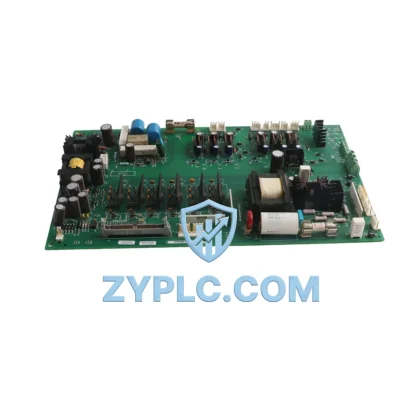
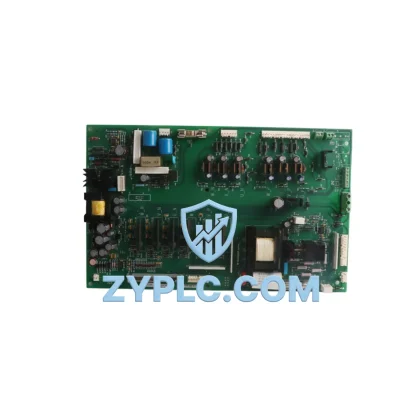
GE DS200SHVMG1AFE System-Ready Servo Interface for Mark V Architecture
The GE DS200SHVMG1AFE is a high-integrity servo interface board engineered for deployment within the GE Mark V Turbine Control System — one of the most widely adopted distributed control architectures in power generation, oil & gas, and heavy industrial environments. Rather than functioning as a standalone component, the DS200SHVMG1AFE occupies a critical position within the Mark V’s layered control hierarchy, bridging the gap between the digital command layer and the physical actuation layer. Its role in maintaining servo loop integrity, signal fidelity, and real-time feedback processing makes it indispensable to any Mark V-based control cabinet operating under continuous or cyclic load conditions.
In a complete Mark V control architecture, the DS200SHVMG1AFE interfaces directly with the TCCA (Turbine Control Core Assembly) and TCCB processor boards, receiving position demand signals and translating them into precise analog servo drive commands. This tight integration with the processor layer ensures that valve positioning, fuel control, and speed governing functions remain synchronized across all control channels. The board’s analog output resolution and feedback sampling rate are matched to the servo actuator response characteristics defined in GE’s Mark V engineering specifications, ensuring that system tuning parameters established during commissioning remain valid across the full operational lifecycle.
From an architecture standpoint, the DS200SHVMG1AFE is mounted within the Mark V’s standard VME-compatible backplane, sharing the same rack infrastructure as companion boards such as the DS200SDCCG1AFE (Speed and Dynamics Control Card), the DS200TCQCG1BHF (Turbine Control I/O Board), and the DS200DSPCH1ADA (Digital Signal Processor Card). This co-location within a common backplane minimizes inter-board signal latency and simplifies cable routing within the control enclosure. The shared backplane also supports the Mark V’s TMR (Triple Modular Redundancy) architecture, where three independent control paths — designated R, S, and T — vote on output commands to eliminate single-point failures. The DS200SHVMG1AFE participates in this redundancy scheme, ensuring that servo commands are validated across all three channels before actuation.
At the I/O layer, the DS200SHVMG1AFE connects to servo valve drivers and LVDT (Linear Variable Differential Transformer) position feedback sensors through dedicated terminal board assemblies such as the DS200TBCIH1ABA or equivalent Mark V terminal modules. These terminal boards provide the physical wiring interface between the control cabinet and field instrumentation, isolating the servo interface board from transient voltages and ground loops that are common in turbine hall environments. The LVDT feedback signals are conditioned and digitized on the DS200SHVMG1AFE itself, reducing the signal processing burden on the main processor boards and improving overall system response time.
For facilities operating GE Frame 5, Frame 6, Frame 7, or Frame 9 gas turbines — or steam turbines equipped with Mark V controls — the DS200SHVMG1AFE is a non-negotiable component in any maintenance or upgrade strategy. Its compatibility with the Mark V’s communication architecture, including the IONet serial communication bus that links I/O boards to the processor core, ensures that replacement units can be integrated without requiring changes to the existing software configuration or I/O mapping. This plug-and-play compatibility significantly reduces planned maintenance windows and eliminates the risk of configuration errors during board replacement.
In layered automation systems, the DS200SHVMG1AFE also interacts with the HMI layer through the Mark V’s operator interface terminals, which display real-time servo position feedback, valve demand signals, and diagnostic alarms. Operators monitoring turbine performance from a GE Cimplicity or equivalent SCADA platform can observe the servo loop status in real time, with the DS200SHVMG1AFE providing the underlying data that drives these displays. This transparency from the field device level to the operator interface level is a hallmark of the Mark V’s integrated control philosophy and is fully supported by the DS200SHVMG1AFE’s onboard diagnostics and self-test routines.
All DS200SHVMG1AFE units supplied by ZYPLC are fully tested under simulated Mark V operating conditions prior to dispatch, with functional verification of servo command output, LVDT feedback processing, and backplane communication integrity. Each unit is covered by a 12-Month Warranty and is supported by ZYPLC’s Contextual Integration service, which provides application-specific commissioning guidance, compatibility verification against your existing Mark V configuration, and post-installation technical support. Our inventory is maintained to support both emergency replacement and planned maintenance schedules, with same-day dispatch available for in-stock units.
Architecture Specification Table
| System Role |
Servo Interface Board — Mark V Turbine Control System |
| SKU / Part Number |
DS200SHVMG1AFE |
| Brand |
GE (General Electric) |
| Series |
DS200 / Mark V |
| Product Type |
Servo Interface Module |
| Form Factor |
VME-compatible PCB, Mark V rack-mount |
| Servo Output |
Analog servo drive command, configurable per Mark V tuning constants |
| Feedback Input |
LVDT position feedback, onboard signal conditioning and digitization |
| Communication |
IONet serial bus (Mark V internal I/O network) |
| Redundancy Support |
TMR (Triple Modular Redundancy) — R, S, T channel architecture |
| Compatible Processor Boards |
TCCA, TCCB (Mark V processor core) |
| Operating Environment |
Industrial control cabinet, turbine hall installation |
| Origin |
United States |
| Warranty |
12-Month Warranty — all units tested prior to dispatch |
| Integration Support |
Contextual Integration service available |
Coordinated Control System Design
The DS200SHVMG1AFE does not operate in isolation — its value is realized through its coordinated role within the broader Mark V control system. In a typical Mark V cabinet, the servo interface board works in concert with the DS200SDCCG1AFE speed and dynamics control card, which generates the speed error signals that the DS200SHVMG1AFE translates into servo valve commands. The DS200TCQCG1BHF turbine control I/O board manages discrete input and output signals from field devices, while the DS200DSPCH1ADA digital signal processor handles the computational load of the control algorithms, freeing the DS200SHVMG1AFE to focus exclusively on servo loop management.
Power distribution within the Mark V cabinet is managed by dedicated power supply modules such as the DS200PCCAG1ABB power conditioning card, which provides regulated DC power to all boards in the rack, including the DS200SHVMG1AFE. Stable, conditioned power is essential for the analog servo output circuits, where even minor voltage fluctuations can introduce positioning errors in sensitive valve actuators. The Mark V’s power architecture is designed with redundant power feeds to ensure that a single power supply failure does not interrupt servo control.
At the field interface level, the DS200SHVMG1AFE connects to terminal boards such as the DS200TBCIH1ABA, which provides the physical wiring terminals for servo valve cables and LVDT sensor leads. These terminal boards are mounted on the cabinet door or sub-panel and are connected to the DS200SHVMG1AFE via ribbon cables or direct backplane connections. For systems requiring expanded I/O capacity, additional DS200TCDAG1AHF analog I/O boards can be added to the same rack, extending the system’s ability to monitor additional process variables without affecting the servo interface board’s dedicated function.
In TMR configurations, three DS200SHVMG1AFE boards — one per control channel — operate simultaneously, with their outputs voted by the Mark V’s voting logic to produce a single, validated servo command. This architecture ensures that a single board failure does not cause a turbine trip, allowing maintenance teams to replace a faulty board during operation without interrupting power generation. The DS200VPRO voter protection module coordinates the voting process and provides diagnostic outputs that identify which channel has deviated from the consensus, enabling rapid fault isolation.
Application in Layered Automation Systems
The DS200SHVMG1AFE finds application across a broad range of industries where GE Mark V turbine controls are deployed. In power generation facilities — including combined-cycle gas turbine plants, simple-cycle peakers, and steam turbine installations — the board manages the servo loops that control inlet guide vanes, fuel control valves, and steam admission valves. Precise servo control is critical in these applications, where valve positioning errors of even a fraction of a percent can result in fuel inefficiency, emissions exceedances, or turbine trips.
In oil and gas processing facilities, Mark V-controlled gas turbines drive compressors and pumps in pipeline compression stations and LNG liquefaction plants. The DS200SHVMG1AFE’s robust design and TMR redundancy support make it well-suited to these environments, where unplanned shutdowns carry significant economic and safety consequences. The board’s compatibility with the Mark V’s diagnostic architecture allows maintenance engineers to monitor servo loop health continuously and schedule board replacements during planned turnarounds rather than responding to emergency failures.
In petrochemical and refinery applications, Mark V systems control process gas compressors and steam turbine-driven pumps. The DS200SHVMG1AFE’s LVDT feedback processing capability ensures accurate valve positioning in these applications, where process conditions can change rapidly and servo response time is critical to maintaining stable operation. The board’s onboard diagnostics provide early warning of servo loop degradation, allowing maintenance teams to intervene before a fault develops into a process upset.
For mining and metallurgical operations using turbine-driven equipment, the DS200SHVMG1AFE provides the servo control precision required for consistent process performance. In these environments, the board’s industrial-grade construction and compatibility with the Mark V’s environmental specifications — including operation in high-vibration, high-temperature control rooms — ensure long-term reliability without requiring special environmental conditioning beyond standard control cabinet practices.
Architecture Engineering FAQ
Q1: Is the DS200SHVMG1AFE compatible with all Mark V configurations, including TMR and simplex systems?
Yes. The DS200SHVMG1AFE is designed for use in both simplex and TMR Mark V configurations. In simplex systems, a single board manages the servo loop for each controlled actuator. In TMR systems, three boards operate in parallel across the R, S, and T control channels, with the Mark V’s voting logic validating their outputs. No hardware modifications are required to use the DS200SHVMG1AFE in either configuration — the board’s operating mode is determined by the Mark V system configuration, not by the board itself.
Q2: Can the DS200SHVMG1AFE be replaced without taking the turbine offline, and what commissioning steps are required after installation?
In TMR systems, the DS200SHVMG1AFE can typically be replaced on the affected channel while the turbine remains online, provided the remaining two channels are healthy and the Mark V’s online replacement procedure is followed. In simplex systems, a controlled shutdown is required. After installation, the replacement board must be verified for correct backplane seating and IONet communication, and the servo loop calibration constants stored in the Mark V’s configuration should be confirmed against the as-built tuning records. ZYPLC’s Contextual Integration service can provide step-by-step commissioning support tailored to your specific Mark V configuration.
Q3: What does the 12-Month Warranty cover, and what support is available if a compatibility issue is identified after installation?
The 12-Month Warranty covers all hardware defects identified under normal operating conditions consistent with the Mark V’s published environmental and electrical specifications. If a unit fails within the warranty period, ZYPLC will provide a replacement unit at no charge, with priority dispatch to minimize system downtime. If a compatibility issue is identified after installation — for example, a mismatch between the board’s firmware revision and the Mark V’s software version — ZYPLC’s technical team will work with you to identify a compatible alternative or provide guidance on firmware alignment. Contact our team at plc.sales@zyplc.com or +86 19859288691 for warranty claims and technical support.
© 2026 ZYPLC. All rights reserved.
Original Source: https://zyplc.com
Contact: +86 19859288691 | plc.sales@zyplc.com