GE DS200TBQBG1ACB System-Ready SDCC Turbine Control Board: Control Architecture and Upstream-Downstream Coordination
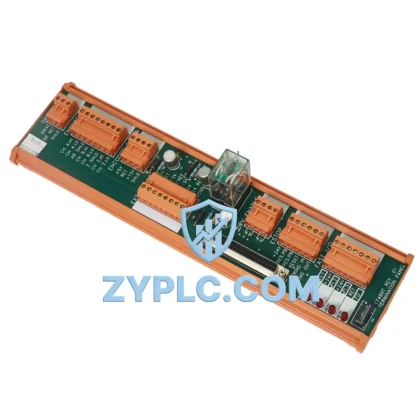
The GE DS200TBQBG1ACB is a Speedtronic Mark V SDCC (Speed, Dynamics, and Control Card) PC board engineered as a core computational node within GE’s Mark V turbine control platform. Rather than functioning as a standalone component, the DS200TBQBG1ACB occupies a critical position in the layered control hierarchy — bridging the high-level supervisory logic of the Mark V controller with the real-time signal conditioning, speed sensing, and dynamic response functions that govern turbine operation. Understanding this board’s role demands a system-level perspective that spans the control layer, I/O layer, communication layer, power supply layer, HMI layer, and actuation layer simultaneously.
In a complete Mark V turbine control architecture, the DS200TBQBG1ACB works in close coordination with companion boards such as the DS200TCQAG1BHF (TCQA I/O terminal board), the DS200SDCCG1A (alternate SDCC variant), and the DS200TCDAG1AHF (TCDA analog I/O board). These modules share a common VME-style backplane within the Mark V , , and controller panels, where redundant processing paths ensure continuous turbine operation even during single-point failures. The SDCC board’s primary responsibility is to execute speed control algorithms, process magnetic pickup unit (MPU) signals, and coordinate with the STCA (DS200STCAG1A) and DSPX (DS200DSPXG1ADB) boards to deliver closed-loop turbine speed and load regulation.
Architecture Specification Table
| Parameter |
Specification |
| Part Number |
DS200TBQBG1ACB |
| Board Function |
SDCC – Speed, Dynamics & Control Card |
| System Role |
Core turbine speed/load control processor, Mark V panels
|
| Compatible Platform |
GE Speedtronic Mark V Turbine Control System |
| Backplane Interface |
VME-compatible Mark V backplane |
| Key Electrical Parameters |
+5 VDC logic supply; ±15 VDC analog rails; 3.3 VDC I/O logic |
| MPU Signal Inputs |
Magnetic pickup unit speed sensing (dual/triple redundant) |
| Communication Capability |
Internal Mark V IONet; ARCNET-based inter-panel communication |
| Redundancy Support |
Triple Modular Redundancy (TMR) architecture compatible |
| Installation Environment |
Industrial control cabinet; -20°C to +65°C operating range |
| Form Factor |
Standard Mark V PCB card format |
| Warranty |
12-Month Warranty – full functional coverage |
| Contextual Integration |
Verified Contextual Integration with Mark V panel ecosystem |
Coordinated Control System Design
The DS200TBQBG1ACB does not operate in isolation. Its value is realized only when properly seated within a fully coordinated Mark V control panel assembly. At the control layer, the SDCC board interfaces directly with the DS200DSPXG1ADB (DSPX digital signal processor board), which handles the primary PID computation loops for fuel valve positioning and inlet guide vane control. The SDCC receives speed feedback from triple-redundant MPU sensors and arbitrates the voted speed signal before passing it downstream to the DSPX for governor response.
At the I/O layer, the DS200TBQBG1ACB connects through the Mark V backplane to terminal boards including the DS200TCQAG1BHF and DS200TCDAG1AHF, which provide the physical wiring interface for thermocouples, RTDs, 4–20 mA analog signals, and discrete digital I/O. These terminal boards are mounted in the
panel and communicate with the processor boards via the Mark V IONet — a deterministic, high-speed internal network that ensures synchronous data exchange across all control layers.
At the communication layer, the Mark V system employs ARCNET-based inter-panel communication, allowing the , , and redundant controllers to cross-check their computed outputs before issuing commands to actuators. The DS200STCAG1A (STCA board) manages this inter-panel arbitration, working alongside the SDCC to ensure that no single board failure can cause an uncontrolled turbine trip. This TMR (Triple Modular Redundancy) design is central to the Mark V’s reputation for high-availability operation in gas turbine, steam turbine, and combined-cycle power plant applications.
At the power supply layer, the Mark V system relies on dedicated DC power distribution boards such as the DS200PCCAG1A to deliver clean, regulated voltages to each processor card. Voltage ripple and transient suppression at the power layer directly affect the SDCC’s analog signal integrity — particularly for the MPU speed inputs, where noise immunity is critical for accurate speed measurement at low turbine speeds during startup sequences.
At the HMI layer, operator interaction with the Mark V system is typically managed through the GE Cimplicity HMI or legacy Mark V panel displays. The SDCC’s computed speed, load, and dynamic state data are transmitted via the Mark V data highway to the HMI, enabling operators to monitor turbine performance in real time and initiate controlled start, load, and shutdown sequences. Proper SDCC operation is therefore a prerequisite for reliable HMI data accuracy.
At the actuation layer, the SDCC’s output commands are routed through servo amplifier boards such as the DS200SVCBG1A to control electro-hydraulic servo valves governing fuel flow and compressor inlet guide vanes. The precision and response speed of the DS200TBQBG1ACB’s control algorithms directly determine turbine efficiency, emissions compliance, and mechanical stress during transient load changes.
Application in Layered Automation Systems
The DS200TBQBG1ACB finds application across a broad range of heavy industrial sectors where GE Speedtronic Mark V systems remain the installed base for turbine control. In power generation facilities — including gas-fired peaker plants, combined-cycle stations, and cogeneration sites — the SDCC board is the computational heart of the turbine governor, maintaining grid-synchronous speed regulation within ±0.5% under varying load conditions.
In the petrochemical and oil & gas sector, Mark V-controlled gas turbines drive compressor trains for pipeline compression, LNG liquefaction, and offshore platform power generation. The DS200TBQBG1ACB’s robust TMR architecture is particularly valued in these safety-critical environments, where an unplanned turbine trip can result in significant production losses and safety incidents. The board’s ability to sustain control through single-card failures without operator intervention is a key operational advantage.
In steel mills and metallurgical plants, Mark V systems control turbine-driven blowers and compressors that supply process air to blast furnaces and electric arc furnaces. The SDCC board’s fast dynamic response — typically achieving speed correction within 100–200 milliseconds of a load disturbance — is essential for maintaining stable process air pressure in these high-demand applications.
Water treatment and desalination facilities operating large centrifugal pump turbines also rely on Mark V SDCC boards for precise speed control during variable-flow demand cycles. The board’s compatibility with the Mark V’s sequential event recorder (SER) function supports post-incident analysis, enabling maintenance engineers to reconstruct turbine behavior leading up to any trip event.
For long-term maintenance planning, stocking a verified replacement DS200TBQBG1ACB is a recognized best practice among reliability engineers managing aging Mark V fleets. With OEM production of Mark V components discontinued, sourcing quality-tested replacement boards with documented 12-Month Warranty coverage and confirmed Contextual Integration is essential for sustaining plant availability without full control system upgrades.
Architecture Engineering FAQ
Q1: Is the DS200TBQBG1ACB compatible with both TMR and Simplex Mark V configurations?
Yes. The DS200TBQBG1ACB is designed for use in GE Speedtronic Mark V systems in both Triple Modular Redundancy (TMR) configurations — where three identical controller panels vote on outputs — and Simplex configurations used in lower-criticality applications. In TMR systems, three SDCC boards operate in parallel across the , , and panels, with the STCA board managing inter-panel arbitration. In Simplex systems, a single SDCC board handles all speed and dynamics control functions. Confirm your panel configuration (TMR or Simplex) before ordering to ensure correct quantity and panel slot assignment.
Q2: What commissioning steps are required when replacing the DS200TBQBG1ACB in a live Mark V system?
Replacement of the SDCC board in a Mark V system should follow GE’s standard hot-swap procedure for TMR configurations, where the replacement card can be inserted into the faulted panel while the remaining two panels maintain turbine control. After physical installation, the replacement board must be initialized via the Mark V toolbox software to synchronize its firmware version and configuration parameters with the active panels. Key commissioning checks include MPU signal verification, speed reference calibration, and dynamic response testing at no-load conditions before returning the turbine to full-load operation. Our technical team provides Contextual Integration support to assist with commissioning documentation and parameter verification.
Q3: What does the 12-Month Warranty cover for the DS200TBQBG1ACB, and what support is available for long-term Mark V fleet maintenance?
The 12-Month Warranty covers full functional performance of the DS200TBQBG1ACB under normal industrial operating conditions, including defects in components, solder joints, and firmware integrity. Warranty claims are supported by our technical team with board-level diagnostics and, where necessary, advance replacement to minimize plant downtime. For long-term Mark V fleet maintenance, we recommend establishing a strategic spare parts inventory that includes not only the SDCC board but also companion cards such as the DSPX, STCA, TCQA terminal board, and power distribution modules. Our inventory management support and 12-Month Warranty program are designed to help plant operators sustain Mark V system availability through the extended operational life of their turbine assets.
© 2026 ZYPLC. All rights reserved.
Original Source: https://zyplc.com
Contact: +86 19859288691 | [email protected]