GE DS200TCPSG1ARE System-Ready Power Supply for Mark V Architecture: Control System Architecture and Upstream–Downstream Coordination
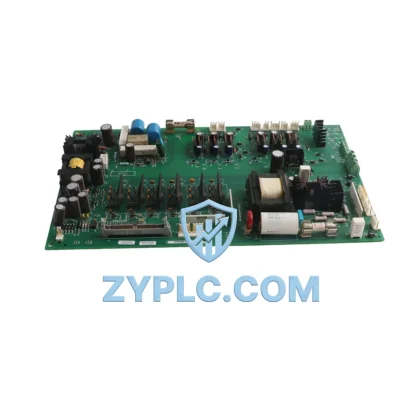
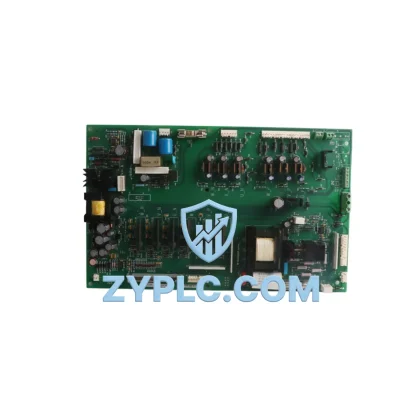
The GE DS200TCPSG1ARE is a rack-mounted power supply board engineered specifically for integration within the GE Mark V turbine control system architecture. Its role is not that of a peripheral component — it occupies a foundational position in the DS200 platform’s power distribution hierarchy, delivering regulated DC voltage rails to the control, I/O, communication, and human-machine interface layers that collectively govern turbine operation across gas, steam, and combined-cycle generating units. Understanding the DS200TCPSG1ARE requires understanding the system it sustains: a layered, redundancy-driven control architecture where power domain stability is a prerequisite for every function above it.
In the Mark V TMR (Triple Modular Redundant) architecture, the DS200TCPSG1ARE provides electrically isolated power to each of the three independent controller channels — R, S, and T — ensuring that a fault in one power domain cannot cascade to the remaining two. This isolation is the physical foundation of the Mark V’s fault-tolerant design philosophy, where the system must continue safe operation and execute a controlled shutdown even in the presence of a single hardware failure. The board’s output rails — nominally +5 VDC, ±15 VDC, and +24 VDC — are distributed across the DS200 backplane bus to every module installed in the rack, making its voltage regulation performance a system-wide variable rather than a board-level concern.
Architecture Specification Table
| Parameter |
Specification |
| Part Number |
DS200TCPSG1ARE |
| Brand / OEM |
GE (General Electric) |
| Series |
DS200 / Mark V Turbine Control |
| System Role |
Rack Power Supply Board — Control & I/O Power Distribution |
| Compatible Platform |
GE Mark V TMR / Simplex Turbine Control Systems |
| Input Voltage |
125 VDC / 120 VAC (nominal, per rack configuration) |
| Output Rails |
+5 VDC, ±15 VDC, +24 VDC (backplane distribution) |
| Communication Capability |
Backplane bus integration; compatible with ARCNET & IONet protocols |
| Installation Environment |
Control cabinet / Mark V rack enclosure; IP20 internal panel |
| Operating Temperature |
0°C to +60°C |
| Redundancy Support |
TMR power channel isolation; supports R, S, T controller redundancy |
| Condition |
New / Refurbished — Fully tested prior to dispatch |
| Warranty |
12-Month Warranty (ZYPLC standard) |
| Origin |
USA |
Coordinated Control System Design
The DS200TCPSG1ARE anchors the power layer of a complete Mark V control system, and its performance directly determines the operational integrity of every module it feeds. At the control layer, the DS200TCQCG1A quad-core processor board draws regulated logic power from the backplane rails supplied by the DS200TCPSG1ARE, executing the real-time turbine protection, sequencing, and load control algorithms that govern every phase of turbine operation — from cold start through full-load dispatch and emergency trip. Alongside it, the DS200TCDAG1A diagnostic board continuously monitors system health parameters, relying on the same stable power domain to maintain accurate fault logging, alarm management, and self-test routines.
At the I/O layer, terminal boards including the DS200TCTSG1A thermocouple input terminal board and the DS200TBCBG1A contact input/output terminal board receive their field-side power through the rack distribution network anchored by the DS200TCPSG1ARE. These boards translate physical process signals — exhaust temperatures, vibration levels, valve positions, flame detector states, and discrete contact inputs — into digital data streams consumed by the processor boards for closed-loop control. Voltage instability at the power supply level directly degrades the signal integrity and analog conversion accuracy of these I/O channels, making the DS200TCPSG1ARE’s regulation performance a system-wide quality factor.
At the communication layer, the DS200SLCCG1A serial link communication board and the DS200TCPAG1A communication processor board depend on clean, low-noise power rails to maintain reliable ARCNET and IONet data exchange between the Mark V controller and remote I/O panels, HMI workstations, and plant-level DCS or SCADA systems. Power-induced noise on communication rails can manifest as intermittent network faults, spurious alarms, or loss of supervisory visibility — consequences that are disproportionately disruptive in turbine control environments where continuous monitoring is a safety and compliance requirement.
The human-machine interface layer — typically implemented through a GE Mark V LCC (Local Control Console) or a modern replacement HMI running ToolboxST or Cimplicity — also depends on the integrity of the control system’s power architecture. When the DS200TCPSG1ARE maintains stable output across varying load conditions, such as during turbine start sequences when I/O activity peaks, the HMI receives consistent data refresh rates and alarm updates, enabling operators to make informed decisions during critical operational transitions. For installations incorporating the DS200TCPSG1A backplane or the DS200TCRAG1A relay output board, the power supply board’s role extends further into the execution layer, where relay coil energization and analog output drive currents are sourced from the same regulated rails.
This Contextual Integration — the DS200TCPSG1ARE functioning not as an isolated component but as the power foundation for a coordinated suite of control, I/O, communication, and interface modules — is what defines its value in a system architecture context. Sourcing a fully tested, 12-Month Warranty-backed DS200TCPSG1ARE from ZYPLC ensures that this foundational layer meets the reliability standard the entire architecture depends upon.
Application in Layered Automation Systems
The DS200TCPSG1ARE finds its primary application in power generation facilities operating GE Frame 6B, Frame 7EA, Frame 7FA, and Frame 9E gas turbines, as well as steam turbine installations where the Mark V platform was deployed as the original equipment control system. In combined-cycle power plants, where gas and steam turbines operate in coordinated sequences managed by a plant-level DCS, the reliability of each turbine’s control system power architecture directly affects plant-wide generation availability, heat rate performance, and grid dispatch capability. A single unplanned turbine trip attributable to a power supply failure can result in significant lost generation revenue and potential grid stability obligations.
In the petrochemical and oil and gas sectors, the DS200 platform and its associated power supply infrastructure have been deployed in compressor train control systems, offshore platform turbine-driven pump and generator sets, and LNG liquefaction facility drivers — environments where unplanned turbine trips carry significant process safety and production consequences. Maintaining a qualified spare DS200TCPSG1ARE in the site’s critical spares inventory is standard practice in these industries, as OEM lead times for original GE boards can extend to several months, while a verified supplier such as ZYPLC can typically fulfill the requirement within days, supported by a 12-Month Warranty and full functional test documentation.
In the water treatment and municipal utility sector, Mark V-controlled turbine-driven pumping stations and power generation auxiliaries benefit from the same architecture-level reliability principles. For mining and metallurgical facilities operating turbine-driven blowers, compressors, or generators as part of smelting or mineral processing infrastructure, the DS200TCPSG1ARE’s role in maintaining continuous control system availability directly supports production continuity targets. Facilities undergoing Mark V to Mark VIe migration projects also rely on the DS200TCPSG1ARE to sustain legacy system operation during the transition period, reducing the risk of unplanned outages that could complicate migration timelines and increase project costs.
Architecture Engineering FAQ
Q1: Is the DS200TCPSG1ARE compatible with both TMR and Simplex Mark V configurations, and how does Contextual Integration apply across both?
Yes. The DS200TCPSG1ARE is designed for use within the GE DS200 rack system and supports both Triple Modular Redundant (TMR) and Simplex Mark V configurations. In TMR systems, the board provides isolated power distribution to individual R, S, and T controller channels, enabling the voting logic and redundancy architecture that defines the Mark V’s fault-tolerant capability. In Simplex installations, it provides the full rack power budget for the single-channel control architecture. Contextual Integration in both configurations means the board must be selected, installed, and verified in the context of the complete rack assembly — including the processor, I/O, and communication boards it powers. Always verify the specific rack slot assignment and jumper configuration against your site’s Mark V system documentation before installation.
Q2: What commissioning and verification steps should be performed after installing a replacement DS200TCPSG1ARE to ensure system-level integrity?
After physical installation, verify output voltage levels on all backplane rails (+5 VDC, ±15 VDC, +24 VDC) using a calibrated multimeter before energizing dependent modules. Confirm that the Mark V diagnostic board (DS200TCDAG1A) reports no power fault alarms following system power-up. Review the Mark V alarm log for any transient undervoltage events during the initial power cycle, which may indicate marginal load regulation performance. For TMR systems, verify that all three controller channels — R, S, and T — achieve normal operating status and that the voting logic is functioning correctly before returning the turbine to service. Document all commissioning measurements in the site maintenance record to support future audits and warranty claims.
Q3: What does the 12-Month Warranty cover, and how does it support long-term maintenance planning for critical turbine control infrastructure?
The 12-Month Warranty provided by ZYPLC covers manufacturing defects and functional failures under normal operating conditions for twelve months from the date of dispatch. This warranty period aligns with typical annual turbine inspection and overhaul cycles, providing a defined reliability assurance window that integrates naturally into planned maintenance schedules. In the event of a warranty claim, ZYPLC’s technical team will assess the returned board and provide either a repaired unit or a direct replacement, minimizing the impact on site spare parts inventory and control system availability. For facilities operating under long-term service agreements or performance-based maintenance contracts, the 12-Month Warranty provides a documented quality assurance baseline that can be referenced in maintenance records, insurance documentation, and regulatory audit submissions.
© 2026 ZYPLC. All rights reserved.
Original Source: https://zyplc.com
Contact: +86 19859288691 | plc.sales@zyplc.com