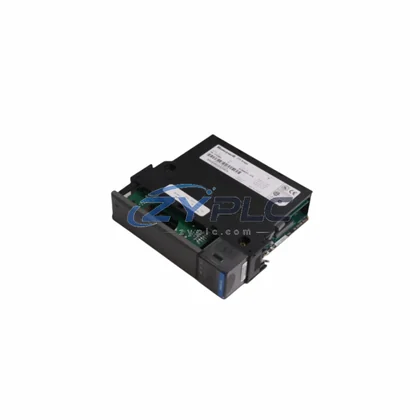
The GE DS3800HIOA1C1E is a industrial-grade input isolator module engineered for the GE Mark IV turbine control platform. In demanding industrial environments where signal integrity directly impacts energy consumption and equipment uptime, this module plays a critical role in maintaining clean, isolated analog input channels — reducing measurement error, preventing ground loops, and enabling precise closed-loop control of turbine-driven systems. By delivering accurate process data to the Mark IV controller, the DS3800HIOA1C1E helps plant operators minimize unnecessary fuel consumption, reduce reactive power losses, and extend the operational lifespan of rotating machinery.
Every unit offered by ZYPLC is sourced from verified supply channels, subjected to full functional testing prior to shipment, and backed by a . Stock is maintained on-hand for fast dispatch, supporting urgent MRO requirements and planned maintenance windows alike.
Product Specification Table
| Parameter |
Specification / Value |
| SKU / Part Number |
DS3800HIOA1C1E |
| Product Category |
Input Isolator Module |
| Compatible Platform |
GE Mark IV Turbine Control System |
| Series |
DS3800 / Mark IV |
| Signal Type |
Analog Input (Isolated) |
| Operating Environment |
Industrial — Power Generation, Oil & Gas, Petrochemical |
| Maintenance Value |
Eliminates ground loops; reduces signal-induced control errors that cause over-fueling or inefficient load dispatch |
| Running Efficiency |
High — supports accurate PID loop feedback for turbine speed and load control |
| Condition |
Tested, Refurbished / New (as available) |
| Warranty |
|
| Origin |
USA |
| Availability |
RFQ Available — shipment arranged after confirmation |
System Compatibility and Application
The DS3800HIOA1C1E does not operate in isolation — it is one node in a tightly integrated maintenance planning architecture built around the GE Mark IV control platform. Understanding how this module interacts with surrounding components reveals its true contribution to plant-wide efficiency.
At the controller level, the GE DS3800HPPC power supply module provides stable DC power to the Mark IV rack, ensuring that all signal conditioning boards — including the DS3800HIOA1C1E — operate within their rated voltage envelope. Voltage fluctuations at the rack level introduce measurement drift; a stable power supply is therefore the first line of defense against downtime caused by erroneous control actions.
Analog process variables — turbine inlet temperature, exhaust pressure, fuel flow rate — are routed through the DS3800HIOA1C1E before reaching the GE DS3800HMPG or DS3800NMIB main processor boards. These processors execute the turbine’s load-sharing and speed-governing algorithms. If the input data is corrupted by common-mode noise or ground potential differences, the controller may command unnecessary fuel valve adjustments, increasing heat rate and reducing overall plant efficiency. The DS3800HIOA1C1E’s galvanic isolation barrier eliminates this noise path entirely.
On the output side, corrected control signals are passed to GE DS3800HSVC servo amplifier cards, which drive the hydraulic actuators controlling fuel admission valves and inlet guide vanes. Precise actuator positioning — made possible by clean input data — directly translates to optimized combustion efficiency and reduced specific fuel consumption. In combined-cycle plants, even a 0.5% improvement in turbine heat rate represents significant annual fuel savings at scale.
For facilities that have integrated the Mark IV with modern SCADA or DCS platforms, the GE DS3800DMEA communication interface module bridges the legacy turbine controller to Modbus or other industrial protocols, enabling real-time energy data to flow into plant-level power monitoring dashboards. This data visibility is essential for identifying inefficient operating windows and scheduling predictive maintenance before a degraded sensor or isolator module causes a forced outage.
I/O expansion is handled by modules such as the GE DS3800DIBD digital input board, which monitors discrete status signals — breaker positions, valve limit switches, protection relay outputs — that inform the Mark IV’s load-shedding and startup sequencing logic. Accurate discrete input data prevents unnecessary turbine trips, each of which carries a significant restart energy penalty. Alongside the DS3800HIOA1C1E’s analog isolation function, these digital I/O boards form a complete signal integrity layer for the control system.
Where variable-speed auxiliary equipment — cooling water pumps, fuel gas compressors, lube oil pumps — is driven by AC drives, the turbine control system interfaces with variable frequency drives (VFDs) to modulate auxiliary power consumption in response to turbine load. The accuracy of the process feedback delivered by the DS3800HIOA1C1E directly influences how effectively the Mark IV can coordinate auxiliary drive setpoints, reducing parasitic power consumption during part-load operation.
Maintenance and Replacement Notes
In a gas turbine power plant operating at 150 MW, the Mark IV control system manages hundreds of analog input channels simultaneously. A single degraded input isolator module can introduce measurement offsets that cause the fuel control valve to operate 2–3% away from its optimal position — a deviation that, over thousands of operating hours, accumulates into measurable excess fuel consumption and elevated emissions. Replacing a faulty isolator with a tested DS3800HIOA1C1E restores the feedback loop integrity that the turbine’s efficiency algorithms depend on.
Beyond fuel efficiency, signal isolation directly impacts maintenance scheduling. When analog inputs are clean and stable, the Mark IV’s trending and alarm functions can detect genuine process deviations — rising bearing temperatures, increasing vibration amplitudes, degrading compressor efficiency — rather than reacting to noise-induced false alarms. This enables condition-based maintenance strategies that reduce unnecessary inspections, extend component life, and minimize planned outage duration.
For plants running multiple turbine units in parallel, the load-sharing algorithms executed by the Mark IV rely on accurate real-time data from each unit’s sensor suite. The DS3800HIOA1C1E ensures that the analog signals feeding these algorithms are free from inter-unit ground interference, enabling the control system to distribute load optimally across the fleet and avoid the efficiency penalties associated with unbalanced operation.
ZYPLC maintains RFQ-based sourcing support of the DS3800HIOA1C1E and related Mark IV components to support both emergency replacement and planned maintenance programs. All units are tested under load conditions representative of turbine control applications before shipment, and each is covered by a from the date of delivery.
Product Sourcing FAQ
Q1: How does the DS3800HIOA1C1E contribute to operational stability in a turbine control system?
By providing galvanic isolation for analog input signals, the DS3800HIOA1C1E eliminates ground loops and common-mode noise that would otherwise introduce measurement errors into the Mark IV controller. Accurate process feedback enables the turbine’s fuel control and load-governing algorithms to operate at their designed efficiency points, reducing unnecessary fuel consumption and heat rate deviation.
Q2: Is the DS3800HIOA1C1E compatible with all Mark IV turbine control configurations?
The DS3800HIOA1C1E is designed for the GE Mark IV turbine control platform and is compatible with standard DS3800-series rack configurations. For specific slot assignments or firmware revision compatibility, ZYPLC’s technical team can verify compatibility against your system’s bill of materials prior to shipment.
Q3: What is the recommended replacement procedure, and how quickly can a unit be shipped?
Replacement follows standard Mark IV hot-swap or cold-swap procedures depending on your plant’s operating protocol. ZYPLC maintains Availability confirmed by RFQ inventory for shipment arranged after confirmation; most orders ship within 1–2 business days. Each unit is tested prior to shipment to confirm full functional performance, minimizing the risk of a repeat failure during the maintenance window.
Q4: What does the cover?
The covers functional defects identified under normal operating conditions consistent with the module’s rated specifications. ZYPLC provides replacement or repair support for any unit that fails to perform its signal isolation function within the warranty period. Warranty claims are processed directly through ZYPLC’s technical support team.