GE DS3800HXPD1C1E: Industrial Data Link for Mark IV Turbine Control Networks
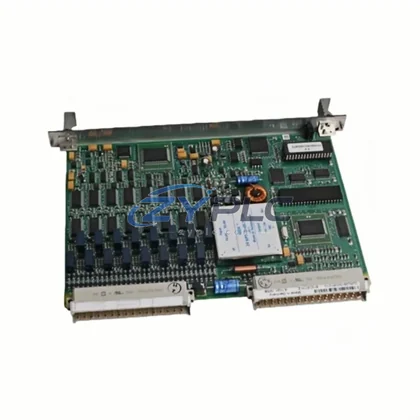
The GE DS3800HXPD1C1E is a high-performance Expander Board engineered for the GE Mark IV Turbine Control System — one of the most widely deployed distributed control architectures in power generation, oil & gas, and heavy industrial environments. Designed to extend the I/O and communication capacity of the Mark IV platform, this board serves as a critical node in the industrial data chain, bridging field-level signals with supervisory control and data acquisition systems.
In modern smart factory and power plant environments, the integrity of the data link between field devices and upper-level systems is paramount. The DS3800HXPD1C1E fulfills this role by expanding the communication backbone of the Mark IV controller, enabling seamless data exchange between turbine sensors, actuators, and the central control processor. Whether deployed in gas turbine, steam turbine, or combined-cycle power plant configurations, this expander board ensures that real-time process data — including temperature, pressure, speed, and vibration signals — flows without interruption from the field to the SCADA layer.
Compatibility & Integration Notes
| Parameter |
Specification |
| Compatible System |
GE Mark IV Turbine Control System |
| Board Function |
I/O Expansion & Communication Interface |
| Communication Protocol |
GE Proprietary Mark IV Serial Bus / Parallel I/O |
| Interface Type |
Backplane Expansion Connector |
| Signal Types Supported |
Analog Input/Output, Digital Input/Output, RTD, Thermocouple |
| Network Compatibility |
Mark IV TCCA, TCDA, TCQA Controller Racks |
| System Application |
Power Generation, Oil & Gas, Industrial Turbine Control |
| Operating Environment |
Industrial Grade, Panel-Mount |
| Pre-Shipment Testing |
Full functional test performed before dispatch |
| Warranty |
warranty terms confirmed during quotation Included |
| Origin |
United States |
| Availability |
RFQ Available — shipment arranged after confirmation |
Connected Automation Data Flow
The DS3800HXPD1C1E operates at the heart of the GE Mark IV distributed control architecture. In a typical turbine control network, the data flow begins at the field instrument level — thermocouples, RTDs, pressure transmitters, and speed sensors feed raw process signals into the Mark IV I/O racks. The DS3800HXPD1C1E expander board aggregates these signals and routes them through the Mark IV backplane to the primary controller boards such as the DS3800HMPD (Mark IV Processor Board) and the DS3800DMEA (Digital I/O Board), which handle real-time control logic execution.
On the network communication side, the Mark IV system interfaces with plant-level SCADA platforms via dedicated gateway modules. The DS3800NCOA (Communication Option Board) and DS3800EPCA (Ethernet Protocol Card) are commonly paired with the expander board to bridge the proprietary Mark IV bus to modern Ethernet-based SCADA and DCS networks. This allows operators at the GE Cimplicity HMI workstation or third-party SCADA systems to receive live turbine data — shaft speed, exhaust temperature, compressor discharge pressure — with minimal latency.
For remote I/O expansion in larger turbine enclosures, the DS3800HXPD1C1E works alongside DS3800DMPD (Discrete I/O Expander) modules to extend the reach of the control system to distributed junction boxes and terminal panels. In combined-cycle plants, the Mark IV network may also interface with GE Speedtronic series controllers and DS3800HPIB (Process Interface Boards) to coordinate gas turbine and steam turbine operations within a unified control framework.
At the edge of the network, industrial Ethernet switches — such as those from the GE MDS series or compatible third-party managed switches — provide the physical network infrastructure that connects the Mark IV gateway to the plant DCS, historian servers, and remote monitoring terminals. This end-to-end data chain, anchored by the DS3800HXPD1C1E, enables real-time visibility, alarm management, and remote diagnostics across the entire turbine control system.
Solving Data Isolation in Industrial Sites
One of the most persistent challenges in legacy turbine control environments is data isolation — the inability to extract real-time process data from proprietary control systems and integrate it with modern plant management platforms. The GE Mark IV, while highly reliable, uses a proprietary communication architecture that can create barriers to data transparency when not properly interfaced with contemporary SCADA and MES systems.
The DS3800HXPD1C1E addresses this challenge by expanding the I/O capacity of the Mark IV rack, providing additional signal channels that can be mapped to communication gateway modules. By increasing the number of available I/O points, plant engineers can connect previously isolated field devices — legacy sensors, actuators, and auxiliary control panels — into the unified Mark IV data network. This eliminates blind spots in the process data chain and enables comprehensive production line transparency.
For remote monitoring and diagnostics, the expanded I/O capacity provided by the DS3800HXPD1C1E allows more process variables to be transmitted to the SCADA layer in real time. Maintenance teams can monitor turbine health parameters — vibration levels, bearing temperatures, fuel flow rates — from remote HMI terminals without requiring physical access to the turbine enclosure. This capability is critical for reducing unplanned downtime and enabling predictive maintenance strategies.
System scalability is another key benefit. As power plants expand their generation capacity or upgrade auxiliary systems, the DS3800HXPD1C1E provides the additional I/O headroom needed to integrate new field devices without replacing the existing Mark IV controller infrastructure. This protects the capital investment in the Mark IV platform while enabling incremental system expansion aligned with operational growth.
All units supplied by ZYPLC undergo comprehensive pre-shipment functional testing to verify board integrity, signal channel performance, and communication bus compatibility. Each DS3800HXPD1C1E is backed by a warranty terms confirmed during quotation, with global logistics support via DHL and FedEx for fast delivery to power plants and industrial facilities worldwide.
Industrial Connectivity FAQ
Q1: Is the DS3800HXPD1C1E compatible with all GE Mark IV controller configurations?
The DS3800HXPD1C1E is designed for use within the GE Mark IV Turbine Control System architecture. It is compatible with standard Mark IV TCCA, TCDA, and TCQA controller racks. For specific rack configurations or mixed Mark IV/Mark V environments, please contact our technical team to confirm compatibility before ordering.
Q2: What communication protocols does the Mark IV system support when using this expander board?
The GE Mark IV uses a proprietary serial bus and parallel I/O architecture for internal rack communication. When paired with gateway modules such as the DS3800NCOA or DS3800EPCA, the system can interface with Modbus RTU, Modbus TCP/IP, and OPC-DA/UA protocols, enabling integration with modern SCADA, DCS, and MES platforms.
Q3: How does ZYPLC ensure network stability and board reliability before shipment?
Every DS3800HXPD1C1E unit undergoes a full functional test prior to dispatch, including signal channel verification, backplane communication checks, and power supply integrity testing. Units that do not meet GE Mark IV performance specifications are not shipped. All boards are covered by a warranty terms confirmed during quotation from the date of delivery.
Q4: Can the DS3800HXPD1C1E support system expansion for additional I/O points in an existing Mark IV installation?
Yes. The DS3800HXPD1C1E is specifically designed to expand the I/O capacity of existing Mark IV racks, allowing plant engineers to connect additional field devices — sensors, actuators, and auxiliary control panels — without replacing the core controller infrastructure. This makes it an ideal solution for phased plant upgrades and capacity expansion projects.