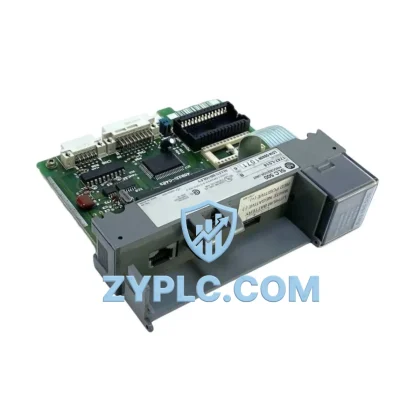
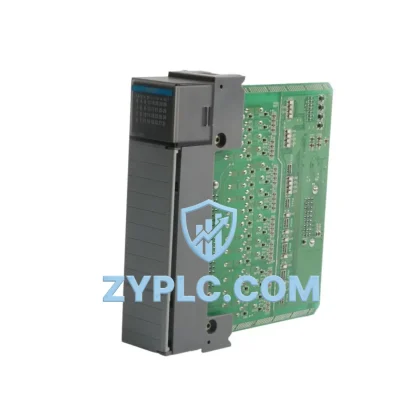
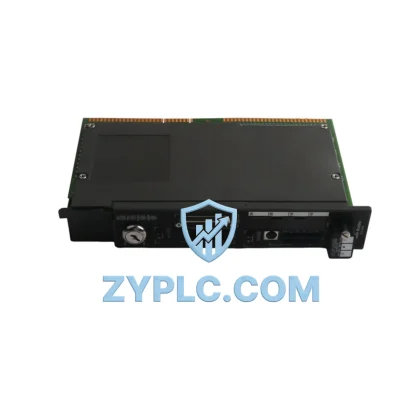
GE Fanuc HE670ADC840C System-Ready Analog Input for HE670 Control System Architecture
The GE Fanuc HE670ADC840C is a high-precision analog input module engineered for seamless integration within the HE670 programmable logic controller platform developed by Horner Electric under the GE Fanuc product family. Rather than functioning as a standalone component, the HE670ADC840C is designed to operate as a critical signal acquisition node within a layered industrial control architecture — bridging field-level instrumentation with the CPU’s real-time processing engine. Its role in the control hierarchy spans the I/O layer, where it converts continuous analog signals from sensors, transmitters, and transducers into digital values that the controller can act upon with precision and speed.
In modern distributed control environments, the value of a module like the HE670ADC840C is measured not only by its individual specifications but by how effectively it integrates with the surrounding system components. When paired with the HE670CPU100 or HE670CPU200 central processing unit, the module delivers synchronized data acquisition that supports deterministic scan cycles — a fundamental requirement in process-critical applications such as chemical dosing, pressure regulation, and temperature profiling. The CPU’s ability to process analog feedback in real time depends directly on the signal fidelity and channel consistency provided by the HE670ADC840C.
Power distribution within the HE670 rack system is managed through dedicated power supply modules such as the HE670PWR100, which provides regulated DC voltage to all installed I/O modules including the HE670ADC840C. Stable power delivery is essential for maintaining analog measurement accuracy, particularly in environments subject to electrical noise from variable frequency drives, motor starters, or high-current switching equipment. The HE670ADC840C’s internal signal conditioning circuitry is designed to reject common-mode interference, but it performs optimally when the rack power supply maintains tight voltage regulation across all slots.
From a system architecture perspective, the HE670ADC840C occupies a defined slot within the HE670 backplane, which supports modular expansion through additional I/O modules. Engineers designing multi-loop control systems can populate the same rack with analog output modules such as the HE670DAC420 to create closed-loop control paths — for example, reading a process variable via the HE670ADC840C and issuing a corrective 4–20 mA command signal through the DAC module to a control valve or variable speed drive. This tight coupling between analog input and output within the same backplane minimizes latency and simplifies wiring topology.
Communication between the HE670 rack and supervisory systems is typically handled through the CPU’s integrated serial or Ethernet ports, supporting protocols such as Modbus RTU, Modbus TCP/IP, and proprietary Horner communication standards. In architectures where the HE670ADC840C feeds data to a SCADA or DCS platform, the CPU acts as a protocol gateway, packaging analog channel data into structured registers that remote HMI terminals — such as the Horner OCS (Operator Control Station) series — can poll and display in real time. This contextual integration across control layers is a defining characteristic of the HE670 platform’s design philosophy.
For redundancy-critical applications, the HE670ADC840C can be deployed in parallel rack configurations where a secondary controller monitors the primary system’s analog inputs and assumes control in the event of a primary CPU fault. While the HE670 platform is not a native hot-standby redundancy system, engineers have successfully implemented warm-standby architectures using dual racks with synchronized program states, ensuring that analog measurement continuity is maintained during planned maintenance or unplanned failures. Terminal modules and marshalling panels connected to the HE670ADC840C’s field wiring terminals further simplify the physical layer of redundancy switchover.
Architecture Specification Table
| Parameter |
Specification |
| System Role |
Analog Input Module — I/O Layer, HE670 Rack Architecture |
| Compatible Platform |
GE Fanuc / Horner Electric HE670 PLC Series |
| Input Type |
Analog (Voltage / Current), Multi-Channel |
| Signal Range |
0–10 VDC / 4–20 mA (channel configurable) |
| Resolution |
12-bit A/D Conversion |
| Number of Channels |
8 Analog Input Channels |
| Electrical Isolation |
Optically isolated field-side inputs |
| Operating Voltage |
5 VDC (backplane supplied via HE670 rack) |
| Operating Temperature |
0°C to 60°C (32°F to 140°F) |
| Mounting |
HE670 Backplane Slot — DIN Rail or Panel Mount Rack |
| Communication |
Backplane bus to CPU; CPU supports Modbus RTU / TCP/IP |
| Certifications |
UL Listed; CE Compliant |
| Warranty |
12-Month Warranty — Tested, Verified, Ready to Ship |
Coordinated Control System Design
The HE670ADC840C achieves its full operational value when considered within the context of a complete HE670-based control system. A typical architecture begins with the HE670CPU100 or HE670CPU200 as the central processing unit, executing the ladder logic or function block programs that govern system behavior. The CPU communicates with all installed I/O modules — including the HE670ADC840C — through the HE670 backplane bus, which provides both power and data pathways in a single integrated structure.
Discrete I/O requirements in the same control cabinet are addressed by modules such as the HE670DIM810 (digital input) and HE670DOM810 (digital output), which handle on/off signals from limit switches, pushbuttons, solenoid valves, and motor contactors. When the HE670ADC840C is installed alongside these discrete modules in the same rack, the CPU can correlate analog process values with discrete status signals — for example, enabling a pump output only when the analog level sensor reading exceeds a defined threshold.
Analog output requirements are served by the HE670DAC420, which translates CPU register values into 4–20 mA command signals for control valves, variable frequency drives, and positioners. The pairing of the HE670ADC840C (input) and HE670DAC420 (output) within the same rack creates a complete closed-loop control path without requiring external signal conditioning hardware. For applications requiring thermocouple or RTD temperature measurement, the HE670THM800 thermocouple input module complements the HE670ADC840C by extending the system’s temperature sensing capability.
Network connectivity is extended through communication modules such as the HE670ETN100 Ethernet module, which enables the HE670 rack to participate in plant-wide Ethernet/IP or Modbus TCP/IP networks. Remote HMI access is provided through Horner OCS panels or third-party SCADA terminals connected via RS-232/RS-485 serial links to the CPU’s communication ports. The HE670ADC840C’s channel data is mapped to CPU registers that are directly accessible by these HMI and SCADA systems, enabling real-time process visualization and alarm management without additional data conversion layers.
Application in Layered Automation Systems
The HE670ADC840C is deployed across a wide range of industrial sectors where analog signal acquisition is fundamental to process control. In water and wastewater treatment facilities, the module reads 4–20 mA signals from flow meters, pH analyzers, turbidity sensors, and dissolved oxygen probes — providing the CPU with the real-time process data needed to regulate chemical dosing pumps and aeration blowers. The module’s multi-channel architecture allows a single HE670 rack to monitor an entire treatment stage without requiring additional remote I/O hardware.
In oil and gas upstream and midstream applications, the HE670ADC840C interfaces with pressure transmitters, differential pressure flow elements, and temperature sensors installed on wellheads, separators, and pipeline metering stations. The module’s signal isolation and noise rejection characteristics make it suitable for installation in control panels located near high-voltage switchgear and variable speed pump drives. Its compatibility with the HE670 CPU’s Modbus communication stack allows seamless integration with existing SCADA infrastructure used by pipeline operators.
Manufacturing and packaging automation applications benefit from the HE670ADC840C’s ability to monitor tension, force, weight, and position signals from load cells and linear transducers. In food and beverage production lines, the module reads analog signals from fill-level sensors and flow meters, enabling the CPU to maintain precise fill volumes and batch weights. The module’s 12-bit resolution provides sufficient measurement granularity for quality-critical applications where small deviations in process variables can result in product non-conformance.
Power generation and electrical substation applications use the HE670ADC840C to monitor voltage, current, and power factor signals from transducers installed on generator panels and distribution switchboards. The module’s ability to accept both voltage and current input signals on a per-channel basis simplifies wiring design in mixed-signal environments. Mining and mineral processing operations deploy the HE670ADC840C in conveyor control systems, crusher monitoring panels, and flotation cell control loops where continuous analog feedback is essential for throughput optimization and equipment protection.
Architecture Engineering FAQ
Q1: Is the HE670ADC840C compatible with both the HE670CPU100 and HE670CPU200, and are there any firmware version requirements for full channel functionality?
The HE670ADC840C is designed for use within the HE670 rack system and is compatible with all HE670-series CPU modules, including the HE670CPU100 and HE670CPU200. Channel configuration is performed through the CPU’s programming software (Horner Cscape), where each analog input channel can be independently configured for voltage or current input range, scaling, and filter settings. No specific firmware version restriction applies to basic channel operation, though it is recommended to use the latest Cscape version to access all diagnostic and configuration features. Our 12-Month Warranty covers the module against manufacturing defects and ensures that all channels perform within published specifications upon delivery.
Q2: Can the HE670ADC840C be used in a warm-standby redundancy architecture, and what considerations apply to analog signal wiring during a switchover event?
The HE670ADC840C can be incorporated into warm-standby redundancy designs where a secondary HE670 rack mirrors the primary system’s program state. In such architectures, field wiring from analog sensors is typically split between the primary and secondary racks using signal splitters or marshalling panels, ensuring that both racks receive identical analog input signals at all times. During a switchover event, the secondary CPU assumes control with current analog channel values already available, minimizing process disruption. Wiring design should account for the additional load presented by parallel-connected analog inputs to ensure that transmitter loop power budgets are not exceeded. All HE670ADC840C modules supplied by ZYPLC are covered by a 12-Month Warranty and are tested for full channel accuracy prior to shipment.
Q3: What is the recommended approach for long-term maintenance of the HE670ADC840C in a production environment, and how does ZYPLC support spare parts availability?
Long-term maintenance of the HE670ADC840C in production environments should include periodic verification of analog channel accuracy using calibrated reference signals, inspection of field wiring terminal connections for corrosion or loosening, and review of CPU diagnostic registers for channel fault flags. Because the HE670 platform is a mature product line, maintaining a spare module in inventory is strongly recommended to minimize downtime in the event of a module failure. ZYPLC maintains stock of the HE670ADC840C and compatible HE670-series modules to support rapid replacement requirements. All modules are supplied with a 12-Month Warranty, tested and verified before shipment, with global logistics support available through our sales team.
© 2026 ZYPLC. All rights reserved.
Original Source: https://zyplc.com
Contact: +86 19859288691 | plc.sales@zyplc.com