GE IC694ALG391A Analog Output for PACSystems RX3i
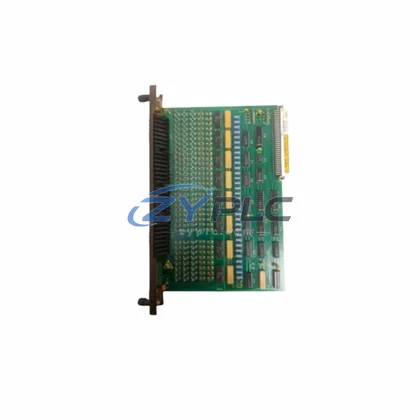
The GE IC694ALG391A is a 4-channel analog output module purpose-built for deployment within the GE PACSystems RX3i backplane architecture. Rather than functioning as a standalone component, this module is designed to operate as an integral node within a fully coordinated control system — one that spans the control layer, I/O layer, network layer, power layer, human-machine interface layer, and execution layer. Its role in the signal chain is to convert digitally processed control commands from the CPU into precise analog voltage or current signals that drive field actuators, control valves, variable-frequency drives, and process instrumentation. Understanding the IC694ALG391A in this architectural context is essential for engineers responsible for system consistency, scalability, redundancy, and long-term maintenance efficiency.
In a typical PACSystems RX3i deployment, the IC694ALG391A occupies a slot on the IC694CHS392 or IC694CHS397 universal backplane, sharing the high-speed backplane bus with the IC695CPE330 or IC695CPE400 CPU module. The CPU executes the control logic and passes analog setpoint data across the backplane to the IC694ALG391A, which then outputs the corresponding 0–10 VDC or 4–20 mA signal to the field device. This tight integration between the CPU and the analog output module ensures deterministic signal delivery with minimal latency — a critical requirement in process control and closed-loop regulation applications.
The module’s system integration capability means it participates in the broader I/O architecture alongside discrete and specialty modules. In a mixed I/O configuration, the IC694ALG391A coexists with modules such as the IC694MDL754 discrete output module and the IC694ALG221 analog input module, enabling the RX3i rack to serve as a unified I/O hub for both digital and analog field signals. This reduces the need for external signal conditioning hardware and simplifies cabinet wiring, contributing to lower installation costs and improved signal integrity across the control system.
Product Specification Table
| Parameter |
Specification |
| System Role |
Analog Output Module — Control Layer to Execution Layer Interface |
| Output Channels |
4 Channels (Voltage / Current Selectable) |
| Output Range |
0–10 VDC / 4–20 mA (per channel) |
| Resolution |
12-bit (0–4095 counts) |
| Backplane Compatibility |
IC694CHS392, IC694CHS397 (PACSystems RX3i Universal Backplane) |
| Communication |
High-Speed RX3i Backplane Bus |
| Power Consumption |
Supplied via backplane from IC694PWR321 or IC694PWR330 power supply |
| Operating Temperature |
0°C to 60°C |
| Isolation |
Channel-to-backplane isolation for signal integrity |
| Installation Environment |
Panel-mount, DIN-rail compatible rack; IP20 enclosure required |
| Compliance |
CE, UL Listed; RoHS compliant |
| Warranty |
warranty terms confirmed during quotation — covers manufacturing defects and functional failure under normal operating conditions |
System Compatibility Notes
The IC694ALG391A achieves its full value when integrated within a coordinated PACSystems RX3i architecture. At the control layer, the IC695CPE330 CPU or IC695CPE400 CPU executes the PLC program and generates analog output setpoints that are transmitted across the backplane to the IC694ALG391A. The CPU’s multi-tasking capability ensures that analog output updates are synchronized with discrete I/O scans and communications tasks without compromising cycle time.
At the power layer, the IC694PWR321 or IC694PWR330 power supply module provides regulated DC power to the backplane, ensuring stable voltage delivery to the IC694ALG391A and all co-resident modules. Power supply redundancy can be achieved by pairing two power supply modules on a dual-slot backplane configuration, protecting the analog output function from single-point power failures.
At the network layer, the IC695ETM001 Ethernet module enables the RX3i system to communicate with SCADA platforms, historian servers, and remote engineering workstations using SRTP and Modbus TCP protocols. This allows operators to monitor analog output channel values in real time and adjust setpoints remotely without interrupting the control process. For legacy serial integration, the IC694CMM002 communications module supports Modbus RTU and SNP protocols, enabling the RX3i rack to interface with older field devices and third-party controllers.
At the I/O layer, the IC694ALG391A works in conjunction with the IC694ALG221 analog input module to form a complete closed-loop control pair — the ALG221 reads process variables from field transmitters while the IC694ALG391A drives the corresponding control output. Discrete I/O modules such as the IC694MDL754 handle on/off field signals in the same rack, and terminal block assemblies like the IC694TBB032 provide organized field wiring termination points that simplify commissioning and reduce wiring errors.
At the human-machine interface layer, operator panels and SCADA workstations connected via the Ethernet module display real-time analog output values, enabling process engineers to verify setpoint delivery and diagnose deviations without accessing the control cabinet. This visibility is essential for maintaining system consistency during production runs and for accelerating fault diagnosis during unplanned shutdowns.
Industrial Application Notes
The IC694ALG391A is deployed across a wide range of industrial sectors where precise analog output control is a fundamental requirement of the process architecture.
In power generation and utilities, the module drives turbine governor actuators and boiler feedwater control valves, where 4–20 mA output accuracy directly affects generation efficiency and grid stability. The 12-bit resolution ensures fine-grained control over valve positioning, reducing process variability and fuel consumption.
In petrochemical and refinery applications, the IC694ALG391A controls flow control valves, pressure regulators, and heat exchanger bypass valves within distributed control architectures. Its channel-to-backplane isolation prevents ground loop interference from corrupting analog signals in electrically noisy environments — a common challenge in refinery control cabinets.
In water and wastewater treatment, the module drives variable-frequency drives (VFDs) on pump motors, enabling precise flow rate control based on level sensor feedback processed by the RX3i CPU. This closed-loop architecture reduces operating load and extends pump service life by eliminating unnecessary on/off cycling.
In mining and metallurgy, the IC694ALG391A controls conveyor speed drives, crusher feed rate actuators, and flotation cell reagent dosing pumps. The module’s robust operating temperature range and backplane isolation make it suitable for the electrically demanding environments typical of mineral processing facilities.
In packaging and discrete manufacturing, the module provides analog speed references to servo drives and tension control systems, ensuring consistent product quality across high-speed production lines. Integration with the RX3i CPU’s motion coordination capabilities allows analog output updates to be synchronized with encoder feedback and cam profile execution.
Product Compatibility FAQ
Q1: Is the IC694ALG391A compatible with both the PACSystems RX3i and the Series 90-30 backplane?
The IC694ALG391A is designed for the PACSystems RX3i universal backplane (IC694CHS392 / IC694CHS397) and is also backward-compatible with GE Series 90-30 racks that accept IC694-series modules. When used in a Series 90-30 rack, the module operates under the Series 90-30 CPU’s I/O scan, and engineers should verify that the CPU firmware version supports the IC694ALG391A’s configuration parameters. For new system designs, deployment within the RX3i architecture is recommended to take full advantage of the high-speed backplane bus and advanced CPU diagnostics.
Q2: How does the IC694ALG391A support system redundancy and long-term maintenance strategies?
The IC694ALG391A supports hot-standby redundancy architectures when paired with a redundant RX3i CPU configuration using the IC695RMX128 redundancy memory xchange module. In redundant systems, the primary CPU maintains synchronized analog output setpoints with the secondary CPU, enabling bumpless transfer in the event of a primary CPU fault. For maintenance, the module supports online replacement in systems configured for I/O module hot-swap, minimizing production downtime during scheduled maintenance windows. The warranty terms confirmed during quotation covers manufacturing defects and functional failures under normal operating conditions, providing procurement teams with a reliable baseline for spare parts planning and total cost of ownership calculations.
Q3: What commissioning steps are required when integrating the IC694ALG391A into an existing RX3i architecture?
Commissioning the IC694ALG391A involves configuring the module’s channel parameters — output type (voltage or current), range, and fault state behavior — within the PACSystems Machine Edition (PME) programming environment. Engineers should assign the module to the correct rack slot in the hardware configuration, verify backplane power budget compliance with the installed IC694PWR321 or IC694PWR330 power supply, and perform a channel-by-channel calibration check using a calibrated milliammeter or voltmeter at the field terminal block. After downloading the hardware configuration to the IC695CPE330 or IC695CPE400 CPU, the module’s status LEDs should indicate normal operation, and analog output values should be verified against the programmed setpoints before enabling closed-loop control. All commissioning records should be retained for the duration of the warranty terms confirmed during quotation period to support any warranty claims.