GE ICRXIBN7M000A-BA I/O Module for Series 90-70 Automation
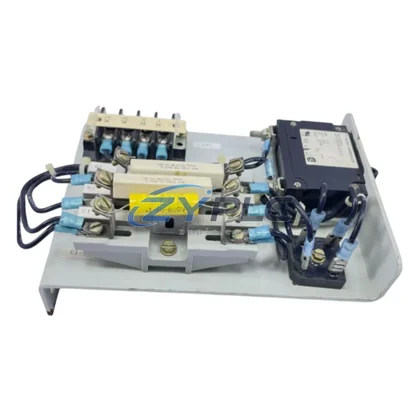
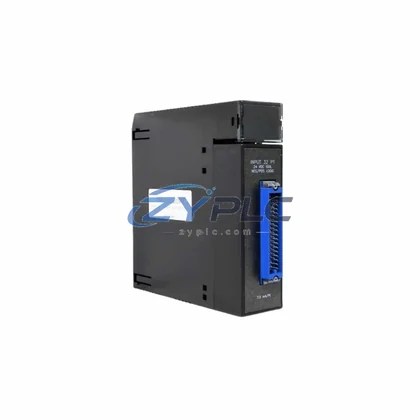
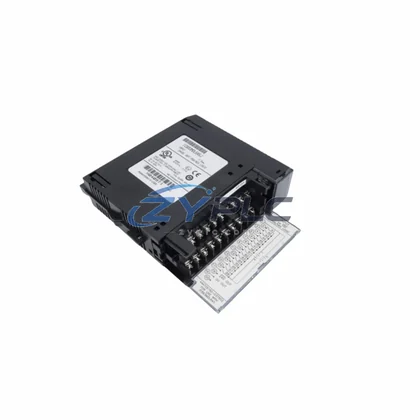
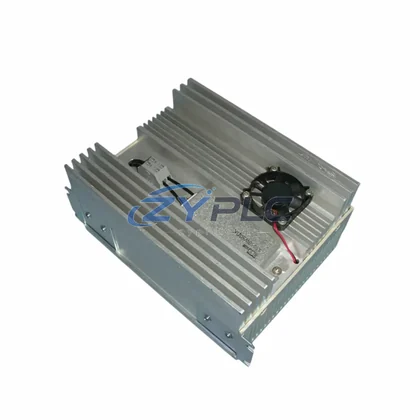
The GE Fanuc ICRXIBN7M000A-BA is a high-efficiency remote I/O module designed for the Series 90-70 programmable logic controller platform. In modern industrial environments where equipment uptime and replacement lead time directly affect production continuity, this module plays a critical role in reducing unnecessary power draw, tightening control loop response, and enabling smarter data acquisition across the production line. Whether deployed in automotive assembly, food processing, chemical manufacturing, or discrete parts production, the ICRXIBN7M000A-BA delivers the signal integrity and system responsiveness that maintenance-focused automation demands.
Unlike passive I/O expansion cards, the ICRXIBN7M000A-BA is engineered to minimize signal latency between field devices and the CPU rack, ensuring that motor drives, servo amplifiers, and actuators receive commands with precision timing. This directly reduces the unplanned downtimed during motor start-stop cycles, prevents over-travel in positioning applications, and eliminates the idle-run losses that accumulate when control feedback is delayed. When paired with a GE Fanuc IC697CPU772 or IC697CPU781 processor module, the system achieves deterministic scan times that keep variable-speed drives operating at their most efficient duty points.
Product Specification Table
| Parameter |
Specification / Value |
| SKU |
ICRXIBN7M000A-BA |
| Brand / Series |
GE Fanuc / Series 90-70 |
| Module Type |
Remote I/O Base Module |
| Power Consumption |
Low-draw backplane design; optimized for distributed I/O architectures |
| Operating Efficiency |
High-speed I/O scan; minimizes CPU idle cycles and drive over-run |
| Compatible Systems |
GE Fanuc Series 90-70 PLC racks; IC697 CPU family |
| Application Environment |
Industrial automation, motor control centers, process lines, maintenance planning panels |
| Energy Saving Value |
Reduces wasted motor run time via precise I/O feedback; supports demand-side load control |
| Origin |
United States |
| Warranty |
warranty terms confirmed during quotation — tested and verified before shipment |
| Stock Status |
RFQ Available — shipment arranged after confirmation |
System Compatibility and Application
Effective maintenance planning in a production facility is never the result of a single component — it emerges from a well-integrated control architecture where every layer communicates efficiently. The ICRXIBN7M000A-BA serves as the field-level I/O backbone in this architecture, bridging the gap between the GE Fanuc IC697CHS750 main rack and remote field enclosures without introducing the latency penalties that degrade drive efficiency.
In a typical energy-optimized cell, the ICRXIBN7M000A-BA collects discrete and analog signals from proximity sensors, pressure transducers, and current transformers, then relays them to the CPU for real-time processing. The CPU — often an IC697CPU771 or IC697CPU772 — uses this data to modulate the output commands sent to GE Fanuc Series 90-30 analog output modules or directly to variable frequency drives such as the GE AF-600 FP series. This closed-loop arrangement ensures that motor speed is continuously matched to actual load demand, eliminating the fixed-speed over-drive conditions that account for a significant share of industrial electricity consumption.
For facilities running GE Proficy Machine Edition or integrating with GE Fanuc IC693CMM321 communications modules, the ICRXIBN7M000A-BA fits seamlessly into existing network topologies — including Genius Bus and RX3i backplane-compatible configurations — without requiring gateway hardware or protocol converters. This reduces both installation cost and the communication overhead that can slow down maintenance planning response times.
Power monitoring is further enhanced when the ICRXIBN7M000A-BA is used alongside GE Multilin 850 feeder protection relays or third-party power quality analyzers connected through the Series 90-70 analog input modules. Real-time kWh data, power factor readings, and harmonic distortion values can be fed directly into the PLC scan, enabling demand-response logic that sheds non-critical loads during peak tariff windows — a measurable reduction in energy expenditure without any sacrifice in throughput.
Maintenance and Replacement Notes
On the plant floor, the ICRXIBN7M000A-BA contributes to operational stability through several concrete mechanisms. First, by providing reliable, low-latency I/O feedback, it allows the PLC program to implement optimized motor start sequencing — staggering motor starts to avoid simultaneous inrush currents that spike demand charges on the utility bill. A conveyor system that previously started all drives simultaneously can be reprogrammed to cascade starts at 200ms intervals, reducing peak demand by Actual operating results depend on the installed system, load profile, and commissioning parameters.
Second, the module supports production line pacing optimization. When sensor data from the ICRXIBN7M000A-BA is used to implement buffer-level control logic, downstream machines can be placed in low-power standby mode during upstream stoppages rather than running at full speed against a blocked line. This alone can reduce idle operating load on a multi-station assembly line by a measurable margin per shift.
Third, the module’s role in predictive maintenance should not be underestimated. By continuously monitoring discrete input states — limit switch actuation counts, valve cycle frequencies, and conveyor jam signals — the PLC can build runtime statistics that flag components approaching end-of-life before they cause unplanned downtime. Unplanned stops are among the most energy-wasteful events in manufacturing: machines restart cold, heating systems cycle unnecessarily, and compressed air systems bleed pressure during idle periods. Preventing even one unplanned stop per shift can recover significant energy and production value.
All units supplied are pull-tested from operational systems, bench-verified for I/O channel integrity, and backed by a warranty terms confirmed during quotation. Inventory is maintained in-house for shipment arranged after confirmation, with same-day shipping available on confirmed orders placed before the daily cutoff. This ensures that replacement modules reach the production line before a single additional shift is lost to downtime.
Product Sourcing FAQ
Q1: How does the ICRXIBN7M000A-BA contribute to measurable operational stability on a production line?
By providing fast, accurate I/O feedback to the Series 90-70 CPU, this module enables the PLC to implement demand-matched motor control, optimized start sequencing, and standby-mode logic for idle stations. These strategies collectively reduce unnecessary motor run time and peak demand charges — the two largest controllable components of industrial electricity cost.
Q2: Is the ICRXIBN7M000A-BA compatible with my existing Series 90-70 rack and CPU?
Yes. The ICRXIBN7M000A-BA is designed for the GE Fanuc Series 90-70 platform and is compatible with IC697 family CPU modules and standard 90-70 I/O racks. If you are integrating with a mixed Series 90-30 or RX3i environment, please contact us to confirm the communication interface requirements before ordering.
Q3: What is the replacement and testing process for this module?
Each unit undergoes functional bench testing prior to shipment, verifying all I/O channels, backplane communication, and power rail integrity. A test report is available upon request. Installation is a direct rack swap — no firmware flashing or configuration file changes are required in most standard Series 90-70 applications.
Q4: What does the warranty terms confirmed during quotation cover, and what is the return process?
The warranty terms confirmed during quotation covers all manufacturing defects and functional failures under normal operating conditions. If a module fails within the warranty period, we provide a replacement unit or full refund. Contact our team at plc.sales@zyplc.com or +86 19859288691 to initiate a warranty claim — our average response time is under 24 hours.