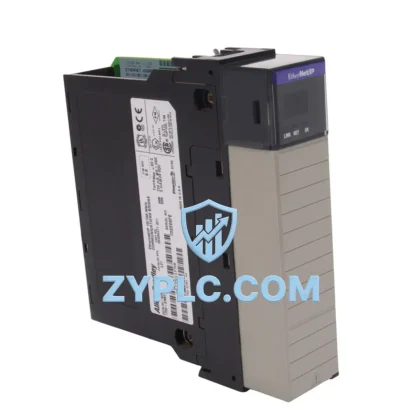
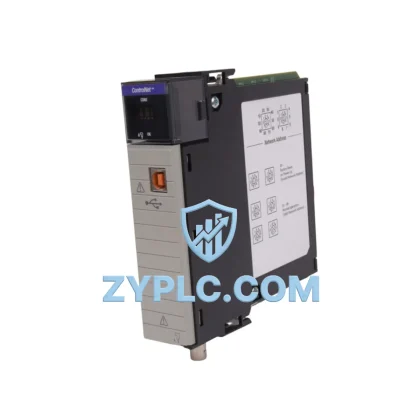
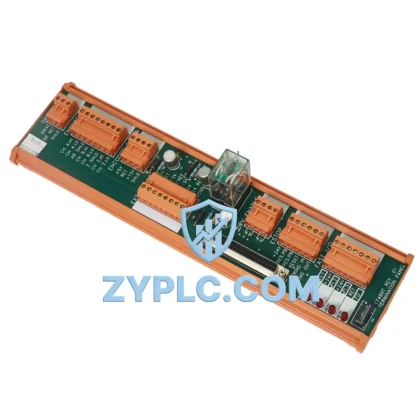
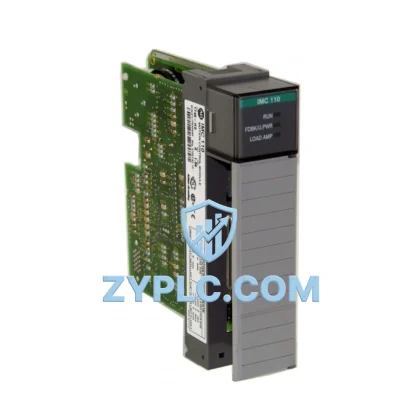
GE IS200AEBEG1A System-Ready Exciter Bridge Interface for Mark VI Architecture
The GE IS200AEBEG1A is a purpose-engineered exciter bridge interface module designed to operate at the heart of GE’s Mark VI Turbine Control System architecture. Rather than functioning as a standalone component, the IS200AEBEG1A is conceived as a critical node within a layered automation hierarchy — one that bridges the excitation control layer with the broader turbine management platform. In modern power generation and industrial turbine applications, the integrity of the exciter interface directly determines the reliability of the entire control loop, from field voltage regulation through to supervisory SCADA oversight. Understanding the IS200AEBEG1A in its full architectural context is essential for engineers responsible for system commissioning, long-term maintenance, and capacity expansion.
Within the Mark VI control architecture, the IS200AEBEG1A occupies the excitation signal conditioning layer, receiving analog feedback from the exciter bridge rectifier assembly and translating those signals into a format compatible with the Mark VI’s VME-based I/O backbone. This positional role means the module must maintain synchronization with upstream power conversion hardware while simultaneously feeding clean, conditioned data to the CPU modules — typically the IS215UCVEH2A or IS215UCVEH2B — that execute the turbine’s closed-loop control algorithms. Any degradation in signal fidelity at the IS200AEBEG1A level propagates directly into speed and load regulation accuracy, making module health a tier-one maintenance priority.
Architecture Specification Table
| Parameter |
Specification |
| System Role |
Exciter Bridge Interface — Excitation Signal Conditioning Layer |
| Compatible Platform |
GE Mark VI Turbine Control System |
| Module Form Factor |
VME-compatible plug-in board |
| Signal Interface |
Analog exciter bridge feedback, conditioned digital output to Mark VI I/O bus |
| Electrical Input Range |
Rated for industrial exciter bridge voltage levels (application-specific) |
| Communication Capability |
Internal Mark VI VME backplane; compatible with IONet Ethernet-based I/O network |
| Operating Temperature |
0°C to 60°C (standard industrial panel environment) |
| Mounting Environment |
Mark VI control cabinet, DIN-rail or card-cage installation |
| Redundancy Support |
Compatible with TMR (Triple Modular Redundancy) Mark VI configurations |
| Warranty |
12-Month Warranty — covers functional defects under normal operating conditions |
| Contextual Integration |
Full Contextual Integration support — pre-validated for Mark VI system compatibility |
| Condition |
Tested, inspected, and verified prior to shipment |
Coordinated Control System Design
The IS200AEBEG1A does not operate in isolation. Its value is realized through coordinated interaction with every layer of the Mark VI control architecture. At the CPU layer, the IS215UCVEH2A controller processes the conditioned exciter feedback to execute AVR (Automatic Voltage Regulator) algorithms, adjusting field current in real time to maintain generator terminal voltage within specification. The IS200AEBEG1A’s output feeds directly into this computational loop, making signal accuracy non-negotiable.
At the I/O layer, the IS200AEBEG1A works alongside analog input modules such as the IS200BIARG1A and IS200TRLYH1B terminal board assemblies, which aggregate field signals from temperature sensors, vibration probes, and pressure transmitters across the turbine skid. The coherence of data across these I/O modules — all sharing the Mark VI VME backplane — ensures that the CPU receives a unified, time-stamped picture of machine state, enabling precise protective relay coordination and load-following response.
Network connectivity in a Mark VI installation typically relies on the IONet architecture, with modules such as the IS215UCVEH2B providing dual Ethernet ports for redundant communication paths to the HMI layer. The IS200AEBEG1A’s data, once processed by the CPU, is transmitted via IONet to operator workstations running GE’s ToolboxST configuration environment, where engineers can monitor exciter performance trends, configure alarm thresholds, and execute firmware updates without interrupting live turbine operation.
Power supply integrity is foundational to the IS200AEBEG1A’s reliable operation. The Mark VI cabinet typically employs redundant 28 VDC power supply modules — such as the IS200EPSCG1A — to ensure that no single power rail failure can interrupt exciter interface functionality. In TMR (Triple Modular Redundancy) configurations, three independent IS200AEBEG1A modules may be deployed in a voting architecture, with the Mark VI’s internal arbitration logic comparing outputs and flagging discrepancies before they can affect turbine control decisions. This redundancy design is particularly critical in baseload power generation facilities where unplanned outages carry significant financial and grid-stability consequences.
At the human-machine interface layer, operator panels and industrial touchscreens connected via the IONet display real-time exciter parameters sourced from the IS200AEBEG1A’s signal chain. Maintenance engineers can correlate exciter bridge performance data with generator output curves, enabling predictive maintenance scheduling that extends mean time between failures across the entire turbine train. Complementary modules such as the IS200DSPXH1D digital signal processor board and the IS200VCRCH1BBB voltage regulator card further enrich the excitation control loop, each contributing distinct signal processing functions that collectively define the Mark VI’s excitation management capability. The IS200AEBEG1A’s role in this data chain — from field signal to operator display — exemplifies the module’s contribution to system-wide observability and maintainability.
Application in Layered Automation Systems
The IS200AEBEG1A finds its primary application in power generation facilities operating GE Frame 6, Frame 7, and Frame 9 gas turbines, where the Mark VI platform serves as the standard turbine control solution. In combined-cycle power plants, the module supports coordinated control between the gas turbine generator and the steam turbine generator, with exciter interface data feeding into plant-level DCS systems — often Emerson DeltaV or Honeywell Experion — via OPC-DA or OPC-UA gateways. This cross-platform integration capability makes the IS200AEBEG1A a key enabler of unified plant automation strategies.
In the petrochemical sector, IS200AEBEG1A modules are deployed in compressor drive applications where gas turbines power large centrifugal compressors in LNG liquefaction trains and refinery hydrogen recycle loops. The exciter interface’s ability to maintain stable field voltage under rapidly varying load conditions is critical in these applications, where compressor surge events can impose severe transient electrical demands on the generator excitation system. The module’s robust signal conditioning architecture ensures that the Mark VI CPU receives accurate exciter feedback even during these high-stress operating periods.
Water treatment and pumping stations utilizing turbine-driven pump sets also benefit from the IS200AEBEG1A’s integration within the Mark VI architecture. In these installations, the module supports remote monitoring via SCADA systems, enabling utility operators to track exciter health across geographically distributed pump stations from a central control room. The 12-Month Warranty provided with each IS200AEBEG1A unit supports the long-term maintenance planning requirements of utility asset managers, who must balance capital expenditure with operational reliability targets across multi-year maintenance cycles.
Mining and minerals processing operations — particularly those employing large electric shovel drives and mill motor systems with turbine-generator power supplies — represent another significant application domain. In these environments, the IS200AEBEG1A’s compatibility with the Mark VI’s TMR redundancy architecture provides the fault tolerance required to meet the high-availability demands of continuous mining operations, where control system downtime translates directly into lost production tonnage. Metallurgical plants and steel mill auxiliary drive systems similarly rely on the Mark VI’s excitation control integrity to maintain consistent power quality across high-inertia motor loads, with the IS200AEBEG1A serving as the critical interface between the physical exciter bridge and the digital control domain.
Architecture Engineering FAQ
Q1: Is the IS200AEBEG1A compatible with both simplex and TMR Mark VI configurations?
Yes. The IS200AEBEG1A is designed to operate in both simplex (single-controller) and TMR (Triple Modular Redundancy) Mark VI architectures. In TMR configurations, three modules are installed in parallel, with the Mark VI’s internal voting logic continuously comparing outputs to detect and isolate any single-module fault without interrupting turbine operation. This makes the IS200AEBEG1A suitable for high-availability applications where control system uptime is a contractual or regulatory requirement. Our team can advise on TMR installation sequencing and module matching to ensure consistent firmware revisions across all three positions.
Q2: What commissioning steps are required when replacing an IS200AEBEG1A in a live Mark VI system?
Replacement of the IS200AEBEG1A in an operational Mark VI system should follow GE’s standard hot-swap procedure for VME-based I/O modules. Prior to removal, engineers should verify that the replacement module carries a matching hardware revision and firmware version to the installed unit, using ToolboxST to confirm compatibility. After physical installation, a calibration verification sequence should be performed to confirm that exciter bridge feedback signals are within expected ranges before returning the module to closed-loop control. Our 12-Month Warranty covers any functional defects identified during this commissioning process, and our technical support team is available to assist with ToolboxST configuration queries.
Q3: How does the 12-Month Warranty and Contextual Integration service support long-term maintenance planning?
Each IS200AEBEG1A supplied by ZYPLC is covered by a 12-Month Warranty against functional defects under normal operating conditions, providing asset managers with a defined reliability baseline for maintenance budget planning. Contextual Integration means that each module is pre-validated against the Mark VI system architecture — including backplane compatibility, signal range verification, and firmware baseline confirmation — before shipment, reducing the risk of integration issues during installation. For facilities operating multiple Mark VI systems, ZYPLC can supply matched sets of IS200AEBEG1A modules with consistent hardware and firmware revisions, supporting standardized spare parts inventory strategies and minimizing the engineering effort required for cross-system maintenance.
© 2026 ZYPLC. All rights reserved.
Original Source: https://zyplc.com
Contact: +86 19859288691 | plc.sales@zyplc.com