GE IS200AEPAH1ABB System-Ready Exciter Power Assembly: Control System Architecture and Contextual Integration
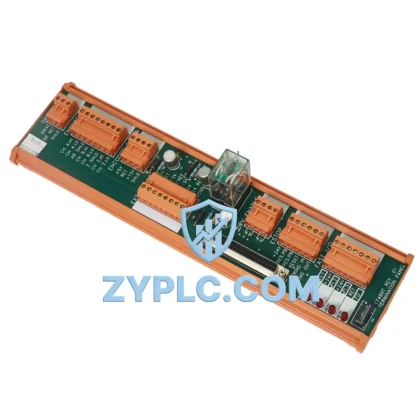
The GE IS200AEPAH1ABB Analog Exciter Power Assembly is a precision-engineered power conditioning and distribution module designed for deployment within the GE Mark VI Turbine Control System architecture. Rather than functioning as a standalone component, the IS200AEPAH1ABB occupies a critical position within the layered automation hierarchy — bridging the power supply layer and the excitation control layer to ensure stable, regulated energy delivery to the generator excitation subsystem. In complex turbine control environments where uptime is non-negotiable, this module’s role in maintaining excitation voltage integrity directly influences the reliability of the entire generation unit.
Understanding the IS200AEPAH1ABB requires viewing it through the lens of the complete Mark VI control architecture. The Mark VI platform organizes control functions across multiple coordinated layers: the controller layer (housing VCMI, VCRC, and VTUR processor boards), the I/O layer (populated by analog and digital I/O modules such as the IS200VAOCH1B and IS200VCRCH1B), the power distribution layer (managed by modules including the IS200AEPAH1ABB itself alongside companion power assemblies), the communications layer (utilizing IONET and Ethernet-based protocols), and the human-machine interface layer (typically driven by GE’s Cimplicity or ToolboxST environment). The IS200AEPAH1ABB ensures that the excitation subsystem receives clean, conditioned power regardless of upstream fluctuations — a requirement that becomes especially critical in gas turbine, steam turbine, and combined-cycle power generation applications.
From a system integration perspective, the IS200AEPAH1ABB is typically installed within the Mark VI control cabinet alongside the IS200EPCTG1A exciter protection card, the IS200EACFG1A exciter analog conditioning module, and the IS200TRLYH1BCC relay output terminal board. These components collectively form the excitation control chain, with the IS200AEPAH1ABB providing the foundational power stability that allows upstream signal processing and downstream relay actuation to function within specification. Engineers commissioning a Mark VI excitation system must verify that the IS200AEPAH1ABB’s output voltage rails align with the input requirements of adjacent I/O and signal conditioning boards to prevent ground loop interference or voltage mismatch faults.
Architecture Specification Table
| Parameter |
Specification |
| Part Number |
IS200AEPAH1ABB |
| Manufacturer |
GE (General Electric) |
| Series |
Mark VI Turbine Control System |
| Module Type |
Analog Exciter Power Assembly |
| System Role |
Excitation Power Conditioning & Distribution |
| Architecture Layer |
Power Distribution Layer / Excitation Subsystem |
| Input Voltage |
120/240 VAC (nominal, per Mark VI cabinet spec) |
| Output |
Regulated DC rails for exciter analog circuits |
| Communication Compatibility |
IONET, Ethernet (via Mark VI controller backbone) |
| Mounting |
Mark VI control cabinet rack-mount, DIN-compatible backplane |
| Operating Temperature |
0°C to 60°C (standard industrial enclosure) |
| Humidity |
5% to 95% non-condensing |
| Certifications |
CE, UL (per GE Mark VI platform standards) |
| Contextual Integration |
Full compatibility with Mark VI excitation control chain |
| Warranty |
12-Month Warranty — covered from date of shipment |
| Condition |
New / Refurbished / Tested (as specified at order) |
Coordinated Control System Design
The IS200AEPAH1ABB does not operate in isolation. Its value is realized through coordinated interaction with the broader Mark VI control platform. At the controller level, the VCMI (VME Communications and Memory Interface) board manages high-speed data exchange between the control processor and I/O subsystems, while the VCRC (VME Relay and Control) board handles discrete output logic. The IS200AEPAH1ABB’s power output feeds directly into the analog excitation circuitry managed by the IS200EACFG1A, which conditions field voltage feedback signals before they reach the VCRC for closed-loop regulation.
On the I/O side, the IS200VAOCH1B analog output board and IS200VCRCH1B contact input board rely on stable power rails to maintain signal accuracy across the full operating range. Any instability in the excitation power supply — the domain of the IS200AEPAH1ABB — propagates as noise or offset errors into these analog channels, degrading control loop performance. This interdependency underscores why the IS200AEPAH1ABB must be sourced as a genuine GE Mark VI component rather than a generic substitute.
For redundancy-critical installations, the Mark VI architecture supports TMR (Triple Modular Redundancy) configurations where three independent control paths — each with its own power assembly — vote on output commands. In TMR deployments, three IS200AEPAH1ABB units may be installed in parallel, with the IS200EPCTG1A exciter protection card monitoring each path for fault conditions. The IS200TRLYH1BCC relay terminal board then executes trip or transfer commands based on the voted output, ensuring that a single power assembly failure does not interrupt turbine operation.
At the network layer, the Mark VI system communicates via IONET — GE’s proprietary deterministic control network — as well as standard Ethernet for historian and HMI connectivity. The IS200AEPAH1ABB’s stable power output is a prerequisite for reliable IONET communication, as voltage transients on the excitation bus can induce electromagnetic interference that disrupts network timing. Proper grounding of the IS200AEPAH1ABB within the control cabinet, following GE’s GEH-6421 installation guidelines, is therefore essential for maintaining network integrity across the full Mark VI architecture.
Application in Layered Automation Systems
The IS200AEPAH1ABB finds application across a wide range of industrial sectors where GE Mark VI turbine control systems are deployed. In power generation facilities — including gas-fired combined-cycle plants, steam turbine installations, and hydroelectric stations — the module ensures that generator excitation remains stable during load transients, grid disturbances, and startup/shutdown sequences. Utilities operating aging Mark VI fleets rely on the availability of genuine IS200AEPAH1ABB assemblies to maintain excitation system integrity without requiring full controller upgrades.
In oil and gas applications, Mark VI systems control gas compression trains and pipeline pumping stations where turbine-driven compressors must maintain precise speed and load profiles. The IS200AEPAH1ABB’s role in excitation power conditioning directly affects the compressor’s ability to respond to process demand changes, making it a critical spare part for operators managing remote or offshore installations where downtime costs are exceptionally high.
In petrochemical and refinery environments, Mark VI-controlled turbines drive critical rotating equipment including feed pumps, air compressors, and reactor agitators. The IS200AEPAH1ABB supports continuous operation in these high-availability applications by providing the excitation power stability required for sustained full-load operation. Maintenance teams at these facilities typically maintain IS200AEPAH1ABB units as critical spares, with inventory replenishment cycles aligned to planned turnaround schedules.
For mining and metals processing operations, where large synchronous motors and turbine-driven mill drives are common, the Mark VI excitation system — anchored by the IS200AEPAH1ABB — provides the reactive power control capability needed to maintain power factor and voltage stability on weak industrial grids. The module’s robust construction and wide operating temperature range make it suitable for the demanding thermal and vibration environments typical of mineral processing facilities.
Architecture Engineering FAQ
Q1: Is the IS200AEPAH1ABB compatible with both simplex and TMR Mark VI configurations?
Yes. The IS200AEPAH1ABB is designed for use in both simplex (single-path) and TMR (Triple Modular Redundancy) Mark VI architectures. In simplex systems, a single unit provides excitation power conditioning. In TMR configurations, three units are installed in parallel within the excitation cabinet, with each unit independently powering one of the three redundant control paths. The IS200EPCTG1A exciter protection card monitors all three paths and initiates fault isolation if any unit deviates from specification. Engineers should verify cabinet slot assignments and backplane connector compatibility against the site-specific Mark VI configuration drawing before installation.
Q2: What commissioning steps are required when replacing an IS200AEPAH1ABB in a live Mark VI system?
Replacement of the IS200AEPAH1ABB in an operational Mark VI system should follow GE’s hot-swap procedures where supported, or require a controlled shutdown sequence where not. Prior to installation, verify that the replacement unit’s revision level (H1ABB) matches the existing assembly to ensure firmware and hardware compatibility. After physical installation, use GE’s ToolboxST configuration software to perform a power-up self-test and verify that excitation voltage feedback signals — monitored via the IS200EACFG1A analog conditioning module — fall within the expected calibration range. Log all commissioning data in the site maintenance management system for future reference.
Q3: What does the 12-Month Warranty cover for the IS200AEPAH1ABB, and how is a warranty claim initiated?
The 12-Month Warranty covers manufacturing defects, component failures under normal operating conditions, and functional non-conformance to GE Mark VI specifications. The warranty period begins from the date of shipment. To initiate a claim, contact ZYPLC at plc.sales@zyplc.com or +86 19859288691 with the order reference number, a description of the observed fault, and any available diagnostic data from the Mark VI system log. ZYPLC will coordinate return authorization and provide a replacement or repaired unit within the agreed service timeline. Warranty coverage does not extend to damage caused by incorrect installation, overvoltage events, or use outside the specified operating environment.
© 2026 ZYPLC. All rights reserved.
Original Source: https://zyplc.com
Contact: +86 19859288691 | plc.sales@zyplc.com