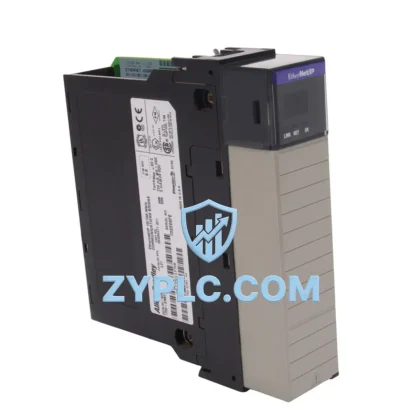
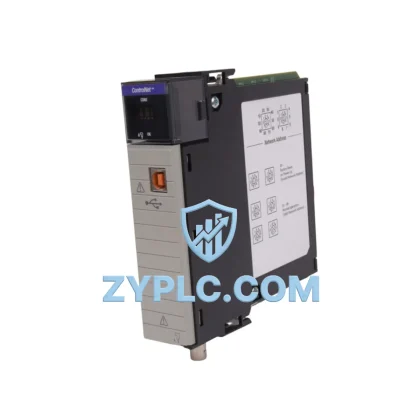
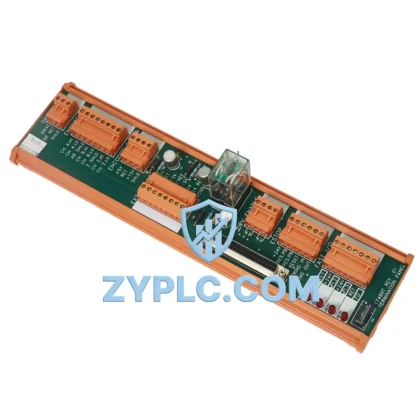
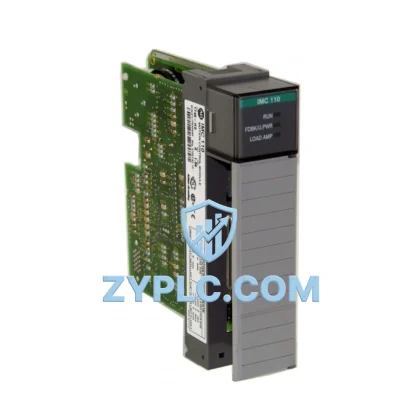
GE IS200ERBPG1ACA System-Ready Exciter Regulator for Mark VI Control Architecture
The GE IS200ERBPG1ACA is a purpose-engineered Exciter Regulator Board designed for seamless integration within the GE Speedtronic Mark VI turbine control platform. Rather than functioning as a standalone component, this board occupies a critical position within a layered automation architecture — bridging the excitation control layer with the broader distributed control system to ensure generator stability, signal fidelity, and long-term operational reliability. Understanding its role within the full system hierarchy is essential for engineers responsible for turbine control design, commissioning, and lifecycle maintenance.
In modern power generation and industrial turbine applications, the Mark VI control system operates as a multi-layer architecture encompassing the control layer, I/O layer, network communication layer, power supply layer, human-machine interface layer, and the execution layer. The IS200ERBPG1ACA resides at the intersection of the control and execution layers, receiving setpoint commands from the Mark VI controller and translating them into precise excitation regulation signals that govern generator field current. This position makes it indispensable to system consistency — any degradation in the exciter regulator’s response directly impacts voltage regulation accuracy, reactive power output, and grid synchronization performance.
From a system architecture perspective, the IS200ERBPG1ACA works in close coordination with companion boards and modules across the Mark VI platform. The IS200VCRCH1B VME Chassis provides the physical backplane infrastructure that houses the regulator board alongside other I/O and control modules, ensuring low-latency inter-board communication. The IS200EACFG1A Exciter Application Card complements the ERBPG1ACA by managing application-level excitation logic, while the IS200EPSMG1A Power Supply Module delivers the regulated DC voltages required for stable board operation. On the network side, the IS200STCIH1A STCI Board facilitates high-speed communication between the exciter subsystem and the main turbine controller over the Mark VI’s proprietary IONet architecture, maintaining synchronization across all control loops.
The I/O layer surrounding the IS200ERBPG1ACA typically includes the IS200TRLYH1B Relay Output Board for discrete trip and alarm signal routing, and the IS200TBAIH1C Terminal Board Assembly for field wiring termination. These components ensure that analog feedback signals from the generator — including terminal voltage, field current, and reactive power measurements — are accurately conditioned and delivered to the regulator board for closed-loop control. The integrity of this signal chain is fundamental to excitation system performance, particularly in applications requiring fast fault response or power system stabilizer (PSS) functionality.
For redundancy-critical installations, the IS200ERBPG1ACA supports deployment within TMR (Triple Modular Redundancy) architectures, where three parallel control paths vote on output commands to eliminate single-point failures. In such configurations, the board operates alongside redundant IS200EPSMG1A power supplies and IS200STCIH1A communication boards, with the Mark VI’s voting logic continuously monitoring channel agreement. This redundancy design is particularly valued in combined-cycle power plants, LNG compression stations, and offshore platform applications where unplanned turbine trips carry significant operational and safety consequences.
At the human-machine interface layer, operators interact with the excitation system through GE’s ToolboxST configuration environment, which provides real-time visibility into exciter setpoints, AVR (Automatic Voltage Regulator) mode status, and alarm diagnostics. The IS200ERBPG1ACA’s parameter set — including voltage regulation gain, stabilizer coefficients, and ceiling current limits — is fully configurable through ToolboxST, enabling engineers to optimize excitation response for specific generator characteristics and grid requirements without hardware modification.
From a maintenance and lifecycle perspective, the IS200ERBPG1ACA’s modular design within the Mark VI VME chassis allows for hot-swap replacement in non-redundant configurations following proper isolation procedures, minimizing turbine downtime during corrective maintenance events. Maintaining a spare IS200ERBPG1ACA in inventory is a recognized best practice for power plant operators seeking to reduce mean time to repair (MTTR) for excitation system faults. All units supplied by ZYPLC undergo functional testing and are backed by a 12-Month Warranty, providing documented assurance of board performance prior to installation.
Architecture Specification Table
| Parameter |
Specification |
| Part Number |
IS200ERBPG1ACA |
| Manufacturer |
GE (General Electric) |
| Series |
Speedtronic Mark VI |
| System Role |
Exciter Regulator Board — Excitation Control Layer |
| Platform |
Mark VI VME-Based Turbine Control System |
| Form Factor |
VME Board (fits IS200VCRCH1B VME Chassis) |
| Communication |
IONet (GE proprietary high-speed control network) |
| Redundancy Support |
TMR (Triple Modular Redundancy) compatible |
| Configuration Tool |
GE ToolboxST |
| Operating Temperature |
0°C to 60°C (typical industrial panel environment) |
| Power Input |
Supplied via VME backplane from IS200EPSMG1A |
| Signal Interface |
Analog voltage/current feedback via IS200TBAIH1C terminal board |
| Warranty |
12-Month Warranty (ZYPLC) |
| Contextual Integration |
Full Contextual Integration within Mark VI architecture |
| Condition |
Tested, inspected, ready to ship |
Coordinated Control System Design
The IS200ERBPG1ACA achieves its full performance potential only when correctly integrated within a complete Mark VI control system. A typical coordinated architecture includes the following components working in concert:
The IS200VCRCH1B VME Chassis serves as the physical backbone, housing the regulator board and providing the backplane communication bus. The IS200EPSMG1A Power Supply Module delivers stable, filtered DC power to all boards within the chassis, including the ERBPG1ACA. The IS200EACFG1A Exciter Application Card manages high-level excitation application logic and interfaces with the regulator board for setpoint arbitration. The IS200STCIH1A STCI Communication Board handles IONet data exchange between the exciter subsystem and the main turbine controller, ensuring that AVR commands and feedback signals are transmitted with deterministic latency.
Field signal conditioning is handled by the IS200TBAIH1C Terminal Board Assembly, which provides the physical wiring interface for generator voltage and current transducer signals. Discrete protection and alarm outputs are routed through the IS200TRLYH1B Relay Output Board, which interfaces with plant protection systems and annunciator panels. In redundant installations, a second IS200ERBPG1ACA channel — along with redundant IS200EPSMG1A and IS200STCIH1A boards — forms the TMR voting architecture that eliminates single-point failure risk in the excitation control path. Together, these components create a tightly integrated excitation control subsystem that supports consistent generator performance, rapid fault detection, and efficient engineering commissioning.
Application in Layered Automation Systems
The IS200ERBPG1ACA finds application across a broad range of industries where turbine-driven generation and rotating machinery control are central to operations. In combined-cycle power plants, the board regulates generator excitation during both gas turbine and steam turbine operating modes, supporting reactive power dispatch and voltage support for grid-connected operation. In LNG and petrochemical facilities, it governs the excitation of large synchronous motors and generators driving compressor trains, where voltage stability directly impacts process continuity and safety system integrity.
In offshore oil and gas platforms, the IS200ERBPG1ACA operates within space-constrained, vibration-exposed control cabinets, where its VME form factor and robust signal conditioning provide reliable performance under demanding environmental conditions. Mining and mineral processing operations utilize the board within mill drive and hoist control systems, where precise voltage regulation supports motor starting and load-sharing across multiple generator sets. In water and wastewater treatment facilities, the board contributes to the stable operation of pump drive systems powered by on-site generation, ensuring uninterrupted process control during grid disturbances. Across all these applications, the IS200ERBPG1ACA’s compatibility with ToolboxST diagnostics and its 12-Month Warranty support both initial commissioning confidence and long-term maintenance planning.
Architecture Engineering FAQ
Q1: Is the IS200ERBPG1ACA compatible with both simplex and TMR Mark VI configurations?
Yes. The IS200ERBPG1ACA is designed for deployment in both simplex (single-channel) and TMR (Triple Modular Redundancy) Mark VI architectures. In TMR configurations, three boards operate in parallel with the Mark VI’s voting logic continuously comparing channel outputs. Replacement of a single channel board in a TMR system can typically be performed without turbine shutdown, provided the remaining two channels remain healthy and the replacement procedure follows GE’s documented hot-swap protocol.
Q2: What commissioning steps are required when installing a replacement IS200ERBPG1ACA?
After physical installation in the IS200VCRCH1B VME chassis, the replacement board must be configured using GE ToolboxST to match the site-specific excitation parameter set, including AVR gain settings, stabilizer coefficients, and ceiling current limits. IONet communication should be verified through the STCI board diagnostics, and analog signal integrity confirmed via the IS200TBAIH1C terminal board connections. A staged excitation test — typically performed at reduced load — is recommended before returning the unit to full-load service to validate closed-loop voltage regulation performance.
Q3: What does the 12-Month Warranty cover, and how does ZYPLC support long-term spare parts availability?
The 12-Month Warranty provided by ZYPLC covers functional defects identified during normal operation under the specified environmental and electrical conditions. All IS200ERBPG1ACA units are tested prior to shipment to verify board functionality against key performance parameters. For long-term spare parts planning, ZYPLC maintains inventory of Mark VI series components to support both emergency replacement and scheduled maintenance programs, reducing lead times compared to OEM procurement channels. Customers requiring multi-unit spare packages or consignment arrangements are encouraged to contact ZYPLC directly to discuss supply agreements tailored to their fleet maintenance strategy.
© 2026 ZYPLC. All rights reserved.
Original Source: https://zyplc.com
Contact: +86 19859288691 | plc.sales@zyplc.com