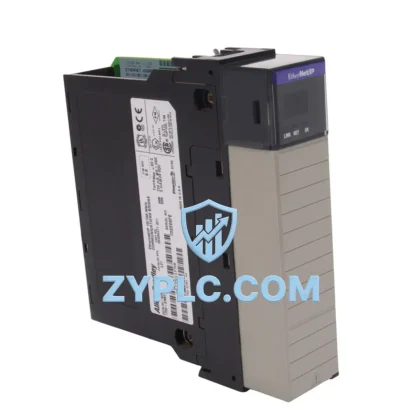
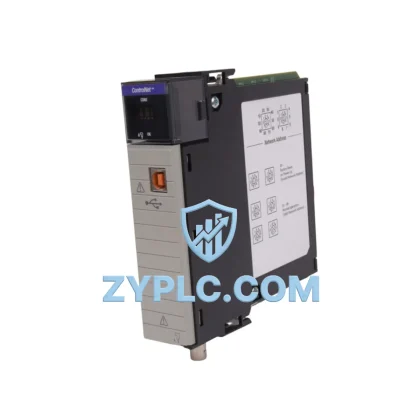
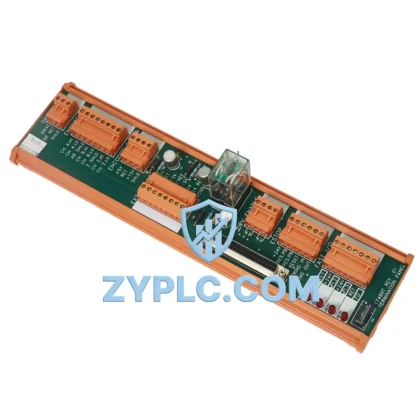
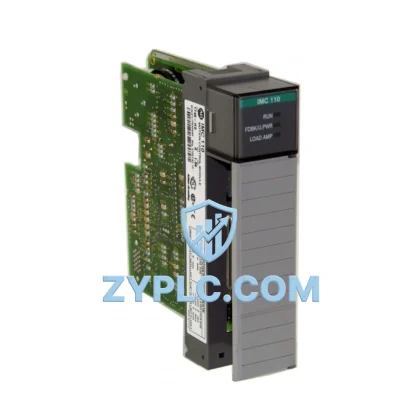
GE IS200ESELH1A System-Ready Exciter Selector for Mark VI Architecture: Control System Coordination and Upstream-Downstream Synergy
The GE IS200ESELH1A is a dedicated Exciter Selector Board engineered for deployment within the GE Mark VI Turbine Control System architecture. Rather than functioning as a standalone component, the IS200ESELH1A occupies a critical position within the excitation control layer of a multi-tier automation hierarchy — coordinating signal routing between the turbine’s generator excitation circuits and the Mark VI’s central processing infrastructure. In modern power generation and heavy industrial environments, the reliability of excitation selection directly determines the stability of voltage regulation, generator synchronization, and overall plant availability. This board is designed to meet those demands with precision, redundancy awareness, and long-term serviceability.
Within the GE Mark VI platform, the IS200ESELH1A interfaces with the system’s TMR (Triple Modular Redundancy) architecture, enabling the control system to select between primary and backup excitation paths without interrupting generator output. This capability is essential in applications where unplanned excitation loss would trigger a turbine trip, resulting in costly downtime and potential grid instability. The board’s role in the excitation selection layer makes it a foundational element of any high-availability Mark VI deployment.
Architecture Specification Table
| Parameter |
Specification |
| Part Number |
IS200ESELH1A |
| Alternate Reference |
151X1225DF01PC03RA |
| Manufacturer |
GE (General Electric) |
| Series |
Mark VI Turbine Control System |
| System Role |
Exciter Selector Board — Excitation Control Layer |
| Architecture Compatibility |
GE Mark VI TMR (Triple Modular Redundancy) and Simplex configurations |
| Mounting |
Mark VI VME-based control cabinet backplane |
| Signal Interface |
Analog and discrete I/O for excitation path selection and status feedback |
| Communication Capability |
Internal Mark VI backplane bus; compatible with IONet Ethernet-based I/O network |
| Operating Temperature |
0°C to 60°C (standard industrial enclosure) |
| Power Supply Compatibility |
Mark VI distributed DC power rail (IS200EPCTG1A or equivalent power supply module) |
| Installation Environment |
Control cabinet; DIN-rail or rack-mount Mark VI enclosure |
| Contextual Integration |
Full Contextual Integration within GE Mark VI control architecture |
| Warranty |
12-Month Warranty from date of shipment |
| Origin |
United States |
Coordinated Control System Design
The IS200ESELH1A does not operate in isolation. Its value is realized through tight integration with the surrounding Mark VI control architecture. At the processor layer, the IS200ESELH1A receives switching commands from the IS215UCVEH2A or IS215UCVEH2B Mark VI controller boards, which serve as the primary CPU modules responsible for executing turbine control logic, protection sequences, and excitation management algorithms. These controllers communicate with the exciter selector board via the Mark VI’s internal VME backplane, ensuring deterministic, low-latency command execution.
On the I/O side, the IS200ESELH1A works in conjunction with analog input boards such as the IS200VTURH1B turbine I/O board and the IS200TREGH1B terminal board, which aggregate field-level signals from current transformers, voltage transformers, and excitation feedback circuits. These signals are conditioned and routed through the IS200ESELH1A’s selection logic to determine which excitation path — primary or standby — should be active at any given moment.
For power distribution within the Mark VI cabinet, the IS200EPCTG1A power converter module supplies regulated DC voltage to the IS200ESELH1A and adjacent boards. Stable power delivery is non-negotiable in excitation control applications, where voltage transients can cause false switching events or board-level faults. The IS200EPCTG1A’s regulated output ensures that the IS200ESELH1A operates within its specified electrical envelope at all times.
Network connectivity is managed through the IS200IOCIH1B IONet communication interface board, which bridges the Mark VI’s internal control bus with the plant’s Ethernet-based I/O network. This allows the IS200ESELH1A’s status — including active excitation path, fault flags, and selector position — to be monitored in real time from the GE Cimplicity HMI or third-party SCADA systems via OPC-DA or OPC-UA protocols. Operators can observe excitation switching events, acknowledge alarms, and initiate manual overrides without physical access to the control cabinet.
In TMR configurations, the IS200ESELH1A is typically paired with redundant instances of the IS200ESYSH1A excitation system interface board and the IS200EACFH1A AC feedback board, forming a voted excitation control loop. The TMR architecture ensures that a single board failure does not result in a turbine trip — the remaining two channels continue to operate, and maintenance can be performed online without plant shutdown. This level of redundancy is a core requirement in baseload power generation, combined-cycle plants, and critical process industries.
Terminal connectivity is handled through the IS200TTURH1C terminal board, which provides the physical wiring interface between field cables and the Mark VI’s internal signal paths. Proper termination at this layer is essential for signal integrity across the IS200ESELH1A’s analog inputs, particularly in high-noise industrial environments where electromagnetic interference from large motors, transformers, and variable frequency drives can corrupt low-level excitation feedback signals.
Application in Layered Automation Systems
Power Generation: In gas turbine and steam turbine power plants, the IS200ESELH1A is deployed as part of the generator excitation control system. It enables seamless switching between static excitation systems and brushless excitation systems, supporting black-start capability, reactive power control, and voltage regulation across the generator’s full operating range. Plants operating in grid-connected mode rely on the IS200ESELH1A to maintain excitation stability during load transients, frequency disturbances, and fault ride-through events.
Combined-Cycle and Cogeneration Facilities: In combined-cycle plants where multiple generating units share a common grid connection, the IS200ESELH1A’s excitation selection capability supports coordinated reactive power dispatch. The board’s integration with the Mark VI’s unit control logic allows excitation switching to be synchronized with gas turbine load changes, steam turbine ramp rates, and heat recovery steam generator (HRSG) dynamics — ensuring that voltage profiles remain stable across the entire plant during load following and dispatch operations.
Industrial Power Systems — Petrochemical and Refining: Large rotating machinery in petrochemical complexes — including compressor trains, boiler feed pumps, and process gas compressors — often use synchronous motors with dedicated excitation systems. The IS200ESELH1A, deployed within a Mark VI-based motor control architecture, provides excitation path selection for these critical drives, supporting soft-start sequences, power factor correction, and controlled shutdown procedures that protect both the motor and the driven process equipment.
Mining and Metals Processing: In mining operations and smelting facilities, large synchronous drives for ore crushers, ball mills, and hoisting systems require reliable excitation control to maintain torque stability under variable load conditions. The IS200ESELH1A’s ability to switch excitation paths without interrupting motor operation is particularly valuable in these applications, where a drive trip can result in significant production loss and mechanical stress on the driven equipment.
Water and Wastewater Treatment: Municipal water authorities and industrial water treatment facilities operating large pumping stations with synchronous pump motors benefit from the IS200ESELH1A’s excitation management capabilities. Stable excitation control ensures consistent pump performance across varying flow demands, supports power factor optimization to reduce utility charges, and enables controlled motor starts that minimize water hammer effects in long pipeline systems.
Architecture Engineering FAQ
Q1: Is the IS200ESELH1A compatible with both TMR and Simplex Mark VI configurations, and can it be retrofitted into an existing Mark VI cabinet?
A1: Yes. The IS200ESELH1A is designed to operate in both TMR (Triple Modular Redundancy) and Simplex Mark VI configurations. In TMR systems, three IS200ESELH1A boards operate in a voted architecture, with the Mark VI controller comparing outputs from all three channels before executing an excitation switching command. In Simplex configurations, a single board handles excitation selection with no voting logic. Retrofitting into an existing Mark VI cabinet requires verification of backplane slot compatibility, firmware revision alignment with the installed IS215UCVEH2A or equivalent controller, and confirmation that the terminal board wiring matches the IS200ESELH1A’s I/O channel assignments. Our engineering team can provide pre-installation compatibility verification as part of the procurement process.
Q2: What are the long-term maintenance considerations for the IS200ESELH1A in a continuous-duty power generation environment?
A2: The IS200ESELH1A is a solid-state board with no moving parts, which minimizes wear-related failure modes. However, long-term reliability in continuous-duty environments depends on several factors: maintaining cabinet ambient temperature within the 0°C–60°C operating range, ensuring that the IS200EPCTG1A power supply module delivers clean, regulated DC voltage within specification, and performing periodic inspection of the IS200TTURH1C terminal board connections to detect any loosening caused by thermal cycling. GE Mark VI diagnostic tools, accessible via the Cimplicity HMI or ToolboxST software, provide board-level health monitoring that can identify developing faults before they result in an unplanned excitation switching event. Maintaining a spare IS200ESELH1A in inventory is strongly recommended for plants with high availability requirements.
Q3: What does the 12-Month Warranty cover, and what support is available during the warranty period?
A3: The 12-Month Warranty covers manufacturing defects, component failures, and functional non-conformance under normal operating conditions as specified in the GE Mark VI system documentation. The warranty period begins from the date of shipment. During the warranty period, defective units will be repaired or replaced at no charge, subject to inspection confirming that the failure was not caused by improper installation, operation outside specified parameters, or physical damage. Technical support for installation, configuration, and system integration is available throughout the warranty period via our engineering team. For post-warranty support, extended service agreements and spare board exchange programs are available. Contact us at plc.sales@zyplc.com or +86 19859288691 for warranty claims and technical assistance.
© 2026 ZYPLC. All rights reserved.
Original Source: https://zyplc.com
Contact: +86 19859288691 | plc.sales@zyplc.com