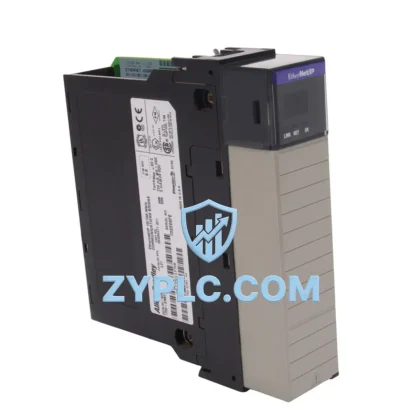
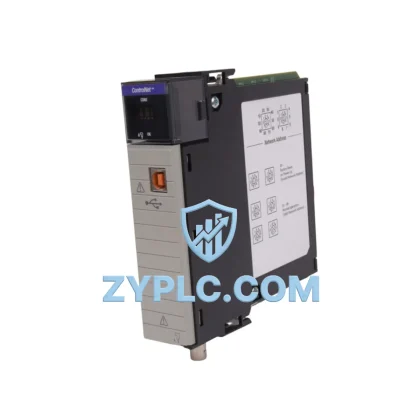
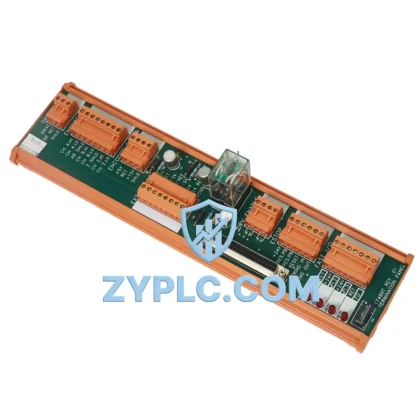
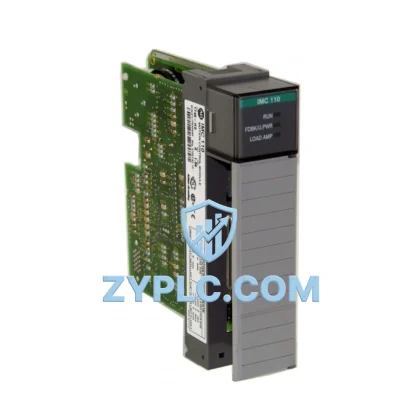
GE IS200HSLAH2A System-Ready HS Serial Link Interface for Mark VI Control Architecture
The GE IS200HSLAH2A is a High-Speed Serial Link Interface Board engineered specifically for deployment within the GE Mark VI Turbine Control System architecture. Rather than functioning as a standalone component, this module occupies a critical position in the communication backbone of the Mark VI platform, bridging the control layer with distributed I/O assemblies, redundant processor racks, and field-level instrumentation networks. Understanding its role requires examining the full system hierarchy in which it operates — from the controller core to the execution layer — and recognizing how its presence directly influences system consistency, expandability, fault tolerance, and long-term maintainability.
Architecture Specification Table
| Parameter |
Specification |
| System Role |
High-Speed Serial Link Interface — Mark VI Communication Layer |
| Compatible Platform |
GE Mark VI Turbine Control System |
| Module Type |
Serial Link Interface Board (HSLA) |
| Communication Capability |
High-Speed Serial Link (HSSL) protocol for inter-rack and I/O communication |
| Electrical Interface |
Backplane-mounted; compatible with Mark VI VME-based rack architecture |
| Installation Environment |
Industrial control cabinet; DIN-rail or rack-mount enclosure |
| Operating Temperature |
0°C to 60°C (standard industrial range) |
| Redundancy Support |
TMR (Triple Modular Redundancy) and Simplex configurations |
| Warranty |
12-Month Warranty — covers functional integrity and board-level defects |
| Contextual Integration |
Contextual Integration support for seamless replacement in live Mark VI architectures |
Coordinated Control System Design
The IS200HSLAH2A does not operate in isolation. Its value is realized through its coordination with the broader Mark VI control ecosystem. At the processor level, the IS215UCVEH2A (Mark VI UCVE Controller Board) relies on high-speed serial communication paths to synchronize control logic execution across redundant racks. The IS200HSLAH2A provides exactly this link, ensuring that the controller’s output commands reach I/O termination assemblies with minimal latency and maximum determinism.
On the I/O side, terminal boards such as the IS200TBCIH2B and IS200TBAIH2B receive analog and digital signals from field instruments — thermocouples, pressure transmitters, proximity probes, and valve positioners. These signals are routed through the serial link infrastructure that the IS200HSLAH2A supports, maintaining signal integrity across the full I/O chain. In TMR configurations, the IS200TRLYH1B relay output board and IS200VSVOH1B servo driver module depend on synchronized, redundant communication paths to execute protective relay actions and servo positioning commands without cross-rack timing discrepancies.
Power distribution within the Mark VI cabinet is managed by modules such as the IS200EPCTG1A power converter board, which supplies regulated DC voltages to the backplane. The IS200HSLAH2A, mounted within this same backplane environment, benefits from stable power delivery that ensures consistent serial link performance even under high electromagnetic interference conditions typical of turbine hall installations. The IS200PSCDH1A power supply conditioning module further stabilizes the electrical environment, reducing the risk of communication errors caused by voltage transients.
At the network layer, the Mark VI architecture integrates with plant-level DCS and SCADA systems through Ethernet-based gateways. The IS200EACFG1A Ethernet adapter board enables this upward connectivity, while the IS200HSLAH2A handles the lower-level, time-critical serial communication that cannot be delegated to standard Ethernet protocols. This layered communication design — HSSL at the rack level, Ethernet at the plant level — ensures that the control system maintains real-time responsiveness while remaining accessible for remote monitoring and diagnostics.
For human-machine interface integration, the Mark VI platform connects to operator workstations running GE’s Toolbox software environment. The IS200HSLAH2A’s role in maintaining reliable inter-rack communication directly supports the accuracy of real-time data displayed on HMI screens, ensuring that operators receive correct turbine state information for informed decision-making during startup, load changes, and shutdown sequences.
Application in Layered Automation Systems
The IS200HSLAH2A finds application across a wide range of heavy industrial environments where the GE Mark VI platform is the control system of choice. In power generation facilities — including gas turbine, steam turbine, and combined-cycle plants — the board supports the communication infrastructure that governs fuel control, inlet guide vane positioning, exhaust temperature monitoring, and protective trip logic. Its presence in TMR architectures ensures that no single communication failure can compromise turbine protection.
In petrochemical and refinery applications, the Mark VI platform controls compressor trains, gas turbine-driven pumps, and rotating equipment critical to continuous process operation. The IS200HSLAH2A’s high-speed serial link capability ensures that vibration monitoring data, bearing temperature signals, and surge control commands are transmitted with the determinism required for safe compressor operation. Similarly, in offshore oil and gas installations, where environmental conditions are extreme and maintenance access is limited, the board’s robust design and 12-Month Warranty provide the reliability assurance that operators require.
Mining and metallurgical operations deploying Mark VI-controlled drives and motor control centers benefit from the IS200HSLAH2A’s ability to maintain communication integrity in high-vibration, high-dust environments. In water treatment and pumping stations, the board supports the control of large pump motors and valve actuators, where communication reliability directly affects process continuity and regulatory compliance. Across all these sectors, the IS200HSLAH2A’s Contextual Integration capability allows it to be introduced into existing Mark VI architectures without requiring full system reconfiguration, significantly reducing commissioning time and operational risk.
Architecture Engineering FAQ
Q1: Is the IS200HSLAH2A compatible with both Simplex and TMR Mark VI configurations?
Yes. The IS200HSLAH2A is designed to operate within both Simplex and Triple Modular Redundancy (TMR) Mark VI architectures. In TMR systems, multiple IS200HSLAH2A boards are deployed across the R, S, and T controller racks to provide fully redundant serial link paths. Each board operates independently, and the Mark VI voting logic ensures that a failure in any single communication path does not interrupt control system operation. Replacement of a failed board in a TMR system can typically be performed without a full system shutdown, provided proper hot-swap procedures are followed.
Q2: What does Contextual Integration mean for replacing the IS200HSLAH2A in a live system?
Contextual Integration refers to the board’s ability to be introduced into an existing Mark VI control architecture with minimal configuration overhead. Because the IS200HSLAH2A is a direct form-fit-function replacement for the original GE-manufactured module, it does not require changes to the system’s Toolbox configuration files, I/O mapping, or communication parameters. Engineers can replace the board, restore power, and verify communication link status through the Mark VI diagnostic interface without re-engineering the surrounding architecture. This significantly reduces mean time to repair (MTTR) and minimizes production downtime.
Q3: What does the 12-Month Warranty cover, and how does it support long-term maintenance planning?
The 12-Month Warranty covers the IS200HSLAH2A against functional failures and board-level defects under normal industrial operating conditions. This warranty period supports maintenance planning by providing a defined assurance window during which replacement or repair will be provided at no additional cost. For facilities operating on multi-year maintenance contracts or planned outage schedules, the 12-Month Warranty allows procurement teams to align spare parts inventory strategies with warranty coverage periods, reducing the total cost of ownership for Mark VI spare parts programs. Extended support arrangements can be discussed with the ZYPLC technical team for facilities requiring longer coverage commitments.
© 2026 ZYPLC. All rights reserved.
Original Source: https://zyplc.com
Contact: +86 19859288691 | plc.sales@zyplc.com