GE IS200SCSAS1AEB System-Ready SCSA I/O for Mark VI Architecture: Control System Architecture and Upstream–Downstream Coordination
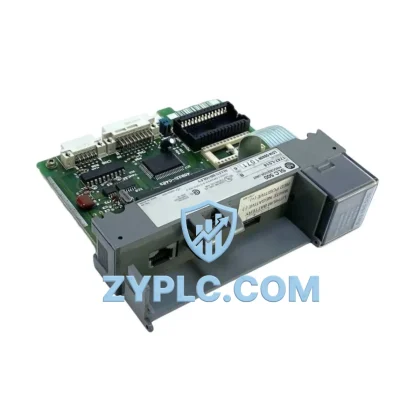
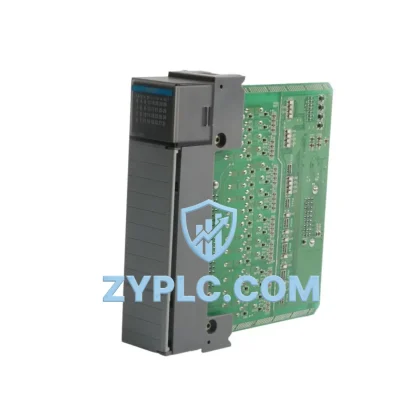
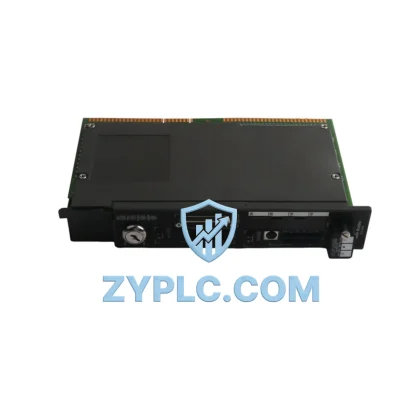
The GE IS200SCSAS1AEB (also referenced as IS210SCSAS1A) is a Signal Conditioning and Sequence Adapter (SCSA) I/O module engineered for deployment within the GE Mark VI Turbine Control System. Rather than functioning as a standalone component, this module occupies a critical position within a layered automation architecture — bridging the physical signal environment of gas turbines, steam turbines, and combined-cycle power plants with the deterministic logic execution layer managed by the Mark VI controller platform. Understanding its role demands a system-level perspective that spans the control layer, I/O layer, network layer, power layer, human–machine interface layer, and actuation layer simultaneously.
In a complete Mark VI control architecture, the IS200SCSAS1AEB is mounted within the VCMI or VCRC I/O rack, where it interfaces directly with field-side sensors, thermocouples, RTDs, and discrete signal wiring. Its signal conditioning circuitry normalizes raw analog inputs before they are passed upstream to the processor board — typically the IS215UCVEH2A or IS215UCVEH2B Mark VI UCVx CPU module — which executes the turbine protection and sequencing logic. This upstream dependency means that any degradation in the SCSA module’s signal fidelity directly affects the quality of data available to the control processor, making module integrity a system-wide concern rather than a localized one.
Downstream from the CPU, the processed control outputs are distributed through output modules such as the IS200VTURH1B or IS200VTURH1C, which drive servo valves, solenoids, and relay-based actuators. The IS200SCSAS1AEB’s role in maintaining clean, conditioned input signals ensures that these downstream actuators receive commands derived from accurate process data — a requirement that is non-negotiable in turbine overspeed protection, flame detection, and exhaust temperature monitoring applications.
Architecture Specification Table
| Parameter |
Specification |
| System Role |
SCSA Signal Conditioning & Sequence Adapter I/O Module |
| Compatible Platform |
GE Mark VI Turbine Control System |
| Alternate Part Number |
IS210SCSAS1A |
| Module Form Factor |
Rack-mounted, Mark VI I/O rack compatible |
| Signal Types Supported |
Analog inputs (thermocouple, RTD, 4–20 mA), discrete I/O |
| Communication Interface |
IONet (GE proprietary high-speed I/O network) |
| Operating Voltage |
28 VDC (supplied via Mark VI power distribution) |
| Operating Temperature |
0°C to 60°C (standard industrial enclosure) |
| Mounting Environment |
Control cabinet / Mark VI I/O rack (VCMI/VCRC) |
| Redundancy Support |
TMR (Triple Modular Redundancy) architecture compatible |
| Warranty |
12-Month Warranty — covers full functional verification |
| Contextual Integration |
Contextual Integration support for system-matched deployment |
Coordinated Control System Design
Deploying the IS200SCSAS1AEB within a Mark VI system requires careful coordination across multiple hardware layers. At the processor level, the IS215UCVEH2A UCVx CPU module serves as the primary logic engine, receiving conditioned signals from the SCSA module via the IONet communication backbone. IONet is GE’s proprietary high-speed deterministic network that links I/O modules to the controller with cycle times suitable for turbine protection applications where response latency must remain below critical thresholds.
Power integrity is managed through the IS200EPBAG1A or IS200EPBAG1B power distribution boards, which supply regulated 28 VDC to the I/O rack. Any instability in this power layer propagates directly to the SCSA module’s analog front-end circuitry, potentially introducing offset errors in thermocouple or RTD readings. Engineers commissioning Mark VI systems should verify power rail stability before performing signal calibration on the IS200SCSAS1AEB.
For systems configured in Triple Modular Redundancy (TMR) architecture, three IS200SCSAS1AEB modules operate in parallel across the R, S, and T control paths. The IS215VCMIH2B VCMI backplane coordinates the voting logic between these three signal paths, ensuring that a single module fault does not propagate to a spurious trip or missed protection event. This redundancy architecture is standard in critical turbine applications where unplanned outages carry significant operational and financial consequences.
At the human–machine interface layer, the Mark VI system communicates with operator workstations running GE’s ToolboxST configuration environment. Changes to I/O module assignments, signal scaling, and alarm setpoints are pushed from ToolboxST through the IS215UCVEH2A controller to the IS200SCSAS1AEB’s configuration registers. Maintaining version consistency between the ToolboxST project file and the installed module firmware is essential for predictable system behavior during commissioning and after maintenance interventions.
Terminal modules such as the IS200TBCIH1C or IS200TBCIH1D provide the physical wiring interface between field cables and the IS200SCSAS1AEB’s connector. These terminal boards are mounted adjacent to the I/O module in the control cabinet and must be matched to the specific signal types — thermocouple, RTD, or discrete — assigned to each channel. Mismatched terminal boards are a common source of commissioning errors and should be verified against the Mark VI I/O configuration drawing before energization.
Application in Layered Automation Systems
The IS200SCSAS1AEB finds application across a broad range of industrial sectors where the GE Mark VI platform has been deployed as the primary turbine control solution. In combined-cycle power generation facilities, the module conditions exhaust gas temperature signals from Type K thermocouples distributed across the turbine exhaust diffuser, providing the temperature spread data used by the Mark VI to detect combustion anomalies and initiate load reduction sequences before hardware damage occurs.
In petrochemical and refinery applications, Mark VI-controlled gas turbine compressor trains rely on the IS200SCSAS1AEB to condition vibration proxy signals and bearing temperature inputs. These signals feed directly into the turbine protection logic, where exceeding defined thresholds triggers automatic shutdown sequences. The module’s signal conditioning accuracy is therefore directly linked to the reliability of the plant’s rotating equipment protection strategy.
Water treatment and pumping stations that use gas turbine-driven pump sets benefit from the IS200SCSAS1AEB’s ability to interface with a wide range of sensor types within a single module footprint, reducing cabinet space requirements and simplifying wiring infrastructure. In mining and mineral processing applications, where turbine-driven compressors and generators operate in dusty, high-vibration environments, the module’s industrial-grade construction supports reliable long-term operation when installed within properly sealed control enclosures.
For packaging and process manufacturing lines that incorporate turbine-driven utilities, the IS200SCSAS1AEB supports integration with plant-level DCS systems through the Mark VI’s OPC-DA or Modbus gateway interfaces, enabling process data from the turbine control layer to be surfaced in the plant historian and operator displays without requiring additional signal conditioning hardware.
Architecture Engineering FAQ
Q1: Is the IS200SCSAS1AEB compatible with both TMR and Simplex Mark VI configurations?
Yes. The IS200SCSAS1AEB supports deployment in both Simplex and Triple Modular Redundancy (TMR) Mark VI architectures. In TMR configurations, three modules are installed across the R, S, and T control paths with voting managed by the VCMI backplane. In Simplex configurations, a single module is used per I/O rack slot. The module’s IONet interface and 28 VDC power requirements are identical in both configurations, simplifying spare parts management across mixed-architecture fleets.
Q2: What commissioning steps are required when replacing an IS200SCSAS1AEB in a live Mark VI system?
Replacement should follow GE’s Mark VI maintenance procedures: isolate the affected I/O rack slot, verify that the replacement module’s firmware revision is compatible with the installed ToolboxST project version, install the module, and perform a channel-by-channel signal verification against the I/O configuration drawing. In TMR systems, the replacement can typically be performed online without a turbine shutdown by isolating the affected control path. All replaced modules supplied by ZYPLC are covered under a 12-Month Warranty and have undergone functional verification prior to shipment.
Q3: How does Contextual Integration support simplify IS200SCSAS1AEB deployment?
Contextual Integration means that each IS200SCSAS1AEB supplied by ZYPLC is matched to the customer’s specific Mark VI system context — including rack position, signal type assignments, and firmware compatibility — before shipment. This reduces on-site configuration time, minimizes the risk of module mismatch errors, and ensures that the replacement module integrates directly into the existing ToolboxST project without requiring full I/O reconfiguration. Contextual Integration support is included as standard with all ZYPLC-supplied Mark VI I/O modules.
© 2026 ZYPLC. All rights reserved.
Original Source: https://zyplc.com
Contact: +86 19859288691 | plc.sales@zyplc.com