GE IS200TSVCH1AEC System-Ready Servo Terminal for IS200 Architecture: Coordinated Control System Integration
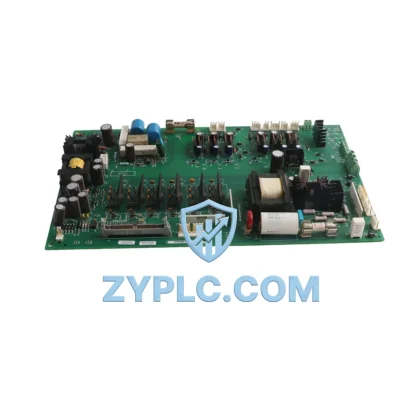
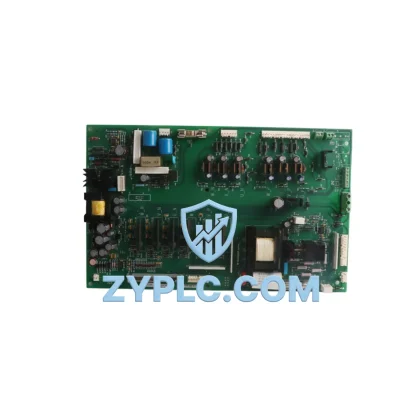
The GE IS200TSVCH1AEC is a Servo Terminal Board engineered specifically for deployment within GE’s IS200 series turbine control architecture. As a critical interface component in the Mark VI and Mark VIe distributed control ecosystem, the IS200TSVCH1AEC bridges the servo drive layer with the controller’s I/O infrastructure, enabling precise, low-latency signal conditioning between the turbine’s electro-hydraulic actuators and the central processing modules. Its role is not merely that of a passive terminal board — it is an active participant in the system’s servo loop integrity, ensuring that valve positioning commands issued by the CPU module are faithfully translated into deterministic actuator responses across the full operating envelope of the turbine unit.
In a layered automation architecture, the IS200TSVCH1AEC occupies the I/O and signal conditioning layer, sitting between the control layer (where modules such as the IS200VCMIH2C VME Controller and IS200DSPXH1DBB Digital Signal Processor reside) and the execution layer (servo valves, hydraulic actuators, and positioning feedback transducers). This positioning within the system hierarchy means that any degradation in the terminal board’s signal path directly affects servo loop stability, turbine ramp rates, and load-following accuracy. The IS200TSVCH1AEC is therefore a component whose reliability is non-negotiable in continuous-duty power generation and industrial drive applications.
Architecture Specification Table
| Parameter |
Specification |
| Part Number |
IS200TSVCH1AEC |
| Manufacturer |
GE (General Electric) |
| Product Series |
IS200 / Mark VI / Mark VIe |
| System Role |
Servo Terminal Board – I/O & Signal Conditioning Layer |
| Function |
Servo valve interface, actuator feedback conditioning, servo loop signal routing |
| Compatible Controllers |
Mark VI, Mark VIe Turbine Control Systems |
| Electrical Interface |
Terminal block connectivity to servo amplifiers and LVDT feedback circuits |
| Signal Types Supported |
Analog servo command signals, LVDT position feedback, 4–20 mA loops |
| Communication Capability |
Backplane integration with IS200 VME rack; compatible with IONet and ARCNET control networks |
| Mounting |
IS200 series VME rack / terminal board panel mount |
| Operating Temperature |
0°C to 60°C (standard industrial enclosure) |
| Origin |
United States |
| Warranty |
12-Month Warranty – covers manufacturing defects and functional failure under normal operating conditions |
Coordinated Control System Design
The IS200TSVCH1AEC does not operate in isolation. Its value is fully realized only when considered as part of a coherent IS200 system architecture. In a typical Mark VI turbine control panel, the servo terminal board interfaces directly with the IS200VSVOH1B Servo Driver Board, which provides the amplified drive current to the servo valve coils. The IS200TSVCH1AEC conditions the command and feedback signals between this driver board and the system’s primary controller, ensuring that the servo loop remains closed with minimal phase lag.
At the control layer, the IS200VCMIH2C VME Controller Module issues valve position setpoints based on turbine speed, load demand, and protective logic processed by the IS200DSPXH1DBB Digital Signal Processor. These setpoints travel through the IS200 backplane to the IS200TSVCH1AEC, which routes them to the appropriate servo amplifier channels. Simultaneously, LVDT position feedback from the valve stem is returned through the terminal board to the controller, completing the closed-loop servo control path.
Power distribution to the servo terminal board and its associated modules is managed by the IS200EPSMH1A Power Supply Module, which provides regulated 28 VDC and 5 VDC rails to the VME rack. Redundant power configurations — common in critical turbine applications — rely on dual IS200EPSMH1A units with automatic switchover, ensuring that a single power supply failure does not interrupt servo control continuity. The IS200TSVCH1AEC is designed to tolerate the brief transients associated with such switchover events without losing servo loop synchronization.
For system-level diagnostics and operator visibility, the IS200TICIH1C Turbine Inlet Control Interface and associated HMI platforms (such as GE’s Cimplicity SCADA or third-party OPC-UA compatible HMI systems) provide real-time visualization of servo valve positions, LVDT feedback values, and servo loop error signals. The IS200TSVCH1AEC’s signal conditioning accuracy directly determines the fidelity of these displayed values, making it a foundational element of operator situational awareness.
In redundant control architectures — particularly TMR (Triple Modular Redundancy) configurations used in critical power generation units — three IS200TSVCH1AEC boards may be deployed in parallel, with voting logic implemented at the IS200VTURH1BEE Turbine Control Board level. This redundancy ensures that a single terminal board failure does not result in a turbine trip, preserving unit availability and reducing unplanned outage risk. The IS200TREGH1A Terminal Board for Regulation further complements this architecture by handling speed and load regulation signal paths in parallel with the servo terminal board’s valve control functions.
Application in Layered Automation Systems
Power Generation: In gas turbine and steam turbine power plants, the IS200TSVCH1AEC is integral to the fuel valve and inlet guide vane servo control loops. Precise servo positioning is essential for maintaining turbine speed within ±0.5% of setpoint during load transients, grid synchronization events, and frequency response operations. The board’s signal conditioning accuracy directly influences the turbine’s ability to meet grid code requirements for primary frequency response.
Petrochemical and Refinery Applications: Compressor trains in LNG liquefaction plants and refinery gas compression services rely on Mark VI control systems with IS200 servo terminal boards to manage anti-surge valve positioning and capacity control valve actuation. The IS200TSVCH1AEC’s deterministic signal routing ensures that anti-surge protection responses occur within the required millisecond timeframes, preventing compressor surge events that could damage rotating equipment.
Combined Heat and Power (CHP) Plants: In cogeneration facilities, the IS200TSVCH1AEC supports coordinated control of steam extraction valves and bypass valves, enabling the turbine to respond dynamically to both electrical load demands and process steam requirements. The board’s compatibility with the IS200 architecture’s IONet communication network ensures that valve position data is available to the plant DCS for integrated energy management.
Mining and Mineral Processing: Large grinding mill drives and conveyor systems in mining operations increasingly use Mark VI-based control platforms for motor protection and process optimization. In these applications, the IS200TSVCH1AEC supports servo-controlled hydraulic coupling and variable speed drive interfaces, enabling smooth acceleration profiles that reduce mechanical stress on drive trains.
Water and Wastewater Treatment: Pump station control systems using GE Mark VI platforms deploy IS200 servo terminal boards to manage variable-speed pump drives and control valve actuators. The IS200TSVCH1AEC’s robust signal conditioning ensures reliable operation in the electrically noisy environments typical of large pump stations, where variable frequency drives generate significant conducted and radiated interference.
Architecture Engineering FAQ
Q1: Is the IS200TSVCH1AEC compatible with both Mark VI and Mark VIe control systems, and are there any hardware revision considerations when integrating it into an existing IS200 rack?
The IS200TSVCH1AEC is designed for the IS200 VME rack platform, which is common to both Mark VI and Mark VIe architectures. The “AEC” hardware revision suffix indicates a specific engineering change level; when replacing an existing terminal board, it is important to verify that the replacement revision is compatible with the firmware version running on the associated IS200VSVOH1B Servo Driver Board and the IS200VCMIH2C VME Controller. In most cases, later hardware revisions are backward compatible, but GE’s Mark VI system documentation and the site’s control system configuration record should be consulted before installation. Our technical team can assist with revision compatibility verification as part of the pre-shipment process.
Q2: What installation and commissioning steps are required when replacing an IS200TSVCH1AEC in a live turbine control system, and how can downtime be minimized?
Replacement of the IS200TSVCH1AEC typically requires a planned turbine outage, as the servo terminal board is in the active servo control path. The recommended procedure involves: (1) documenting all terminal wiring connections using the site’s as-built drawings; (2) de-energizing the servo amplifier circuits while maintaining controller power if possible; (3) replacing the board and verifying terminal torque values per GE’s installation specifications; (4) performing a servo loop calibration using the Mark VI ToolboxST configuration software to verify LVDT feedback scaling and servo command gain; and (5) conducting a slow-roll servo valve stroke test before returning the unit to service. For sites with TMR redundancy, it may be possible to replace one of the three redundant boards online, subject to the site’s operational risk assessment procedures.
Q3: What does the 12-Month Warranty cover for the IS200TSVCH1AEC, and what support is available during the warranty period?
The 12-Month Warranty covers manufacturing defects, component failures, and functional non-conformance under normal operating conditions as specified in GE’s IS200 series documentation. It does not cover damage resulting from incorrect installation, overvoltage events, environmental exposure beyond rated limits, or unauthorized modification. During the warranty period, our support team provides technical assistance for installation and commissioning questions, failure analysis for returned units, and expedited replacement shipping for confirmed warranty claims. We maintain stock of IS200TSVCH1AEC and related IS200 series components to ensure rapid fulfillment for both warranty replacements and emergency procurement requirements.
© 2026 ZYPLC. All rights reserved.
Original Source: https://zyplc.com
Contact: +86 19859288691 | plc.sales@zyplc.com