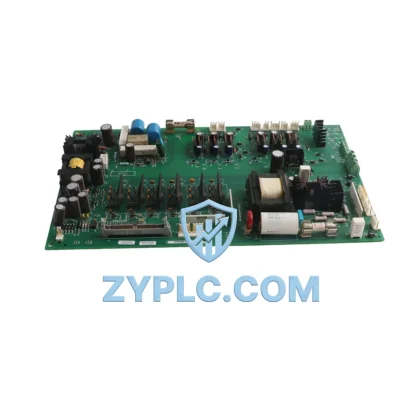
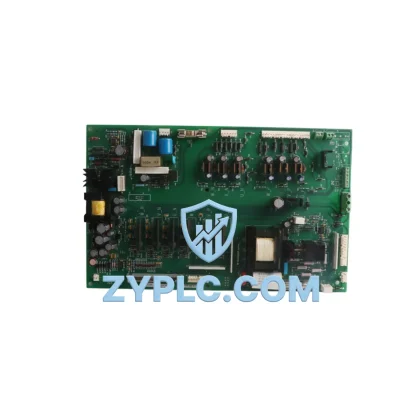
GE IS200TSVCH2AJE System-Ready Servo Termination for Mark VI Control System Architecture
The GE IS200TSVCH2AJE is a servo termination board engineered specifically for integration within the GE Mark VI Turbine Control System architecture. Rather than functioning as a standalone component, this board occupies a critical position within the layered automation hierarchy — bridging the control layer’s command outputs with the physical execution layer’s servo actuators. In gas turbine, steam turbine, and combined-cycle power generation environments, the precision and reliability of servo signal termination directly determines the responsiveness and safety of the entire control loop. The IS200TSVCH2AJE is designed to meet these demands with robust electrical performance, deterministic signal routing, and seamless compatibility with the broader Mark VI platform ecosystem.
Within a complete Mark VI control architecture, the IS200TSVCH2AJE interfaces with the VCMI (VME Communications and Memory Interface) board and the TSVO servo driver module to form a coherent servo control chain. Servo position commands originating from the VCMI are routed through the termination board to the TSVO, which then drives the hydraulic servo valves governing fuel flow, inlet guide vanes, and bypass valve positioning. This signal path must maintain sub-millisecond latency and microvolt-level noise immunity — requirements the IS200TSVCH2AJE is specifically rated to satisfy. Its terminal block layout supports direct field wiring from LVDT position sensors and servo valve coils, eliminating intermediate junction boxes and reducing potential failure points in the signal chain.
System architects integrating the IS200TSVCH2AJE into a Mark VI panel will typically pair it with the IS200TSVOH1A or IS200TSVOH1B servo output boards, the IS215VCMIH2AE communications module, and the IS200BICLH1ABA I/O terminal board for comprehensive signal management. Power distribution within the same control cabinet is typically handled by the IS200EPBAG1A power supply board, which provides the regulated 28 VDC and ±15 VDC rails required by the servo termination circuitry. For redundant architectures — common in critical turbine applications — the IS200TSVCH2AJE can be deployed in TMR (Triple Modular Redundancy) configurations alongside duplicate TSVO and VCMI modules, ensuring that no single board failure interrupts turbine operation.
From a network and communications perspective, the Mark VI system’s IONet Ethernet backbone connects the IS215VCMIH2AE controller to the HMI layer, typically running GE’s Cimplicity or ToolboxST software. The IS200TSVCH2AJE does not participate directly in network communications but its correct termination of servo feedback signals is essential for the VCMI to generate accurate closed-loop control outputs. Incorrect wiring or a degraded termination board will manifest as servo hunting, valve oscillation, or trip events — all of which are immediately visible on the HMI trend displays and event logs.
For maintenance engineers, the IS200TSVCH2AJE offers a significant advantage in long-term serviceability. Its modular VME-compatible form factor allows hot-swap replacement during scheduled outages without requiring full panel rewiring. Spare board management is simplified because the IS200TSVCH2AJE is interchangeable across multiple Mark VI panel configurations, reducing the number of unique spare part numbers that must be stocked. When combined with a structured preventive maintenance program — including periodic LVDT calibration, servo valve stroke testing, and IONet health checks — the IS200TSVCH2AJE contributes to extended mean time between failures (MTBF) for the entire turbine control system.
All units supplied by ZYPLC are tested under load conditions that replicate actual Mark VI operating environments. Each IS200TSVCH2AJE is verified for servo signal integrity, terminal block continuity, and board-level power rail stability before dispatch. Every unit is covered by a 12-Month Warranty and supported by ZYPLC’s Contextual Integration service, which provides application-specific configuration guidance to ensure the board performs correctly within your specific turbine control architecture from day one.
Architecture Specification Table
| System Role |
Servo Signal Termination Board — Mark VI Turbine Control |
| Part Number |
IS200TSVCH2AJE |
| Brand / Manufacturer |
GE (General Electric) |
| Compatible Platform |
GE Mark VI Turbine Control System |
| Series |
Mark VI / IS200 Series |
| Form Factor |
VME-compatible plug-in board |
| Signal Type |
Servo valve command output; LVDT feedback input |
| Electrical Interface |
Terminal block field wiring; board-edge VME connector |
| Power Requirements |
28 VDC / ±15 VDC (supplied via backplane) |
| Communication Role |
Passive termination; interfaces with VCMI and TSVO modules |
| Redundancy Support |
TMR (Triple Modular Redundancy) compatible |
| Installation Environment |
Control cabinet / Mark VI panel enclosure |
| Operating Temperature |
0°C to 60°C (standard industrial range) |
| Origin |
United States |
| Warranty |
12-Month Warranty — all units tested prior to dispatch |
Coordinated Control System Design
The IS200TSVCH2AJE does not operate in isolation — its value is realized through its coordinated role within a fully integrated Mark VI control panel. A typical turbine control architecture built around this board includes the following coordinated components:
-
IS215VCMIH2AE — VME Communications and Memory Interface; generates servo position commands transmitted to the IS200TSVCH2AJE
-
IS200TSVO (TSVO Servo Output Board) — receives terminated servo signals and drives hydraulic servo valve coils
-
IS200TSVOH1A / IS200TSVOH1B — servo output board variants used in parallel or redundant servo drive configurations
-
IS200BICLH1ABA — I/O terminal board providing additional discrete and analog signal termination within the same panel
-
IS200EPBAG1A — power supply board delivering regulated DC rails to servo termination and I/O boards
-
IS200VCRCH1BBB — VME card cage backplane providing the physical and electrical interconnect for all IS200-series boards
-
IS215ACLEH1AE — AC power line filter and entry module for the Mark VI panel power distribution system
-
IS200TRLYH1BCC — relay output board used for trip and alarm signal routing within the same control cabinet
-
LVDT Position Sensors — field-mounted linear variable differential transformers wired directly to the IS200TSVCH2AJE terminal blocks for servo position feedback
-
ToolboxST Configuration Software — GE’s engineering workstation software used to configure servo loop parameters, calibrate LVDT offsets, and commission the IS200TSVCH2AJE within the Mark VI system
This coordinated architecture ensures that servo control commands flow deterministically from the VCMI through the IS200TSVCH2AJE to the TSVO and ultimately to the servo valve, with position feedback completing the closed loop through the same termination board. System consistency, signal integrity, and maintenance efficiency are all maximized when all components are sourced from the same Mark VI platform generation.
Application in Layered Automation Systems
Power Generation (Gas & Steam Turbine): The IS200TSVCH2AJE is most commonly deployed in gas turbine and steam turbine control panels where precise servo valve positioning governs fuel flow, compressor inlet guide vanes, and steam admission valves. In combined-cycle power plants, multiple IS200TSVCH2AJE boards may be installed across separate Mark VI panels controlling the gas turbine, steam turbine, and heat recovery steam generator (HRSG) systems, all networked via IONet to a common HMI station.
Petrochemical & Refinery Process Control: In compressor control applications within refineries and petrochemical plants, the IS200TSVCH2AJE supports anti-surge valve positioning and speed governor servo control. The board’s noise immunity and stable termination characteristics are essential in environments with high electromagnetic interference from large motor drives and variable frequency drives operating in adjacent control cabinets.
Power Transmission & Utilities: Hydroelectric generating stations and pumped-storage facilities use Mark VI-based governor control systems where the IS200TSVCH2AJE terminates servo signals for wicket gate and deflector plate actuators. The board’s TMR compatibility is particularly valued in these applications, where regulatory requirements mandate redundant control architectures for grid-connected generation assets.
Industrial Process & Mining: Large rotating equipment in mining and mineral processing — including SAG mills, ball mills, and large centrifugal pumps — increasingly uses Mark VI-derived control platforms for speed and load regulation. The IS200TSVCH2AJE supports servo termination in these high-availability applications where unplanned downtime carries significant production cost penalties.
Architecture Engineering FAQ
Q1: Is the IS200TSVCH2AJE compatible with both Mark VI and Mark VIe control systems?
The IS200TSVCH2AJE is designed and rated for the GE Mark VI Turbine Control System platform. While the Mark VIe shares architectural concepts with the Mark VI, it uses a different I/O and termination board ecosystem (the IS420 and IS410 series). Direct cross-platform substitution is not recommended without engineering review. For Mark VIe applications, consult ZYPLC’s technical team to identify the correct servo termination board for your specific panel configuration.
Q2: Can the IS200TSVCH2AJE be installed in a TMR (Triple Modular Redundancy) architecture, and what additional boards are required?
Yes. The IS200TSVCH2AJE supports TMR deployment. In a TMR configuration, three IS200TSVCH2AJE boards are installed in separate R, S, and T control paths, each paired with its own TSVO servo output board and VCMI communications module. The Mark VI system’s voting logic continuously compares outputs from all three paths and isolates any faulted channel without interrupting turbine operation. ZYPLC can supply matched sets of IS200TSVCH2AJE boards for TMR installations and provide configuration guidance for ToolboxST servo loop parameter alignment across all three channels.
Q3: What does the 12-Month Warranty cover, and what support is available during commissioning?
Every IS200TSVCH2AJE supplied by ZYPLC is covered by a 12-Month Warranty against manufacturing defects and functional failures under normal operating conditions. Prior to dispatch, each board undergoes functional testing that verifies servo signal termination integrity, terminal block continuity, and power rail stability. During commissioning, ZYPLC’s Contextual Integration service provides application-specific technical support — including LVDT wiring verification, servo loop gain recommendations, and ToolboxST configuration review — to ensure the board is correctly integrated into your Mark VI architecture from the first power-on.
© 2026 ZYPLC. All rights reserved.
Original Source: https://zyplc.com
Contact: +86 19859288691 | [email protected]