GE IS200VSVOH1BDC: VME Servo Control Card as the Industrial Data Link in Mark VI Turbine Architecture
In modern turbine control and industrial automation environments, the integrity of the servo control data link is the backbone of safe, efficient, and scalable operations. The GE IS200VSVOH1BDC (also referenced as IS200VSVOH1B) is a VME-format Servo Control Card engineered for the GE Mark VI Turbine Control System, one of the most widely deployed distributed control platforms in power generation, oil & gas, and heavy industrial applications. This card does not operate in isolation — it functions as a precision node within a layered automation architecture, coordinating servo actuator commands, feedback signal processing, and real-time data exchange across the full control hierarchy.
The IS200VSVOH1BDC occupies a critical position in the Mark VI VME backplane, receiving high-resolution position and velocity feedback from servo actuators and translating those signals into actionable control outputs. Its role spans the boundary between the digital control layer and the physical execution layer, making it indispensable for turbine governor control, fuel valve positioning, inlet guide vane actuation, and other precision servo-driven processes. When integrated with the broader Mark VI architecture, this card enables the system to maintain tight closed-loop control even under dynamic load conditions, grid disturbances, or process upsets.
From a connectivity standpoint, the IS200VSVOH1BDC interfaces directly with the GE IS200VCMI VME Communication Interface and the IS200VCRCH1B VME Controller Card, forming the core of the Mark VI control chassis. Data flows from field-mounted servo actuators through dedicated I/O termination boards — such as the IS200TSVOH1A Servo Terminal Board — into the VME backplane, where the IS200VSVOH1BDC processes feedback and issues corrective commands in real time. This tight integration ensures sub-millisecond response times critical for turbine protection and load control.
Within the Mark VI system hierarchy, the IS200VSVOH1BDC works in concert with the IS200VCCC1B VME Controller Card for supervisory logic execution, and communicates upstream to SCADA and HMI platforms via the GE UCVEH Mark VI Ethernet Communication Module. This upstream data path enables operators to monitor servo positions, valve travel, and actuator health in real time through GE’s ToolboxST engineering environment or third-party SCADA systems using OPC-DA/UA protocols. The result is full process transparency from the servo actuator to the control room display.
Redundancy is a core design principle of the Mark VI platform, and the IS200VSVOH1BDC supports TMR (Triple Modular Redundancy) configurations. In TMR deployments, three IS200VSVOH1BDC cards operate in parallel, with the system continuously voting on servo command outputs to detect and isolate faults without interrupting turbine operation. This architecture, combined with the IS200VSVOH1BDC’s built-in diagnostics, dramatically reduces unplanned downtime and supports predictive maintenance strategies. Companion cards such as the IS200VSVOH1A and IS200VSVOH1C variants may be encountered in mixed-revision installations, and the IS200VSVOH1BDC is designed to maintain backward compatibility within the Mark VI VME chassis family.
For power conditioning within the control cabinet, the IS200VSVOH1BDC relies on stable DC bus supply from the GE IS200EPSCG1A Power Supply Card, which provides regulated voltage rails to the VME backplane. Any instability in the power layer directly impacts servo control accuracy, making the selection of compatible, tested power supply modules equally important to system reliability. ZYPLC maintains inventory of both the IS200VSVOH1BDC and its associated power and communication modules, enabling customers to source complete subsystem kits rather than individual components.
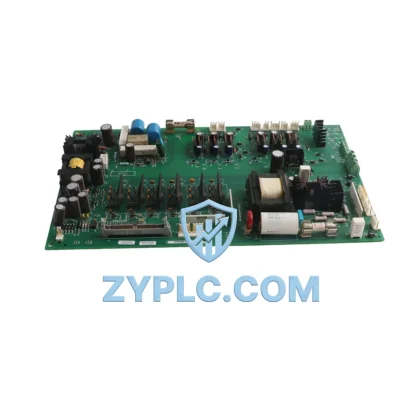
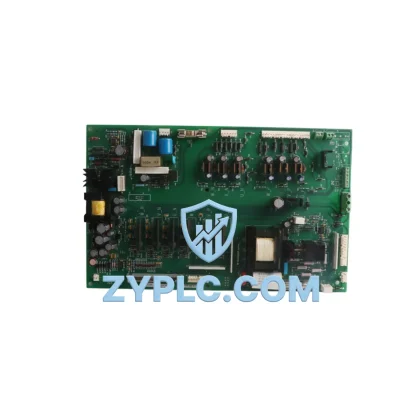
In terms of physical installation, the IS200VSVOH1BDC is a standard VME form-factor card designed for insertion into the Mark VI VMIVME chassis. It connects to the servo termination board via a dedicated cable harness, and its front-panel LEDs provide immediate visual indication of card health, communication status, and fault conditions. Commissioning engineers can leverage GE’s ToolboxST diagnostic suite to perform servo loop tuning, feedback calibration, and end-to-end signal verification without removing the card from service.
Long-term maintainability is a key consideration for any Mark VI installation. As GE transitions newer turbine fleets to the Mark VIe platform, legacy Mark VI sites continue to operate and require reliable access to tested, verified spare parts. ZYPLC specializes in sourcing, testing, and supplying Mark VI VME cards including the IS200VSVOH1BDC, ensuring that plant engineers can maintain system integrity without the lead times and costs associated with OEM procurement. Every IS200VSVOH1BDC unit shipped by ZYPLC undergoes functional testing and is covered by a 12-Month Warranty, providing documented assurance of performance and reliability.
Network Communication Table
| Parameter |
Specification |
| Part Number |
IS200VSVOH1BDC / IS200VSVOH1B |
| Brand |
GE (General Electric) |
| Series |
Mark VI Turbine Control System |
| Card Type |
VME Servo Control Card |
| Form Factor |
VME (Versa Module Europa) Backplane |
| Control Function |
Servo Actuator Command & Feedback Processing |
| Communication Interface |
VME Backplane Bus, Servo Termination Board Cable |
| Protocol Support |
Internal VME Bus; OPC-DA/UA via upstream UCVEH module |
| Redundancy Support |
TMR (Triple Modular Redundancy) Compatible |
| Upstream Integration |
SCADA, HMI, ToolboxST Engineering Platform |
| Operating Environment |
Industrial Control Cabinet, DIN Rail / Chassis Mount |
| Power Supply |
Regulated DC via VME Backplane (IS200EPSCG1A compatible) |
| Warranty |
12-Month Warranty (ZYPLC Tested & Verified) |
| Availability |
In Stock — Global Shipping Available |
Connected Automation Data Flow
The IS200VSVOH1BDC sits at the intersection of field-level servo actuation and system-level control logic. Understanding its data flow requires mapping the full signal chain from physical actuator to control room. At the field level, servo actuators — such as fuel control valves and inlet guide vane actuators — generate analog position and velocity feedback signals. These signals are routed through the IS200TSVOH1A Servo Terminal Board, which conditions and isolates the signals before passing them into the VME backplane via a dedicated cable harness.
Within the VME chassis, the IS200VSVOH1BDC receives this conditioned feedback and executes the servo control algorithm, comparing actual position against the setpoint commanded by the IS200VCCC1B VME Controller Card. The resulting error signal drives the servo output command, which is returned to the actuator through the same termination board path. This closed-loop cycle repeats at high frequency, maintaining precise actuator positioning under all operating conditions.
Upstream of the VME controller, the GE UCVEH Ethernet Communication Module bridges the Mark VI internal bus to the plant Ethernet network, enabling real-time data exchange with SCADA servers and HMI workstations. Operators monitoring the turbine from a GE MarkVIe HMI or a third-party SCADA platform receive live servo position data, valve travel percentages, and actuator health diagnostics. In plants where the Mark VI coexists with newer control platforms, industrial protocol gateways — such as Modbus TCP/EtherNet IP converters — may be deployed alongside the UCVEH to bridge legacy and modern network segments.
For sites requiring enhanced diagnostics, edge computing gateways can be integrated at the network layer to aggregate servo performance data, apply machine learning models for predictive maintenance, and push alerts to cloud-based asset management platforms. The IS200VSVOH1BDC’s diagnostic outputs — accessible via ToolboxST — provide the raw data streams that feed these advanced analytics pipelines, making it a foundational component of any digital transformation initiative on a Mark VI-controlled turbine.
In TMR configurations, three IS200VSVOH1BDC cards operate simultaneously, with the IS200VCMI VME Communication Interface coordinating the voting logic that selects the median servo command output. This architecture ensures that a single card failure does not interrupt turbine operation, and the faulty card can be replaced online in hot-standby configurations. The combination of the IS200VSVOH1BDC, IS200VCMI, IS200VCCC1B, IS200TSVOH1A, IS200EPSCG1A, and UCVEH modules forms a complete, redundant servo control subsystem capable of meeting the availability requirements of baseload power generation facilities.
Solving Data Isolation in Industrial Sites
One of the persistent challenges in legacy turbine control installations is data isolation — the inability to extract real-time servo performance data from the Mark VI system and integrate it with plant-wide SCADA, ERP, or asset management platforms. The IS200VSVOH1BDC, when properly integrated with the UCVEH Ethernet module and appropriate protocol gateways, resolves this isolation by making servo data available on standard industrial networks.
Protocol fragmentation is another common barrier. Many older Mark VI installations rely on proprietary GE communication protocols that are incompatible with modern OPC-UA or MQTT-based data infrastructure. By deploying protocol conversion gateways alongside the IS200VSVOH1BDC’s upstream communication path, plant engineers can bridge the gap between legacy Mark VI data and modern industrial IoT platforms without replacing the core control hardware.
Remote monitoring and diagnostics represent a growing requirement for distributed power generation assets. With the IS200VSVOH1BDC’s diagnostic outputs accessible via the plant Ethernet network, remote engineering teams can perform servo loop analysis, fault diagnosis, and performance trending without on-site visits. This capability is particularly valuable for peaker plants, remote hydro facilities, and offshore installations where travel costs and response times are significant operational factors.
Production line transparency — knowing the real-time health and performance of every servo actuator in the turbine — is achievable when the IS200VSVOH1BDC is integrated into a comprehensive asset monitoring strategy. ZYPLC supports customers not only with hardware supply but also with technical guidance on integration architecture, ensuring that the IS200VSVOH1BDC delivers its full connectivity value within the customer’s specific control environment.
Industrial Connectivity FAQ
Q1: Is the IS200VSVOH1BDC compatible with both Mark VI and Mark VIe control systems?
The IS200VSVOH1BDC is specifically designed for the GE Mark VI VME-based control platform. It is not directly interchangeable with Mark VIe components, which use a different hardware architecture. However, in hybrid installations where Mark VI and Mark VIe controllers coexist on the same turbine, the IS200VSVOH1BDC continues to serve its designated Mark VI chassis. ZYPLC’s technical team can advise on compatibility and cross-reference requirements for your specific installation.
Q2: What communication protocols does the IS200VSVOH1BDC support for SCADA integration?
The IS200VSVOH1BDC communicates internally via the VME backplane bus. Upstream SCADA integration is achieved through the GE UCVEH Ethernet Communication Module, which supports OPC-DA and OPC-UA protocols for data exchange with SCADA and HMI platforms. For sites requiring Modbus TCP or EtherNet/IP connectivity, additional protocol gateways can be deployed at the network layer without modifying the IS200VSVOH1BDC or its associated Mark VI hardware.
Q3: How does ZYPLC ensure the IS200VSVOH1BDC is functional before shipment?
Every IS200VSVOH1BDC unit supplied by ZYPLC undergoes a multi-stage functional test process that verifies servo control logic, backplane communication, feedback signal processing, and diagnostic output integrity. Units that pass testing are issued a test certificate and covered by ZYPLC’s 12-Month Warranty. This warranty covers defects in materials and workmanship and includes technical support for integration and commissioning questions.
Q4: Can the IS200VSVOH1BDC be used in a TMR redundancy configuration, and what additional components are required?
Yes, the IS200VSVOH1BDC is fully compatible with GE Mark VI TMR (Triple Modular Redundancy) configurations. A TMR servo control subsystem requires three IS200VSVOH1BDC cards installed in the TMR chassis, coordinated by the IS200VCMI VME Communication Interface for voting logic. Additional components include the IS200TSVOH1A Servo Terminal Board, IS200EPSCG1A Power Supply Card, and appropriate cable harnesses. ZYPLC maintains inventory of all these components and can supply complete TMR subsystem kits with matched firmware revisions upon request.
© 2026 ZYPLC. All rights reserved.
Original Source: https://zyplc.com
Contact: +86 19859288691 | [email protected]