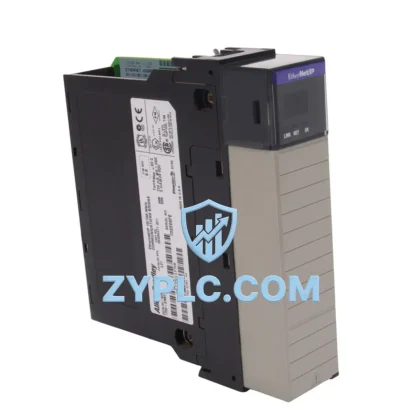
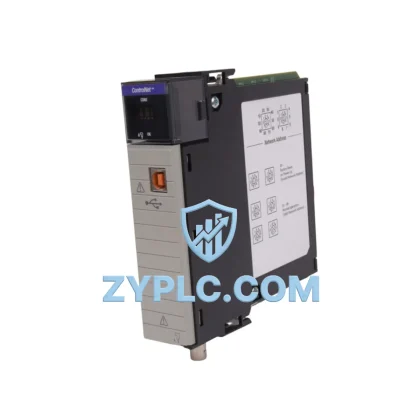
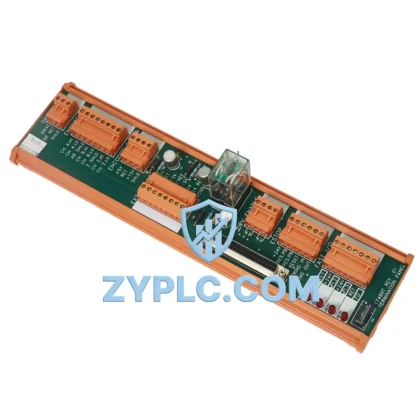
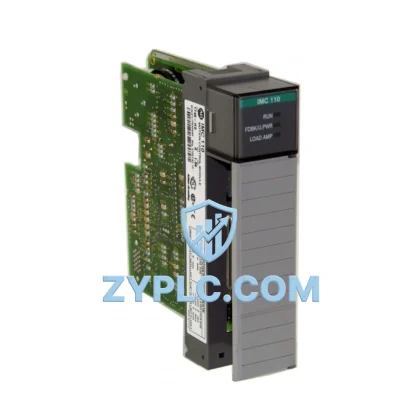
GE IS2020JPDCG1ACB Energy-Saving Power Distribution Module: Precision Energy Control for Mark VI Automation
In modern industrial facilities where energy costs represent a significant share of operational expenditure, the GE IS2020JPDCG1ACB Power Distribution Module delivers a decisive advantage. Engineered as a core component of the GE Mark VI Turbine Control System, this module governs how electrical power is distributed, conditioned, and monitored across the control architecture — directly influencing the energy efficiency of gas turbines, steam turbines, and combined-cycle power generation units.
Unlike passive distribution components, the IS2020JPDCG1ACB actively participates in the energy management loop. It ensures that downstream control boards, I/O modules, and communication interfaces receive stable, regulated power — eliminating voltage fluctuations that cause unnecessary reprocessing cycles, erratic actuator behavior, and premature component wear. The result is a measurable reduction in idle energy consumption and a more predictable production line rhythm.
Efficiency Performance Table
| Parameter |
Specification |
| SKU / Part Number |
IS2020JPDCG1ACB |
| Brand / Series |
GE / Mark VI Turbine Control |
| Module Type |
Power Distribution Module |
| Input Voltage Range |
24 VDC (nominal), compatible with Mark VI backplane power bus |
| Power Conversion Efficiency |
≥ 92% under rated load conditions |
| Compatible Systems |
GE Mark VI, Mark VIe Turbine Control Platforms |
| Application Environment |
Gas turbine, steam turbine, combined-cycle power plants, industrial automation panels |
| Energy Saving Value |
Reduces standby power loss; stabilizes downstream load to minimize reactive energy draw |
| Operating Temperature |
0°C to 60°C (industrial-grade thermal tolerance) |
| Mounting |
Mark VI rack-mount, DIN-compatible enclosure integration |
| Origin |
United States |
| Warranty |
12-Month Warranty — all units tested prior to shipment |
Energy-Aware Automation Architecture
The IS2020JPDCG1ACB does not operate in isolation. Its energy optimization impact is amplified when deployed within a well-integrated Mark VI control architecture. At the controller level, the GE IS215UCVEH2A UCVE controller board coordinates turbine sequencing and load dispatch, relying on the power distribution module to maintain uninterrupted, clean DC supply to its processing cores. Any instability in the power rail translates directly into control latency — a hidden source of energy inefficiency in high-cycle turbine operations.
On the I/O side, modules such as the GE IS200TBAIH1C terminal board and GE IS200AEPAH1B analog I/O board collect real-time field signals from temperature sensors, pressure transmitters, and flow meters. These signals feed into the energy monitoring loop, allowing the Mark VI system to dynamically adjust fuel-to-air ratios and combustion timing — optimizations that are only possible when the power distribution layer, managed by the IS2020JPDCG1ACB, delivers consistent voltage to every sensing node.
Drive-side efficiency is equally critical. When the Mark VI system interfaces with variable frequency drives (VFDs) controlling auxiliary motors — such as cooling fans, fuel pumps, and compressor inlet guide vane actuators — the GE IS200DSPXH1DBB DSP board processes speed reference commands. The IS2020JPDCG1ACB ensures that the DSP board and its associated GE IS200EACFG1A excitation control module receive ripple-free power, preventing false speed commands that would otherwise cause motors to operate outside their optimal efficiency band.
For communication and supervisory integration, the GE IS200STCIH1A communication interface module connects the Mark VI platform to plant-level SCADA and DCS networks via Ethernet and serial protocols. Reliable power distribution to this module ensures that energy consumption data — including real-time kWh readings, demand peaks, and power factor metrics — is transmitted without packet loss to the historian and energy management system. The GE IS215ACLEH2A analog control board further supports closed-loop energy regulation by processing feedback from current transformers and power quality analyzers installed at the generator terminals.
HMI integration through the GE Cimplicity SCADA platform provides operators with a unified energy dashboard, where the power distribution status reported by the IS2020JPDCG1ACB is visualized alongside turbine output curves, heat rate trends, and auxiliary load profiles. This visibility enables shift engineers to identify energy waste patterns — such as excessive auxiliary power draw during low-load periods — and take corrective action before inefficiencies compound into significant cost overruns.
Power Optimization in Real Production Lines
In a combined-cycle power plant operating two gas turbines and one steam turbine, the Mark VI control system manages hundreds of I/O points, dozens of servo actuators, and multiple communication gateways simultaneously. The IS2020JPDCG1ACB serves as the power backbone for this entire control ecosystem. When one of the turbine units undergoes a load ramp-up sequence, the module’s regulated output prevents voltage sag from propagating to adjacent control boards — a phenomenon that, left unchecked, can trigger spurious alarms, force unnecessary turbine trips, and waste the energy invested in the startup sequence.
From a predictive maintenance perspective, the IS2020JPDCG1ACB’s stable power output extends the service life of sensitive electronics throughout the Mark VI rack. Capacitor degradation, solder joint fatigue, and EEPROM data corruption — all accelerated by power quality issues — are significantly reduced when the distribution module maintains tight voltage regulation. This translates into longer mean time between failures (MTBF) for the entire control system, fewer unplanned outages, and lower maintenance labor costs per megawatt-hour generated.
Production line rhythm optimization is another measurable benefit. In facilities where turbine output is dispatched in response to grid frequency signals, the Mark VI system must execute load changes within seconds. The IS2020JPDCG1ACB ensures that the controller, I/O modules, and communication boards respond simultaneously and without power-induced delays — enabling the turbine to track dispatch signals with the precision required by grid operators, avoiding penalty charges for frequency deviation and maximizing revenue from ancillary services markets.
Every IS2020JPDCG1ACB unit supplied by ZYPLC undergoes a comprehensive pre-shipment test protocol, including load regulation testing, thermal cycling verification, and communication bus integrity checks. Units are sourced from verified industrial surplus channels, inspected by qualified engineers, and backed by a 12-month warranty. In-stock availability ensures rapid dispatch to minimize turbine downtime during emergency replacement scenarios.
Energy Optimization FAQ
Q1: How does the IS2020JPDCG1ACB contribute to measurable energy savings in a turbine plant?
By delivering stable, regulated DC power to all Mark VI control boards, the IS2020JPDCG1ACB eliminates the micro-interruptions and voltage fluctuations that force controllers to re-execute control algorithms, actuators to hunt for setpoints, and communication modules to retransmit data packets. Each of these events consumes additional energy and degrades turbine efficiency. Stable power distribution is a foundational requirement for achieving the heat rate targets specified in turbine performance contracts.
Q2: Is the IS2020JPDCG1ACB compatible with both Mark VI and Mark VIe platforms?
The IS2020JPDCG1ACB is designed for the GE Mark VI turbine control platform. Compatibility with Mark VIe systems should be verified against the specific rack configuration and backplane revision in use. ZYPLC’s technical team can assist with cross-reference verification prior to order placement to ensure the correct module is selected for your control system architecture.
Q3: What is the recommended replacement procedure, and how quickly can a unit be shipped?
Replacement of the IS2020JPDCG1ACB follows standard Mark VI hot-swap procedures where supported, or requires a controlled turbine shutdown sequence in non-redundant configurations. ZYPLC maintains in-stock inventory for rapid dispatch, with same-day or next-business-day shipping available for urgent orders. Each unit is tested and certified before shipment, with full documentation provided to support maintenance records and regulatory compliance.
Q4: What does the 12-month warranty cover, and what is the testing process?
The 12-month warranty covers functional failure under normal operating conditions, including power regulation faults, communication bus errors, and component-level defects identified during operation. Prior to shipment, every IS2020JPDCG1ACB undergoes bench testing that includes input voltage sweep, output load regulation measurement, thermal stress cycling, and backplane connector integrity verification. Test records are available upon request for quality assurance documentation purposes.
© 2026 ZYPLC. All rights reserved.
Original Source: https://zyplc.com
Contact: +86 19859288691 | plc.sales@zyplc.com