Product identification and sourcing context
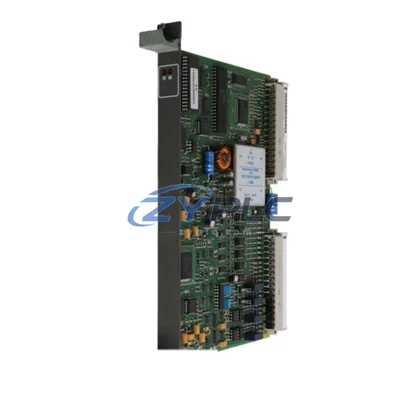
GE IS210AEPSG2BCB Excitation Control for Mark VI is handled as a quote-based GE Speedtronic / Mark turbine-control spare part for turbine-control, DCS, PLC, and industrial maintenance projects. ZYPLC checks the full model number, board revision, installed platform, required condition, quantity, and destination country before quotation.
| Brand |
GE |
| Model / SKU |
IS210AEPSG2BCB |
| Series context |
Mark VI |
| Part type |
Industrial Automation Spare Parts |
| RFQ basis |
Availability, condition, lead time, and export shipment options are confirmed before quote. |
Where this part is typically used
This item is requested for gas turbine, steam turbine, generator excitation, protection, and plant control-system maintenance. GE Mark V, Mark VI, Mark VIe, and PACSystems installations often require exact board revision, firmware, terminal-board pairing, and rack context before a spare part can be safely sourced.
RFQ information for maintenance teams
- Exact model number, revision suffix, and any board assembly code from the label.
- Installed platform context such as Mark V, Mark VI, Mark VIe, Speedtronic, or PACSystems RX3i where applicable.
- Quantity, urgency, required condition, and destination country.
- Photos of front label, board barcode, connector area, or existing spare packaging.
Browse related GE spare parts, review the Mark VI series, or compare similar Industrial Automation Spare Parts records. If the exact revision is not shown, send the model and photos so the RFQ can be checked manually.
Request quote for this model
GE IS210AEPSG2BCB Excitation Control for Mark VI
The GE IS210AEPSG2BCB is a precision-engineered excitation control module designed to operate as a core component within the GE Mark VI Turbine Control System architecture. Rather than functioning as a standalone unit, this module is purpose-built to integrate seamlessly across the control layer, I/O layer, power layer, and communication layer of a complete turbine automation system. Its role in maintaining generator excitation stability directly influences the reliability of the entire control loop — from field voltage regulation through to supervisory SCADA feedback and operator HMI visualization.
In modern power generation and industrial turbine applications, excitation control is not an isolated function. The IS210AEPSG2BCB interfaces with upstream CPU modules such as the IS215UCVEH2A and IS215UCVEH2B, which serve as the primary and redundant controllers within the Mark VI platform. These processors issue real-time excitation setpoints based on load demand signals, grid synchronization data, and protection relay inputs. The IS210AEPSG2BCB translates these commands into precise field current regulation, ensuring generator terminal voltage remains within defined operational bands across all load conditions.
Product Specification Table
| Parameter |
Specification |
| Part Number |
IS210AEPSG2BCB |
| Brand |
GE (General Electric) |
| Series |
Mark VI Turbine Control System |
| System Role |
Excitation Control Module |
| Module Type |
Analog Excitation Processing Board |
| Communication Protocol |
IONet (GE Proprietary), ARCNET |
| Backplane Compatibility |
Mark VI VME-based Rack System |
| Operating Voltage |
+5 VDC / ±15 VDC (rack-supplied) |
| Operating Temperature |
0°C to 60°C |
| Mounting |
Card-slot insertion, Mark VI compatible rack |
| Signal Interface |
Analog I/O, field excitation feedback |
| Redundancy Support |
TMR (Triple Modular Redundancy) compatible |
| Origin |
United States |
| Warranty |
Warranty and support terms confirmed before quote — covers functional defects under normal operating conditions |
System Compatibility Notes
The IS210AEPSG2BCB achieves its highest value when deployed within a fully coordinated Mark VI control cabinet. In a typical turbine control architecture, the module occupies a dedicated card slot within the Mark VI VME rack alongside companion boards including the IS200TSVOH1A terminal board, which provides the physical I/O termination for excitation feedback signals. The IS200TBCIH1C and IS200TTURH1CBB terminal boards handle turbine speed and temperature signal conditioning in adjacent slots, ensuring that all critical process variables are available to the CPU layer without signal cross-contamination.
Power distribution within the control cabinet is managed by the IS200EPSMG1A power supply module, which delivers regulated DC voltages to all active boards including the IS210AEPSG2BCB. Redundant power architectures — common in high-availability turbine installations — pair this supply with a secondary IS200EPSMG1A unit, with automatic switchover logic embedded in the Mark VI firmware. This eliminates single-point power failure as a risk to excitation control continuity.
At the communication layer, the IS210AEPSG2BCB exchanges data with the Mark VI controller over the IONet communication bus. This proprietary GE network enables deterministic, low-latency data transfer between the excitation module, the IS215UCVEH2A processor, and the IS215UCVEH2B redundant processor. For plants operating with a SCADA or DCS overlay, the Mark VI gateway module IS200IOCIH1A bridges IONet data to Modbus TCP or OPC-DA protocols, making excitation status and setpoint data available to plant-wide historian and alarm management systems.
HMI integration is typically achieved through GE’s ToolboxST configuration environment, where operators and engineers can monitor IS210AEPSG2BCB excitation output in real time, configure AVR (Automatic Voltage Regulator) parameters, and review historical trend data. The IS210AEPSG2BCB’s signal outputs are also routed to protection relay systems — such as the GE Multilin 489 Generator Protection Relay — which monitors field current levels and initiates protective trips if excitation anomalies are detected.
Industrial Application Notes
Power Generation: In gas turbine and steam turbine power plants, the IS210AEPSG2BCB is deployed as the primary excitation regulation module within the Mark VI control system. It maintains generator terminal voltage during load pickup, load rejection, and grid synchronization events. Plants operating in island mode or grid-connected mode rely on the module’s fast response time to prevent voltage collapse during sudden load changes.
Combined Cycle Plants: Combined cycle facilities operating multiple generation units benefit from the IS210AEPSG2BCB’s compatibility with the Mark VI TMR architecture. Triple-redundant excitation control ensures that a single module failure does not interrupt generation, with the remaining two channels maintaining full excitation authority while maintenance teams replace the faulted board — a hot-swap capability that minimizes planned outage duration.
Industrial Cogeneration: Petrochemical and refinery cogeneration systems use the IS210AEPSG2BCB to regulate generator excitation in environments where process steam and electrical generation are tightly coupled. Stable excitation control prevents voltage fluctuations that could disrupt sensitive process instrumentation or cause nuisance trips on motor protection relays throughout the facility.
Mining and Metals: Large mining operations with captive power generation rely on Mark VI-based turbine control for reliable on-site electricity supply. The IS210AEPSG2BCB supports these applications by maintaining excitation stability during the high inrush current events associated with large mill motor starts, preventing voltage dips that could affect other loads on the plant distribution network.
Water and Wastewater: Hydroelectric generation facilities and pumped-storage plants use the IS210AEPSG2BCB within Mark VI systems to manage generator excitation during frequent start-stop cycles. The module’s compatibility with the Mark VI’s automated sequence logic allows excitation to be ramped up and down in coordination with turbine speed, ensuring smooth synchronization to the grid with each generation cycle.
Product Compatibility FAQ
Q1: Is the IS210AEPSG2BCB compatible with both simplex and TMR Mark VI configurations?
Yes. The IS210AEPSG2BCB is designed to operate in simplex (single-controller), dual-redundant, and TMR (Triple Modular Redundancy) Mark VI architectures. In TMR configurations, three IS210AEPSG2BCB modules operate in parallel, with the Mark VI voting logic continuously comparing outputs. A single module fault is automatically isolated and alarmed without interrupting excitation control, allowing the system to continue operating on the remaining two channels while the faulted module is replaced.
Q2: What configuration tools and firmware versions are required for commissioning the IS210AEPSG2BCB?
Commissioning the IS210AEPSG2BCB requires GE’s ToolboxST software, which is the standard configuration and diagnostic environment for the Mark VI platform. Engineers should verify that the ToolboxST version is compatible with the installed Mark VI controller firmware revision before beginning configuration. Excitation parameters including AVR gain, voltage setpoint, and field current limits are configured through ToolboxST’s application-specific function blocks. GE’s Mark VI Application Manual provides the reference parameter ranges for IS210AEPSG2BCB integration within standard excitation control schemes.
Q3: What does the Warranty and support terms confirmed before quote cover, and what support is available for long-term maintenance?
The Warranty and support terms confirmed before quote covers functional defects in the IS210AEPSG2BCB under normal operating conditions, including failures attributable to manufacturing defects or component-level faults that emerge during the warranty period. Warranty claims are supported by our technical team, who can assist with fault diagnosis, module testing, and replacement logistics. For long-term maintenance planning, we recommend maintaining at least one spare IS210AEPSG2BCB in your critical spares inventory, particularly for TMR systems where a faulted module reduces redundancy margin. Our team can advise on compatible spare module specifications and assist with sourcing additional Mark VI components to support your plant’s long-term operational continuity.
GE IS210AEPSG2BCB Excitation Control for Mark VI RFQ and compatibility notes
GE IS210AEPSG2BCB is an excitation-control related request where plant system context, installed revision, and terminal-board relationship should be checked before quotation.
How to request a quote for this part
For a reliable quotation, send the complete model number, quantity, required condition, destination country, urgency, and photos of the nameplate or existing module if available. ZYPLC confirms availability and condition through RFQ before quotation, rather than presenting this industrial spare part as a fixed-price online purchase.
Compatibility and suffix verification
Many industrial automation spares vary by suffix, revision, firmware, installed option, voltage class, communication interface, or rack position. The visible base model is not always enough for a safe replacement decision. Please include any suffix, revision label, option-card information, and system context so the request can be checked against the intended installation.
Testing, packing, and export notes
Before dispatch, quoted parts can be reviewed against the requested model details and packed for international shipment. Testing or inspection scope depends on the part type and condition route confirmed during the RFQ process.
Use the Power Generation & Grid Control Parts, related brand page, series page, and category page to move from system context to exact model records.
FAQ
Is this part quoted with fixed online stock status?
No. Availability is confirmed via RFQ because industrial automation parts often require model, suffix, condition, and destination checks.
Can ZYPLC help with obsolete or hard-to-find replacements?
Yes. Send the complete model data and photos so our team can review sourcing routes and compatibility before quotation.