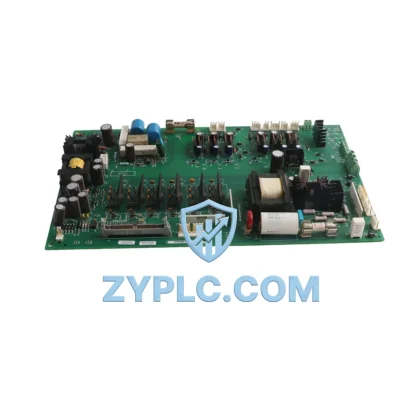
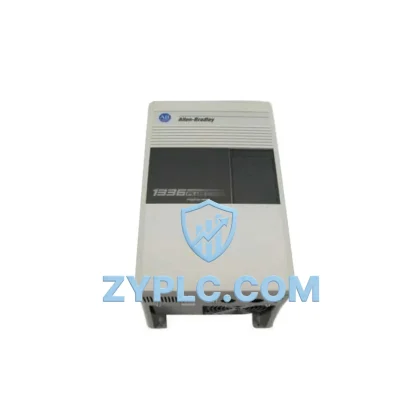
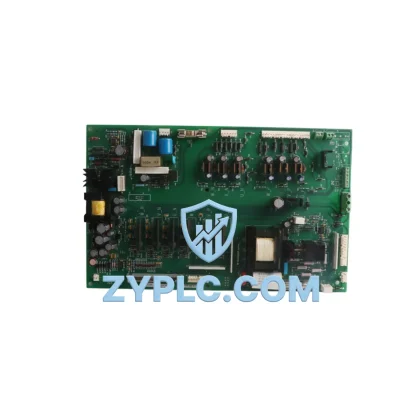
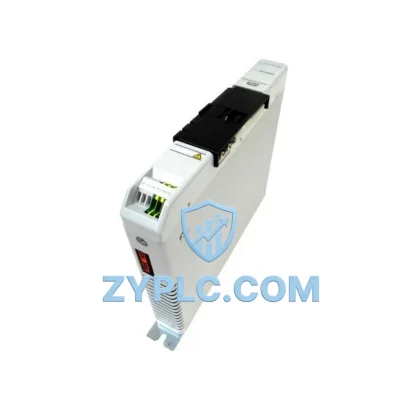
GE IS210WSVOH1A Energy-Saving Servo Driver for Mark VI Automation
The GE IS210WSVOH1A is a high-performance servo driver board engineered for the GE Mark VI turbine control system, one of the most widely deployed distributed control platforms in power generation and heavy industrial environments. Designed to deliver precise servo positioning with minimal power overhead, the IS210WSVOH1A plays a critical role in reducing unnecessary energy consumption at the actuator level — directly impacting plant-wide efficiency metrics, equipment utilization rates, and overall production line throughput.
In modern industrial facilities where energy costs represent a significant share of operating expenditure, the quality and responsiveness of servo control hardware determines how efficiently motors and actuators respond to control signals. A degraded or incompatible servo driver board introduces latency, signal distortion, and overcorrection cycles — all of which translate into wasted electrical energy, increased mechanical wear, and unplanned downtime. The IS210WSVOH1A eliminates these inefficiencies by maintaining tight closed-loop servo feedback, ensuring that actuators move precisely as commanded without excess current draw or thermal buildup.
Efficiency Performance Table
| Parameter |
Specification / Value |
| Part Number |
IS210WSVOH1A |
| Brand / Platform |
GE / Mark VI Turbine Control System |
| Module Type |
Servo Driver Board |
| Operating Voltage |
24 VDC (nominal, Mark VI backplane supplied) |
| Power Consumption |
Low-standby design; active servo loop optimized for minimal quiescent draw |
| Drive Efficiency |
Closed-loop servo feedback; eliminates overcorrection energy waste |
| Compatible Systems |
GE Mark VI, Mark VIe turbine control platforms |
| Application Environment |
Power generation, gas turbines, steam turbines, compressor control |
| Communication Protocol |
Mark VI proprietary I/O bus; compatible with IONet Ethernet backbone |
| Energy Optimization Value |
Reduces actuator hunting, lowers motor correction cycles, cuts idle energy draw |
| Origin |
United States |
| Warranty |
12-Month Warranty — tested before shipment, full functional verification |
Energy-Aware Automation Architecture
The IS210WSVOH1A does not operate in isolation — its energy optimization value is fully realized when integrated within a well-structured Mark VI control architecture. In a typical turbine control cabinet, the servo driver board works in concert with the IS215UCVEH2A Mark VIe controller board, which issues positioning commands based on real-time process variables such as fuel flow, exhaust temperature, and shaft speed. The controller’s output is only as efficient as the servo board’s ability to execute it accurately and without excess correction cycles.
On the I/O side, the IS200TREGH1B terminal board provides the physical interface between field wiring and the Mark VI backplane, ensuring that servo feedback signals arrive clean and without noise-induced errors that would otherwise cause the IS210WSVOH1A to issue unnecessary correction pulses. Alongside it, the IS200VTURH1BDB turbine I/O board handles speed and vibration inputs that inform the servo control loop, allowing the system to anticipate load changes rather than react to them — a key factor in reducing energy-wasting transient responses.
For power quality and distribution within the control cabinet, the IS200EPCTG1A power converter board regulates the DC bus voltage that feeds the servo driver, ensuring stable supply even during grid fluctuations. Voltage instability is a leading cause of servo overcorrection and motor hunting; a stable power supply directly reduces the IS210WSVOH1A’s corrective workload. The IS200DSPXH1DBB digital signal processor board further supports the control loop by executing high-speed calculations that keep the servo response curve optimized for current load conditions.
At the communication layer, the Mark VI system’s IONet Ethernet module enables real-time data exchange between the servo control subsystem and the plant DCS or SCADA platform. This connectivity allows energy managers to monitor servo drive activity, identify actuators operating outside their efficiency envelope, and schedule predictive maintenance before a degraded servo board begins consuming excess power. The IS200STCIH1A static converter I/O board complements this by providing additional analog feedback channels that track actuator position and load current — data that feeds directly into energy consumption dashboards.
For facilities running parallel drive systems, the IS210AEBIH3BEC analog I/O board extends the Mark VI’s ability to monitor multiple servo channels simultaneously, enabling cross-channel energy benchmarking. When one servo channel begins drawing disproportionate current relative to its peers, the system flags it for inspection — preventing a single failing board from inflating the entire line’s energy bill. The IS200VSVOH1BAB servo output board works as a companion module to the IS210WSVOH1A in high-demand applications, sharing the servo output load and reducing thermal stress on individual components.
Power Optimization in Real Production Lines
In gas turbine power plants, the IS210WSVOH1A governs the servo actuators that control fuel valve positioning — one of the highest-energy-impact control loops in the entire facility. A servo driver board that introduces even minor positioning errors forces the turbine control system to issue continuous correction commands, each of which draws additional current from the servo power supply and generates heat that must be dissipated by the cabinet cooling system. Over a 24-hour operating cycle, these micro-inefficiencies accumulate into measurable increases in auxiliary power consumption.
By maintaining precise, stable servo positioning with minimal correction activity, the IS210WSVOH1A reduces the frequency and magnitude of these correction cycles. In facilities where turbines operate at partial load for extended periods — a common scenario in grid-balancing applications — the energy savings from optimized servo control are proportionally larger, since the control system is continuously making fine adjustments rather than large step changes.
From a maintenance perspective, a properly functioning IS210WSVOH1A also reduces mechanical wear on servo actuators and valve stems. Actuators that are driven by an unstable or degraded servo board experience higher cycle counts and greater mechanical stress, leading to earlier failure and unplanned downtime. Replacing the IS210WSVOH1A before it degrades — or sourcing a tested replacement unit with a verified 12-month warranty — is a straightforward intervention that protects both energy efficiency and equipment longevity.
Every unit of the IS210WSVOH1A available through ZYPLC undergoes full functional testing prior to shipment, including servo loop response verification, signal integrity checks, and backplane compatibility confirmation. Stock is maintained for fast dispatch, minimizing the window between a servo board failure and full system restoration — a critical factor in facilities where turbine downtime carries significant financial and grid-stability consequences.
Energy Optimization FAQ
Q1: How does the IS210WSVOH1A contribute to reducing plant energy consumption?
The IS210WSVOH1A maintains tight closed-loop servo control, which minimizes actuator overcorrection cycles. Each unnecessary correction pulse draws current and generates heat; by eliminating these, the board reduces auxiliary power consumption and lowers the thermal load on cabinet cooling systems — both of which contribute to measurable energy savings over continuous operation.
Q2: Is the IS210WSVOH1A compatible with both Mark VI and Mark VIe systems?
The IS210WSVOH1A is designed for the GE Mark VI platform. Compatibility with Mark VIe configurations depends on the specific backplane and I/O architecture in use. We recommend confirming your system’s I/O board configuration and controller revision before ordering. Our technical team can assist with compatibility verification prior to purchase.
Q3: What is the recommended replacement interval, and how do I know when the board is degrading?
There is no fixed replacement interval, but early indicators of servo board degradation include increased actuator hunting, unexplained rises in servo supply current, and positioning errors flagged by the Mark VI diagnostics. Proactive replacement based on these signals — rather than waiting for complete failure — prevents energy waste and avoids unplanned downtime. ZYPLC maintains ready stock to support fast turnaround replacements.
Q4: What does the 12-month warranty cover, and what is the testing process?
Every IS210WSVOH1A shipped by ZYPLC carries a 12-month warranty covering functional performance under normal operating conditions. Prior to shipment, each board undergoes bench testing that includes power-on verification, servo loop response testing, signal integrity checks, and backplane interface confirmation. Test records are available upon request. Warranty claims are handled directly through our support team at plc.sales@zyplc.com.
© 2026 ZYPLC. All rights reserved.
Original Source: https://zyplc.com
Contact: +86 19859288691 | plc.sales@zyplc.com